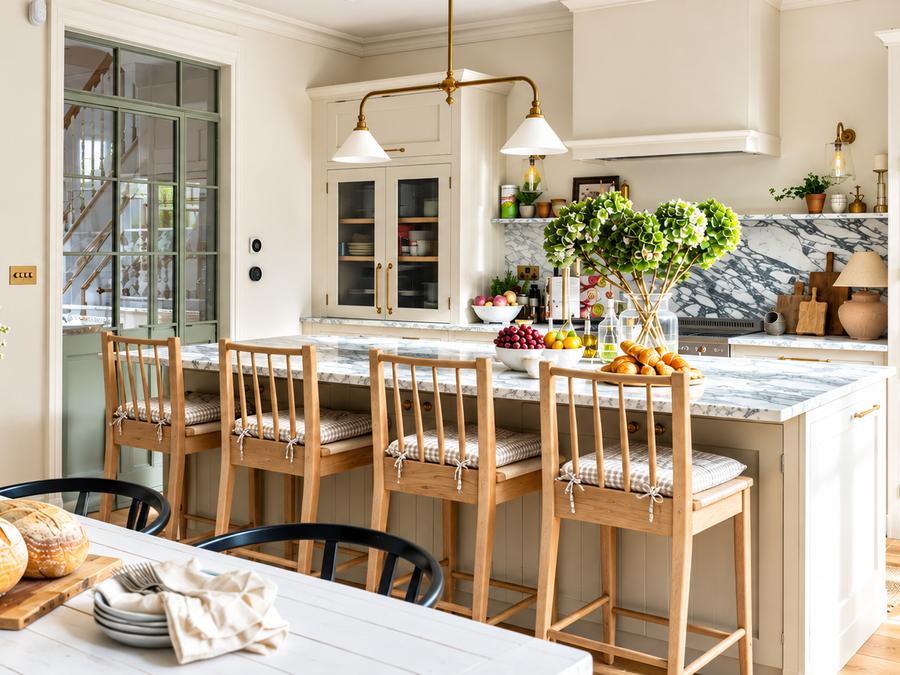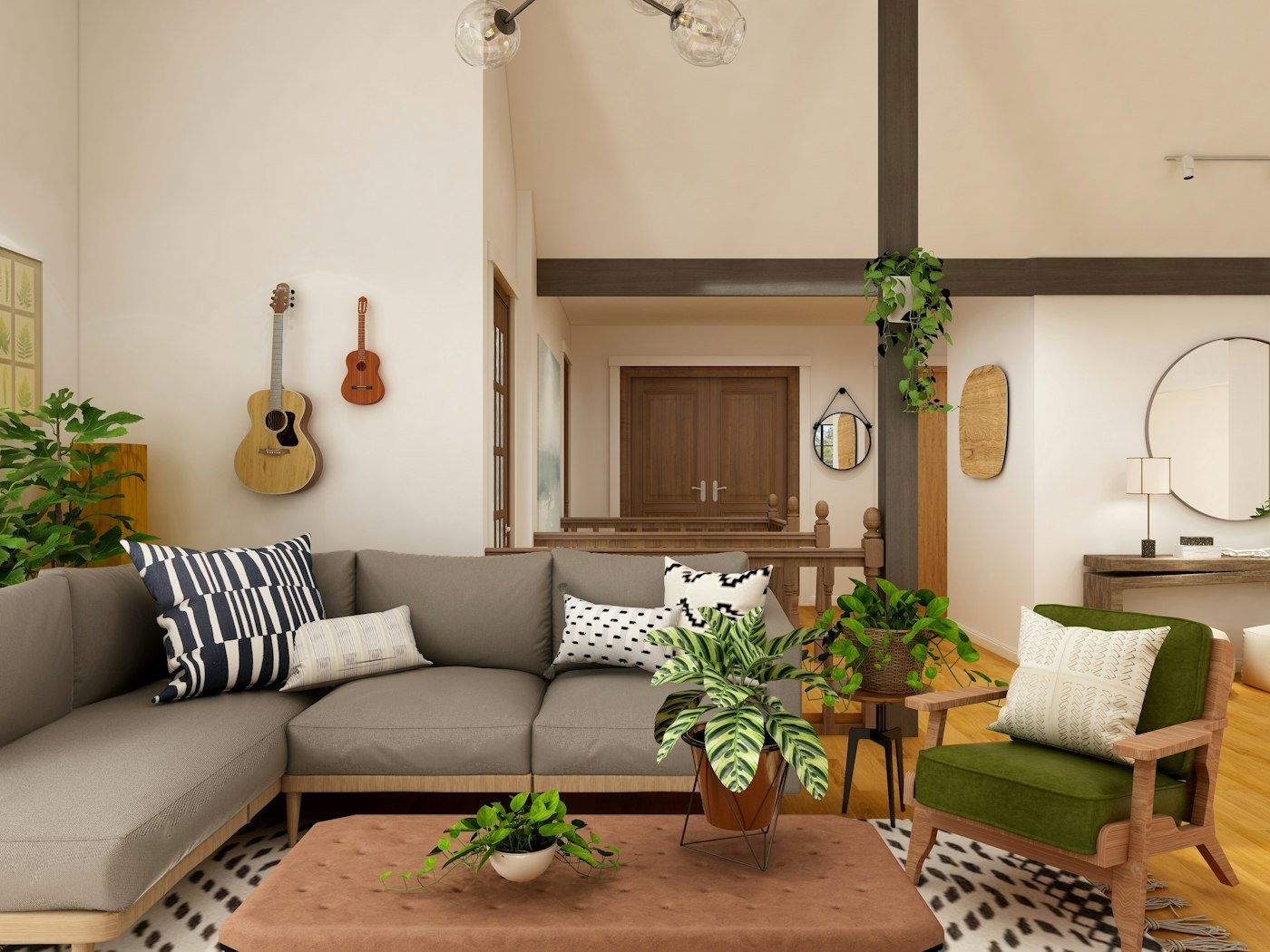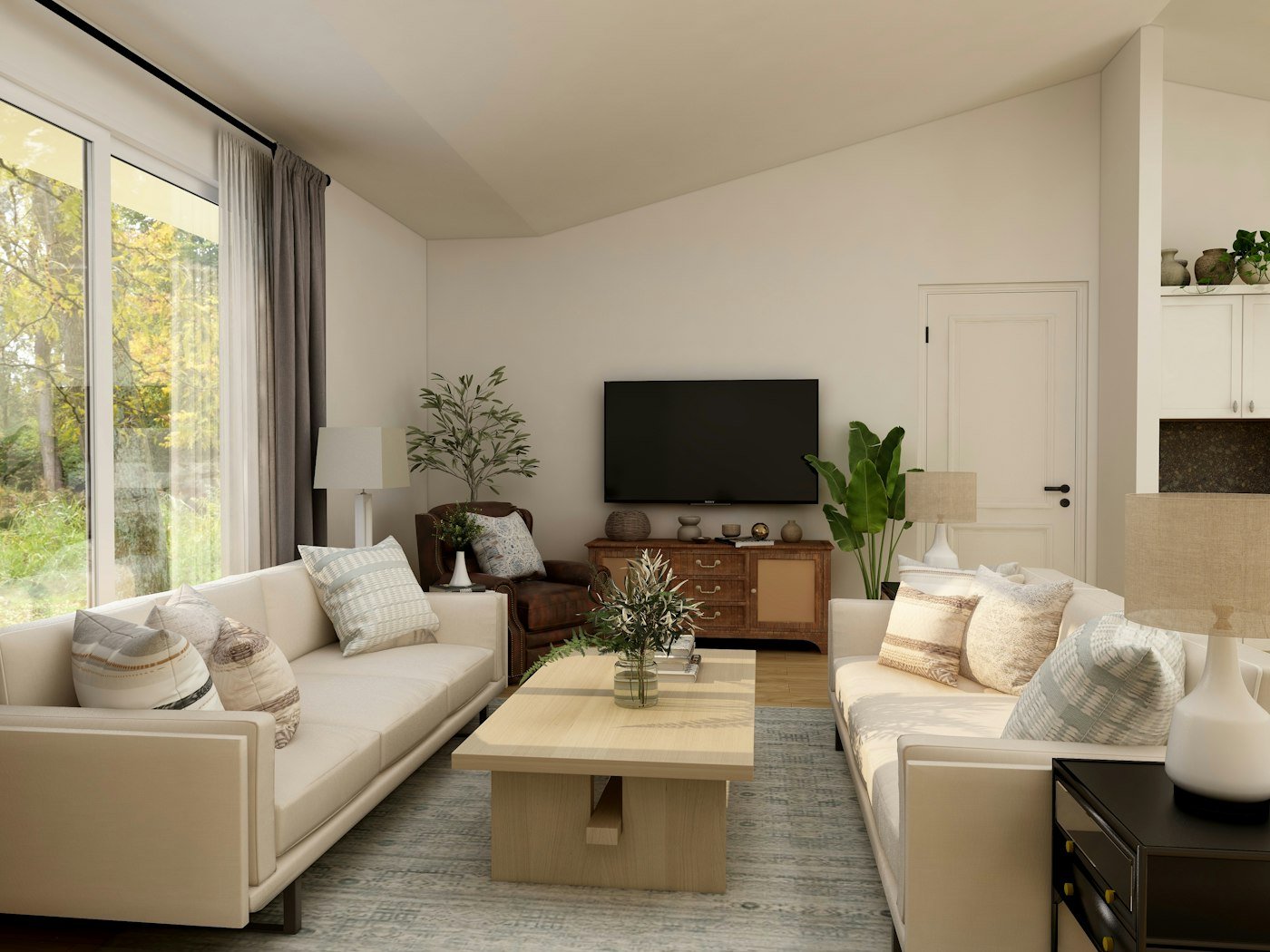
A modern farmhouse living room gets reduced to “shiplap and a barn door” more often than any other style, and that version usually reads as dated within a few years. The rooms that actually hold up lean on warm materials and a restrained palette far more than on any one signature detail.
This guide walks through exactly how to create a modern farmhouse living room step by step, using a handful of consistent choices instead of a long shopping list of “farmhouse” labeled items. The same warm-material, restrained-accent approach carries over directly from a modern farmhouse kitchen, if you’re working on both rooms together.
Why Farmhouse Doesn’t Mean Every Wall Gets Shiplap
The biggest misconception in how to create a modern farmhouse living room is treating shiplap, barn doors and rustic signage as required elements. The style actually leans on something simpler: warm neutrals, real wood tones, and a mix of textures — the rustic details work best used sparingly, as an accent rather than the whole room. The broader farmhouse style it borrows from was always a working, lived-in look, not a themed one.
Step 1: Choose a Warm White or Neutral Base
Start with a warm white, soft greige, or pale oatmeal wall color rather than a stark cool white. This base is what makes every other step of how to create a modern farmhouse living room feel cohesive, since it’s warm enough to pair naturally with wood tones without competing with them.
Step 2: Add One Wood or Shiplap Accent, Not Every Wall
A single accent wall — a plank treatment, a stone or shiplap surround around a fireplace, a wood ceiling beam — reads as intentional. The same treatment on every wall in the room tips into theme-park territory fast, which is exactly the trap that makes an older attempt at how to create a modern farmhouse living room feel dated today.
Step 3: Mix Natural Textures Instead of Matching Them
Linen upholstery, a woven jute rug, a raw wood coffee table, a cotton throw — the goal is variety within the same warm tonal range, not an exact matching set. This textural mixing is one of the details that most separates a genuinely modern farmhouse living room from a purely rustic one.
Step 4: Use Vintage or Vintage-Look Pieces Sparingly
One or two aged or vintage-style pieces — a weathered trunk, an old ladder used as a blanket rack, a reclaimed-wood shelf — add the “collected over time” feeling the style is known for. More than a couple of these in one room, though, and how to create a modern farmhouse living room starts sliding toward costume rather than decor.
Step 5: Layer Black or Bronze Metal Accents
Black window frames, bronze light fixtures, or a single black metal-framed mirror give the warm, soft palette some contrast and keep the room from feeling flat. This is the “modern” half of modern farmhouse, and it’s often the step that dates a room the fastest when it’s skipped entirely.
Applying This in a Rental
Most of how to create a modern farmhouse living room doesn’t require paint or permanent changes. The wood tones and vintage pieces come from furniture, the metal accents are usually lighting or small fixtures rather than built-ins, and even the “accent wall” can come from a large piece of art or a removable wallpaper panel instead of shiplap. A renter can apply the entire look and take it to the next apartment.
Budget Priorities If You Can Only Do a Few Steps
If budget only allows for two or three changes, prioritize the warm base palette (Step 1) and the metal accents (Step 5) first. These bookend the whole look — the base sets the warmth, the accents set the contrast — and the accent wall, textures and vintage pieces can be layered in gradually as budget allows. This staged approach is a practical way to think about how to create a modern farmhouse living room without a full furniture budget upfront.
How This Style Has Changed Over the Past Decade
The earliest wave of modern farmhouse decor leaned heavily on shiplap, barn doors and rustic signage in nearly every room, which is exactly the version that now reads as dated. The current, more durable approach to how to create a modern farmhouse living room pulls back on the signature details and leans harder on material quality — real wood over faux finishes, genuine vintage over mass-produced “farmhouse style” decor. Rooms built this way tend to age better because they’re not tied to a single visual trend.
Common Modern Farmhouse Mistakes to Avoid
- Covering every wall in shiplap or wood paneling. One accent wall reads as intentional; every wall reads as a theme.
- Skipping the black or metal accents. Without contrast, an all-warm-neutral room can start to feel flat rather than cozy.
- Overloading on vintage or “farmhouse sign” decor. A couple of genuine or vintage-look pieces work; a dozen read as costume.
- Going cool-toned instead of warm. A cool white or grey base undercuts the warmth the whole style depends on.
FAQs
What makes a living room “modern farmhouse” instead of just farmhouse? The mix of warm, rustic materials (wood, linen, vintage pieces) with black or bronze metal accents and a more restrained, less cluttered approach than traditional farmhouse style.
Do I need shiplap for a modern farmhouse living room? No — one wood or plank accent wall gets the texture across; full shiplap coverage isn’t necessary and often reads as dated rather than current.
What colors work best in a modern farmhouse living room? Warm white, soft greige and pale oatmeal for the base, with black or bronze used as accent colors rather than a primary tone.
Can I create a modern farmhouse living room without buying new furniture? Often yes — start by editing what you own toward warmer, more textured pieces, then add one accent wall and a few black metal accents before considering new furniture.
Is modern farmhouse style going out of trend? The heaviest, shiplap-everywhere version has faded, but the restrained approach in this guide — warm materials, one accent, metal contrast — is closer to a lasting style than a passing trend.
How do I keep a modern farmhouse living room from feeling dated? Limit rustic signature details (shiplap, barn doors, farmhouse signs) to one accent rather than the whole room, and prioritize real material quality over decor that’s obviously trend-driven.
Choosing Furniture That Fits the Style
Furniture shape matters as much as material in how to create a modern farmhouse living room. Look for slightly rounded or slipcovered sofas over sharply modern lines, turned-leg tables over glass and chrome, and simple woven or leather details over heavily upholstered ornamentation. None of this needs to be bought new — the same principle applies to editing furniture you already own toward slightly softer, more natural-material shapes.
The Bottom Line
Learning how to create a modern farmhouse living room comes down to restraint: one accent wall, one warm neutral base, a few well-chosen vintage pieces, and black or bronze accents for contrast. Skip the instinct to add rustic details everywhere, and the same room reads as current years from now instead of dated within one trend cycle.
Related:
Modern Farmhouse Kitchen Ideas: 14 Rooms That Are Not Cookie-Cutter · 22 Living Room Ideas That Make a Small Space Feel Bigger