Japandi — the blend of Japanese minimalism and Scandinavian warmth — is one of the fastest-growing style searches heading into 2026, largely because it solves a real complaint about minimalism: it can feel cold. These Japandi living room ideas keep the clean lines and uncluttered surfaces minimalism is known for, while adding the natural materials and soft, lived-in warmth that a purely Scandinavian or purely minimalist room can sometimes miss.
The result is a room that photographs as calm but doesn’t feel like a showroom — these Japandi living room ideas are meant to be lived in, not just looked at.
What Makes Japandi Different From Plain Minimalism
Where minimalism often prioritizes emptiness for its own sake, Japandi living room ideas prioritize intention — every piece earns its place, but the room isn’t stripped down to the point of feeling unfinished. The Japanese half brings a respect for craftsmanship and quiet imperfection; the Scandinavian half brings warmth, texture and function.
1. Choose Light, Natural Wood Tones
Pale oak, ash and light bamboo define the furniture in most Japandi living room ideas, replacing the darker walnut tones common in traditional Japanese interiors with something closer to Scandinavian lightness. This lighter wood is what keeps the look feeling airy rather than heavy.
2. Keep the Color Palette Muted and Earthy
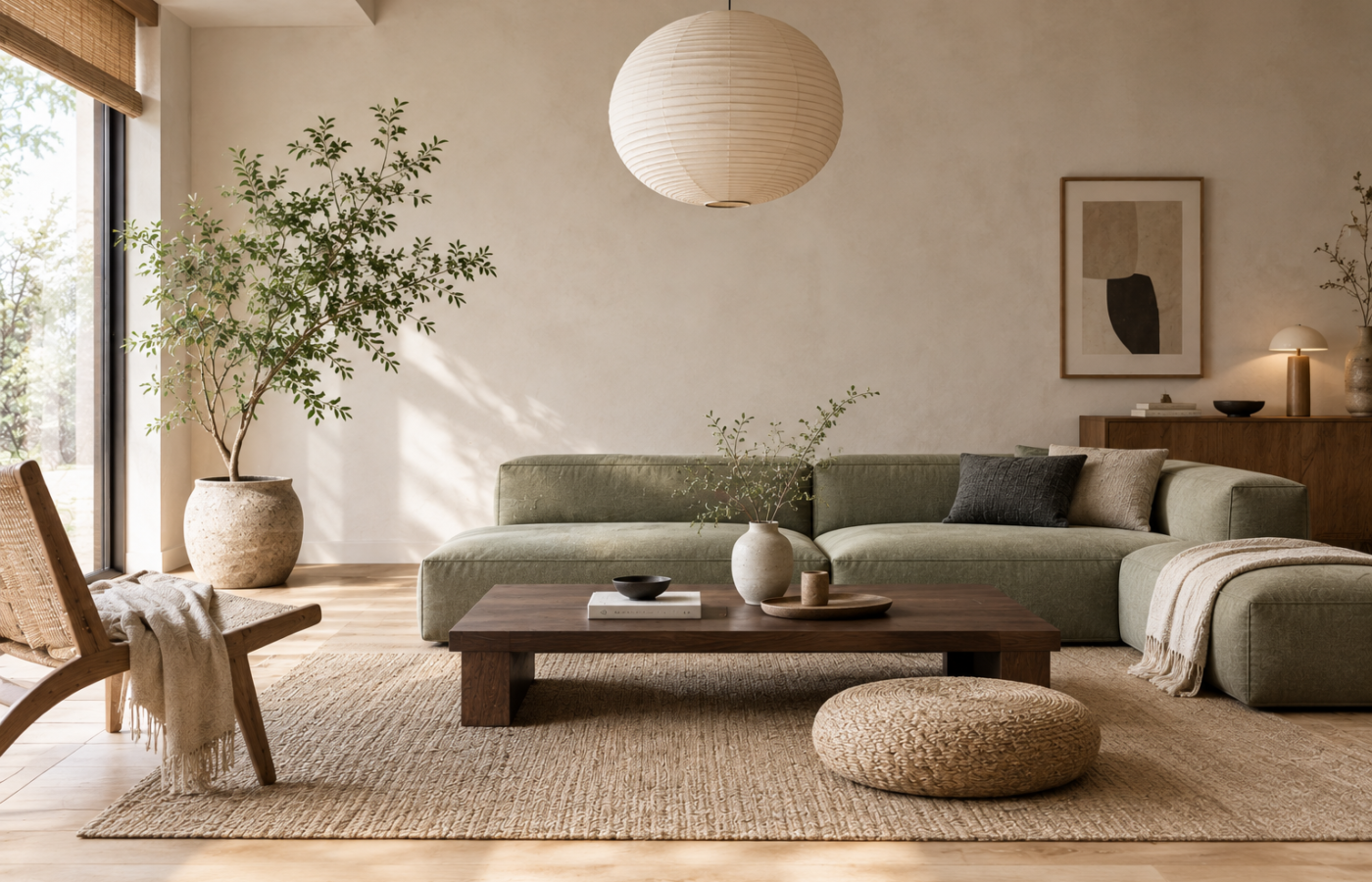
Soft neutrals, warm greige, muted sage and gentle terracotta form the backbone of nearly every successful Japandi living room, avoiding both stark white and anything highly saturated. This restrained palette is one of the most recognizable Japandi living room ideas, since color choice does more to define the look than any single piece of furniture.
3. Add Low-Profile Furniture
Low sofas, floor cushions and low coffee tables reference traditional Japanese seating while staying comfortable and practical for everyday use. Lower furniture also makes a room feel more spacious, which is part of why this is one of the most functional Japandi living room ideas for a smaller space specifically.
4. Embrace Wabi-Sabi Imperfection
A handmade ceramic vase with a slightly uneven glaze, a visibly grained wood surface, or a linen throw with natural texture all bring the Japanese half’s appreciation for imperfection into the room. This is one of the more philosophical Japandi living room ideas, but it’s also what keeps the space from feeling sterile or overly manufactured.
5. Limit Decor to a Few Meaningful Pieces
Rather than filling every surface, the most convincing Japandi living room ideas leave visible negative space around a small number of considered objects — one piece of pottery, one plant, one piece of art — so each item actually gets noticed instead of disappearing into clutter.
6. Layer in Natural Textures
Woven rattan, linen, raw cotton and a jute or wool rug add the tactile warmth that keeps Japandi living room ideas from reading as cold minimalism. Texture is doing a lot of the visual work here, since the color palette itself stays deliberately quiet.
7. Bring in One Living Plant
A single well-placed plant — often something simple like a snake plant or a small potted tree — connects the room to nature in a way that fits both halves of the Japandi aesthetic. It’s one of the lowest-cost Japandi living room ideas and one of the easiest to add to a room that’s otherwise already finished.
Doing This on a Budget
Most Japandi living room ideas don’t require replacing every piece of furniture at once. A pale wood coffee table, a linen throw, and one handmade ceramic piece can shift a room’s feel noticeably without a full furniture budget — the same gradual, piece-by-piece approach that works for a Scandinavian living room applies here too, since both styles share a similar restraint.
Budget Priorities If You Can Only Do a Few
If budget only allows for two or three changes, prioritize a light wood coffee table and a natural-fiber rug first — these two Japandi living room ideas change a room’s character the most for the cost. A ceramic piece, a plant and additional textiles can be added gradually, which actually suits the intentional, considered feeling this style is built around.
Applying This in a Small Apartment
None of these Japandi living room ideas require much square footage — in fact, low-profile furniture and a restrained decor count both work especially well in a small space, where every piece needs to earn its footprint. A single low sofa, one plant, and a light wood side table can establish the look in even a compact room.
Common Mistakes to Avoid
- Going stark white instead of warm neutral. A purely white palette reads as generic minimalism, not Japandi — warmth is half the point.
- Overfilling the room with decor. Japandi living room ideas depend on visible negative space around a few meaningful objects, not a fully styled surface.
- Choosing dark, heavy wood tones. Lighter oak and ash tones keep the look airy; dark walnut can tip the room toward a different, heavier aesthetic.
- Skipping texture entirely. Without linen, rattan or a textured rug, an all-neutral room can feel flat rather than warm.
FAQs
What is Japandi style? A blend of Japanese minimalism and Scandinavian warmth, combining clean lines and intentional decor with natural materials, texture and a muted, earthy color palette.
Is Japandi the same as minimalism? Not exactly — minimalism often prioritizes emptiness, while Japandi living room ideas prioritize warmth and texture alongside a similarly restrained, uncluttered approach.
What colors work best for a Japandi living room? Soft neutrals, warm greige, muted sage and gentle terracotta — avoiding both stark white and highly saturated colors.
Do I need to buy all new furniture for a Japandi look? No — a light wood coffee table, a linen throw and one or two natural-material pieces can shift an existing room toward the style gradually.
Does Japandi work in a small living room? Yes — low-profile furniture and a restrained decor count both suit a small space particularly well, since every piece has room to be noticed rather than crowded.
How much decor should a Japandi living room have? Less than a typical styled room — a few meaningful pieces with visible space around them are more in keeping with the style than a fully decorated surface.
How Japandi Compares to Scandinavian and Minimalist Styles
Japandi living room ideas share the light wood and functional furniture of Scandinavian style, and the restraint and negative space of minimalism, but land somewhere warmer than either on its own — closer to a modern living room in its clean lines, but softer in texture and color than a strictly modern space usually allows.
Lighting That Suits a Japandi Living Room
Soft, warm-toned lighting — a paper or linen pendant shade, a simple wood-based floor lamp — fits the calm, natural feeling behind most Japandi living room ideas far better than bright, cool-toned overhead lighting. Layering a floor lamp and a table lamp instead of relying on one overhead fixture also keeps the room feeling intentional after dark, echoing the same low, grounded furniture the style favors during the day.
Shopping Secondhand for Japandi Pieces
Because the style values visible craftsmanship and natural imperfection over uniform newness, secondhand shops and estate sales are often a genuinely good source for Japandi living room ideas — a worn wooden stool or a handmade ceramic bowl can fit the aesthetic more convincingly than something bought new specifically to look that way. Look for solid wood over veneer, and pieces with visible grain or a slightly uneven, handmade quality.
The Bottom Line
The best Japandi living room ideas combine light natural wood, a muted earthy palette, low-profile furniture and a few meaningful, texture-rich objects rather than a fully decorated room. Built gradually, piece by piece, the result feels calm and intentional without ever tipping into cold or unfinished.
Related:
How to Create a Scandinavian Living Room: 6 Easy Tips · Modern Living Room Decor Tips: 7 Easy Ways on a Budget