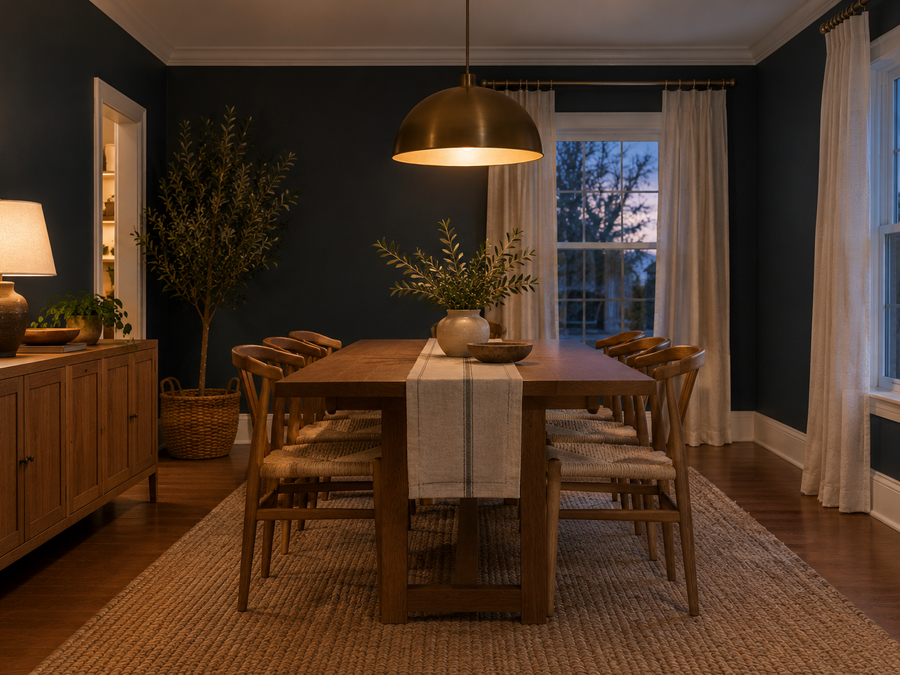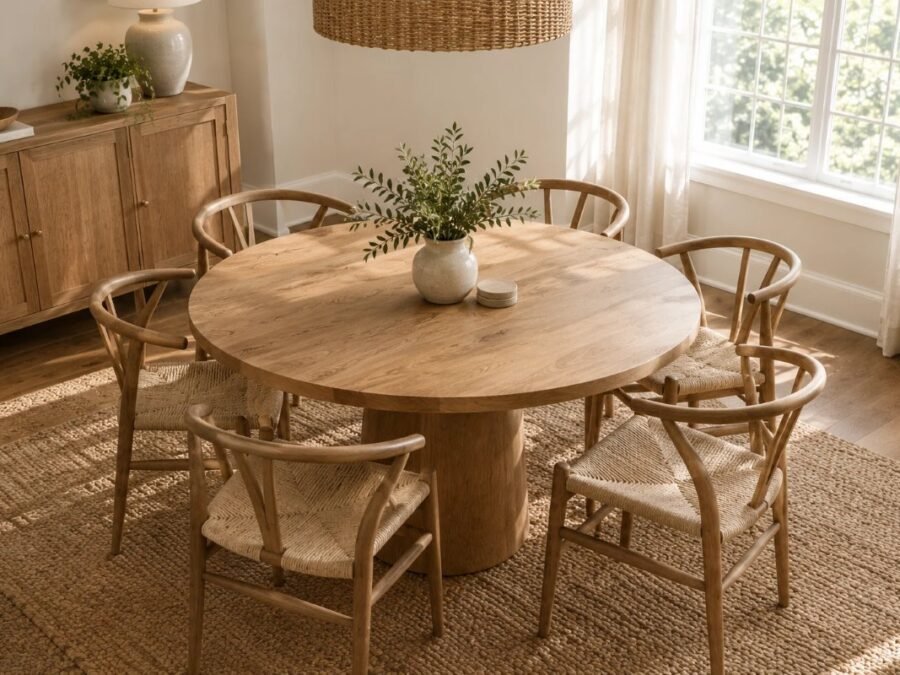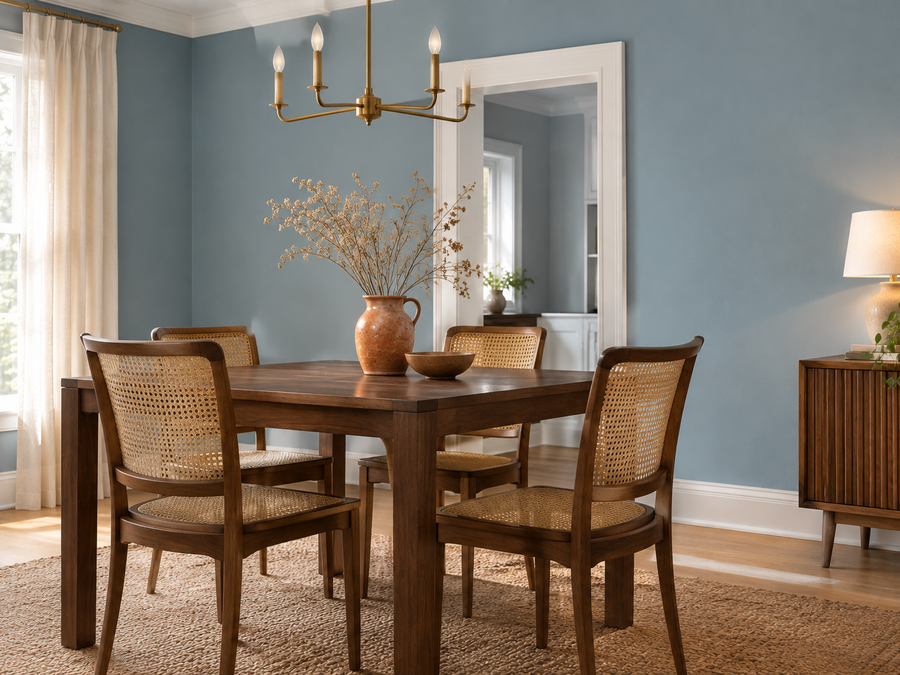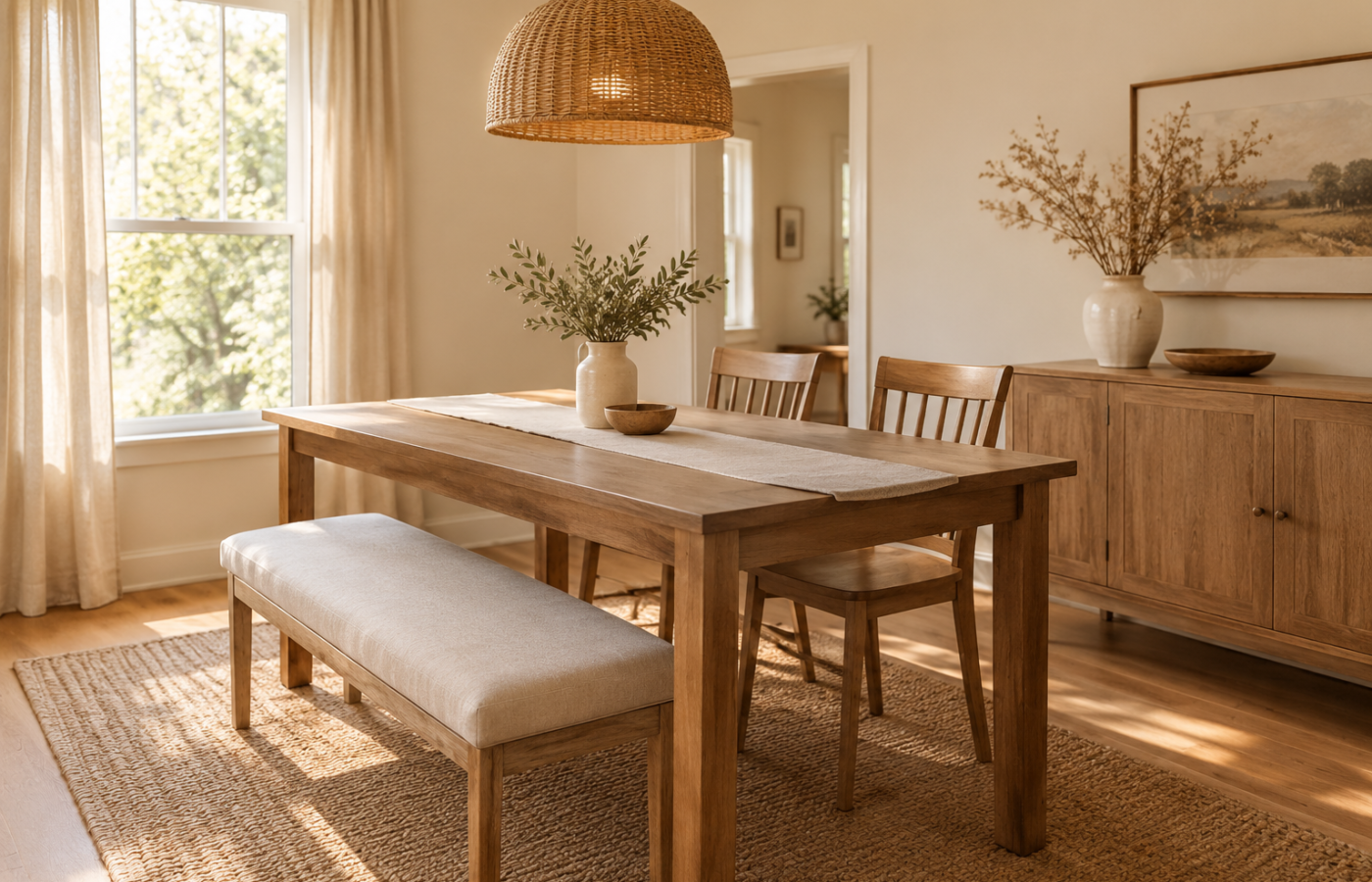
A row of matching dining chairs is the default, but in 2026 more people are swapping some or all of them for something softer. Dining room bench seating, whether it is a simple bench, a loveseat or an upholstered banquette, is showing up in homes of all sizes. It seats more people, tucks in neatly and makes a table feel casual and welcoming.
This guide covers six ways to use dining room bench seating, along with the practical details that decide whether it is comfortable for everyday meals.
Why Dining Rooms Are Changing
Design writers describe 2026 dining rooms as more casual, lived-in and multi-purpose. People use the table for dinner, homework, laptops and long conversations. Dining room bench seating suits that mood, because a continuous seat with a soft back creates a gentler line than a row of separate chairs, and it changes how people sit and talk together.
Way 1: A Simple Bench on One Side
The easiest change is to replace the chairs on one long side of the table with a single bench. It is a small change that seats more people and lets you push the bench under the table when you are not using it. This is the simplest form of dining room bench seating and a good first step.
Way 2: An Upholstered Bench for Comfort
A bench with a padded seat and cushions is far more comfortable for long meals. Choose a durable, cleanable fabric such as a performance weave or a tight-weave cotton blend. Keep the color close to your walls or rug, so the bench feels like part of the room instead of a separate piece.
Way 3: A Banquette Along the Wall
A banquette is a bench built or placed against a wall, often with a padded back. It is a classic choice for a small dining room, because there is no chair to pull out on that side. Put the banquette on the long wall and the table in front of it. If you like the look in a living space, our guide to the living room banquette explains the layout rules.
Way 4: A Loveseat at the Table
Some designers suggest placing a small loveseat along one side of the table instead of chairs. The deep seat and soft back feel more like a lounge than a dining chair, and it is perfect for casual meals. Make sure the seat height suits the table so people are not sitting too low or too high.
Way 5: Mix Benches and Chairs
You do not have to give up chairs entirely. A common layout is a bench on one side and two or three chairs on the other, or a chair at each end. This mixed approach makes dining room bench seating feel intentional and gives some guests a chair with arms.
Way 6: Use Storage Underneath
A bench with a hinged seat or with baskets underneath gives you a place for table linens, board games and extra napkins. In a small dining room, this can replace a sideboard or a shelf. Choose a bench that is easy to open and light enough to move.
Getting the Height and Size Right
A standard dining table is generally about 28 to 30 inches tall, and a bench seat usually sits around 17 to 19 inches from the floor. Leave enough room for knees under the table, and choose a bench that is a few inches narrower than the table so it can tuck in. In a dining room bench seating layout, aim for about 24 inches of width per person.
Choosing the Right Table Shape
Rectangular tables suit benches best, since the long side matches the bench. Round tables can work with a curved banquette. Whatever the shape, leave at least 36 inches between the table edge and the wall or the nearest furniture so people can move behind the bench.
Making It Work in a Small Dining Room
Bench seating is one of the best space-savers for a compact dining area. A bench can slide fully under the table, and a wall banquette removes the need to pull chairs out. For more ways to arrange a compact dining space, see our guide to arranging a small dining room.
Doing This as a Renter
Everything here is portable: benches, loveseats, cushions and baskets need no installation. A wall-mounted banquette is not renter-friendly, but a freestanding bench against a wall gives the same look. Use felt pads on the legs to protect floors.
Budget and Timing
A simple bench can cost anywhere from under $100 to several hundred, while an upholstered bench or a custom banquette costs more. Setting up a bench takes minutes, and a custom banquette takes weeks to plan and build. You can also find good benches secondhand.
Where to Start If This Is Your First Time
Replace the chairs on one side of your table with a bench and see how you and your guests find it. Add a seat cushion for comfort. If it works, you can go further with upholstery or a built-in.
Common Mistakes to Avoid
- Choosing a bench that is too tall or too low. Match the seat height to the table.
- Skipping cushioning. Long meals need comfort.
- Using fabrics that stain easily. Choose performance fabric or something washable.
- Blocking walkways. Leave enough space behind the bench.
FAQs
Is dining room bench seating comfortable? Yes, if the bench is cushioned and at the right height.
How many people fit on a bench? About two people per four feet of bench length, or around 24 inches per person.
Can I mix benches and chairs? Yes, many designers do exactly that.
Is it good for a small dining room? Yes, benches can tuck under the table and save space.
What fabric should I choose? A durable performance fabric or a tight weave that is easy to clean.
Can renters do this? Yes, with a freestanding bench.
Caring for Upholstered Seating
Dining room bench seating takes more spills than a living room sofa, so plan for cleaning. Choose fabric with a tight weave, apply a fabric protector before first use and blot spills right away instead of rubbing. Removable seat covers make washing easy, and a small stain-resistant cushion can be swapped when it wears out. A bench in leather or a wipeable faux leather is another practical option for a busy family.
Bench Seating for Different Households
Families with children often love a bench, since kids can slide in and out and there is room for one more at a party. Couples in a small apartment appreciate the space saved. If anyone at your table has mobility concerns or needs back support, keep at least one chair with arms and a firm back. The best dining room bench seating layouts are flexible, so guests can choose the seat that suits them.
Tools and Basics to Gather
You need a bench or loveseat, a seat cushion, felt pads for the legs and a fabric protector if you are choosing upholstery. A tape measure is helpful for checking seat height and table clearance.
Styling the Table
Keep the table setting simple and warm. A linen runner, a low bowl or vase and candle holders work well. Add a pendant light above the table and a jute rug beneath. Dining room bench seating looks best with natural materials such as wood, linen and woven baskets.
The Bottom Line
Dining room bench seating is an easy, cozy way to update your table for 2026. Start with a simple bench on one side, add cushions, check the height and size, and mix in chairs where you need them. It seats more people, saves space and makes every meal feel a little more relaxed.
Related:
Living Room Banquette: Easy Layout Rules for 2026 · How to Arrange a Small Dining Room: 7 Easy Steps