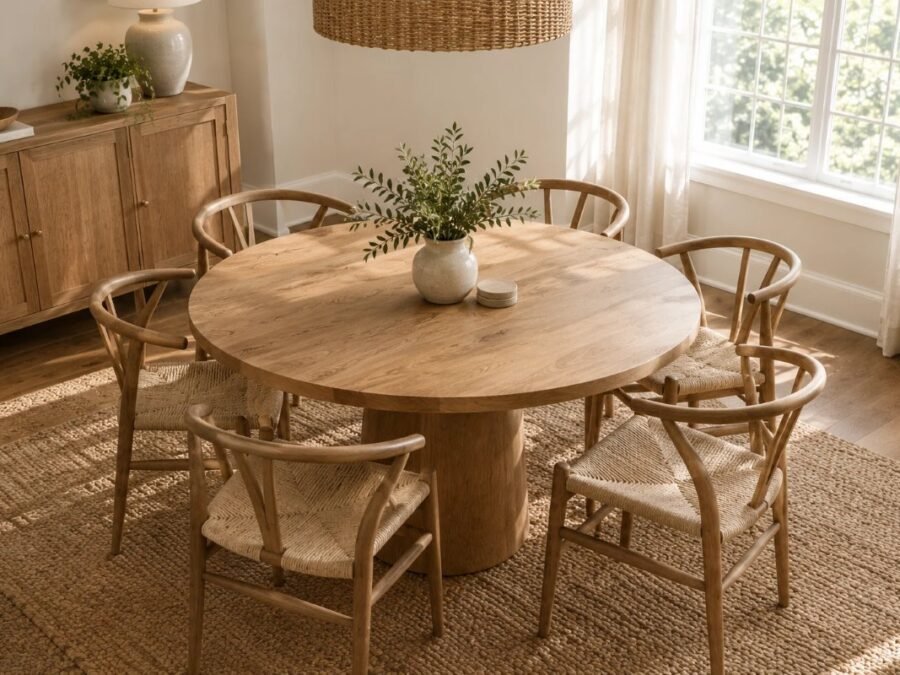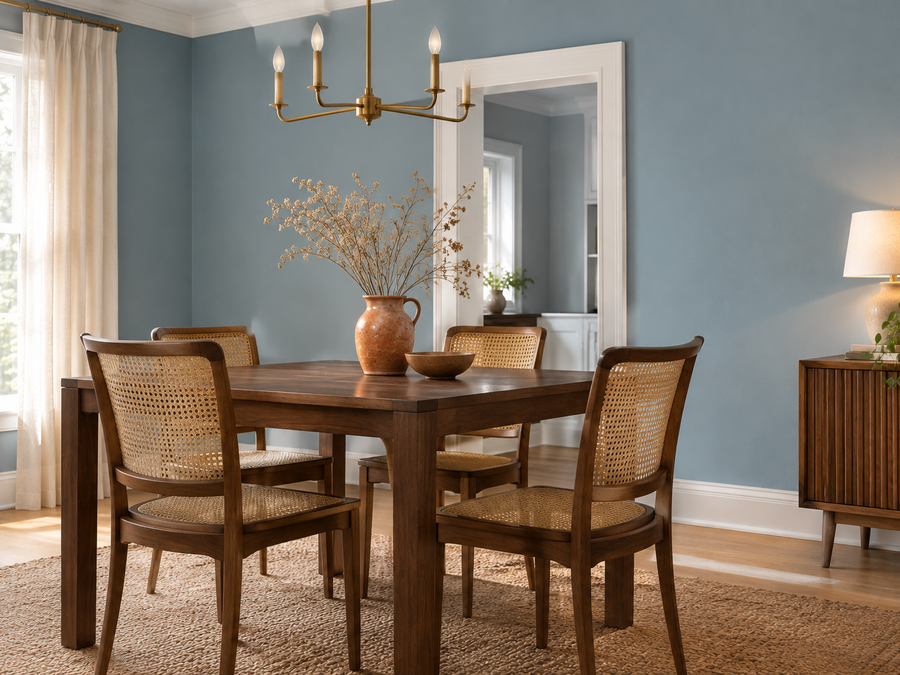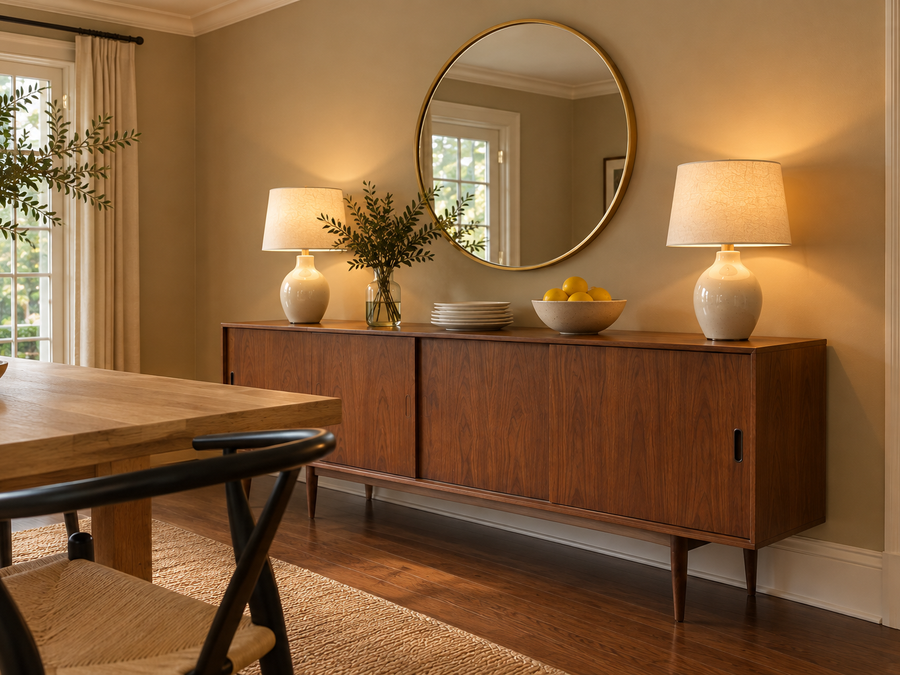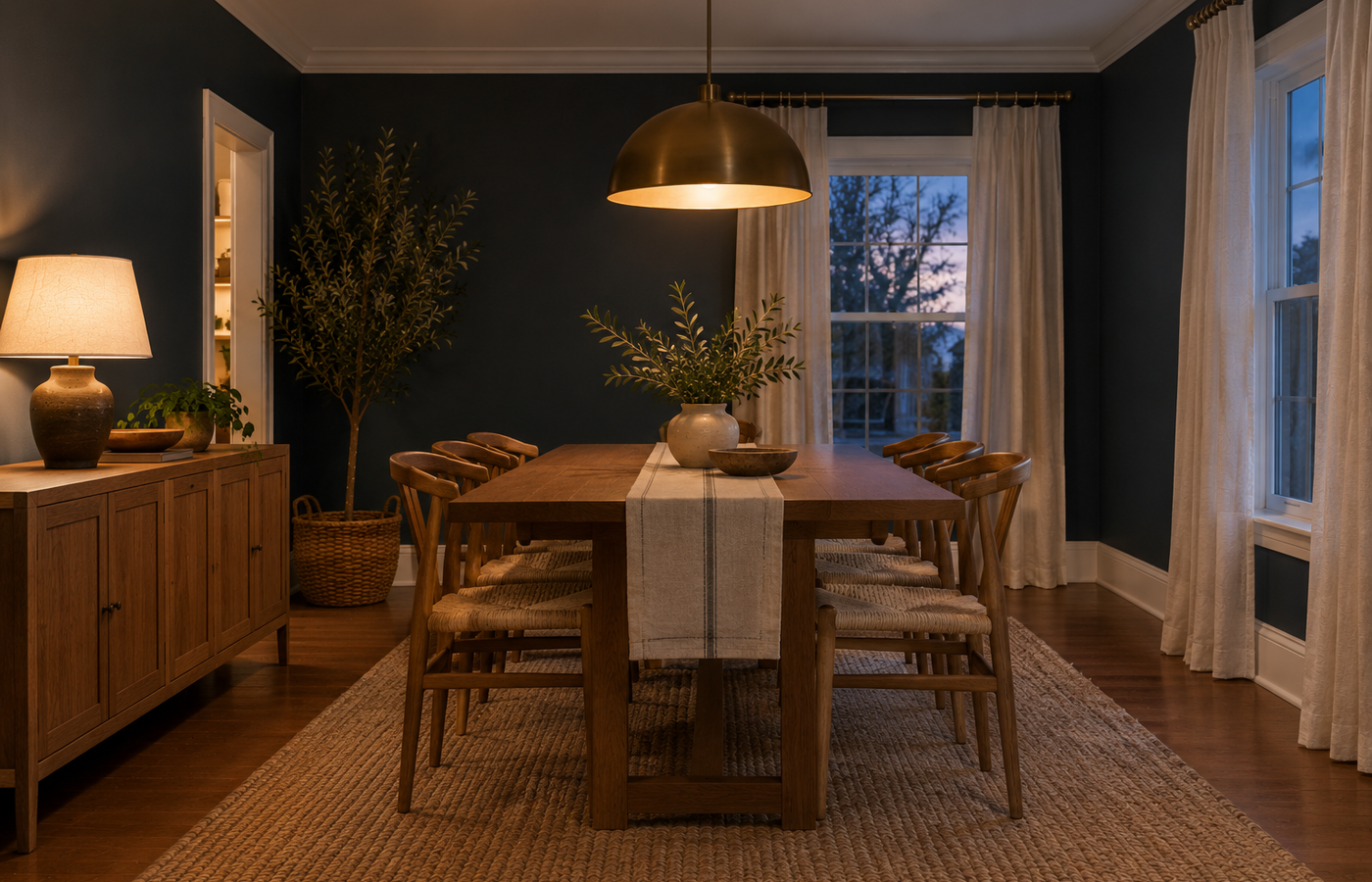
A dining room is used mostly in the evening, under lamps and candles, and that changes which colors work. A pale gray that looks fine at noon can feel flat at dinner, while a deep navy or a warm clay can look beautiful. The best dining room wall color ideas start with the light you will actually use the room in.
This guide gives you six easy palettes, from deep blues and greens to warm greige, with notes on lamps, wood and testing, plus tips for small rooms and renters. The colors and moods come from common paint-brand and palette guidance, and my own styling notes, so test them in your own room.
Quick Answer: Dining Room Wall Color Ideas
- Evening first: choose the color by how it looks under lamps, not at noon.
- Deep colors work: blues, greens, wines and near-black suit evening dining.
- Light walls work too: add depth with art, a stained table or a rug.
- Warm mid-tones: clay, terracotta and warm greige flatter food and candlelight.
- Test: paint large swatches on more than one wall and look at them at night.
Why Evening Light Decides the Color
A dining room is mostly used after dark, when warm bulbs and candles do the work of daylight. Paint guides point out that this lets dining rooms carry deeper, more saturated colors than many living rooms. Good dining room wall color ideas therefore ask one question first: how does this color look at 7 pm with my lamps on? Cool bulbs and cool wall colors together can make food look gray, so keep the light warm.
The 6 Palettes at a Glance
| Palette | Feel (my impression) | Pairs well with |
|---|---|---|
| Deep navy | Classic, glowing at night | Brass, oak, cream |
| Deep green | Natural, calm | Walnut, brass, linen |
| Wine and burgundy | Warm, traditional | Dark wood, gold, ivory |
| Warm greige and clay | Soft, flattering | Walnut, cane, ceramics |
| Terracotta and warm brown | Earthy, welcoming | Rattan, linen, black metal |
| Near-black | Dramatic, graphic | Warm wood, white linen, brass |
Palette 1: Deep Navy
Navy is a classic dining room choice. Palette guides note that a navy room glows at night under warm light. Pair it with brass lighting, an oak or walnut table and cream linen, and keep the trim white or the same navy for a drenched look.
Palette 2: Deep Green
Deep green feels natural and calm, and it looks rich next to wood and brass. Charcoal-green is often paired with brass, which catches candlelight. If your dining room also holds shelves and books, our guide to a dining room library for small homes shows how a deep wall works with shelving.
Palette 3: Wine and Burgundy
Reds, wines and burgundies are the traditional dining room choice, often described as appetite colors that feel warm and inviting under lamps. Pair them with dark wood, gold or brass accents and ivory linens, and keep the lighting warm.
Palette 4: Warm Greige and Clay
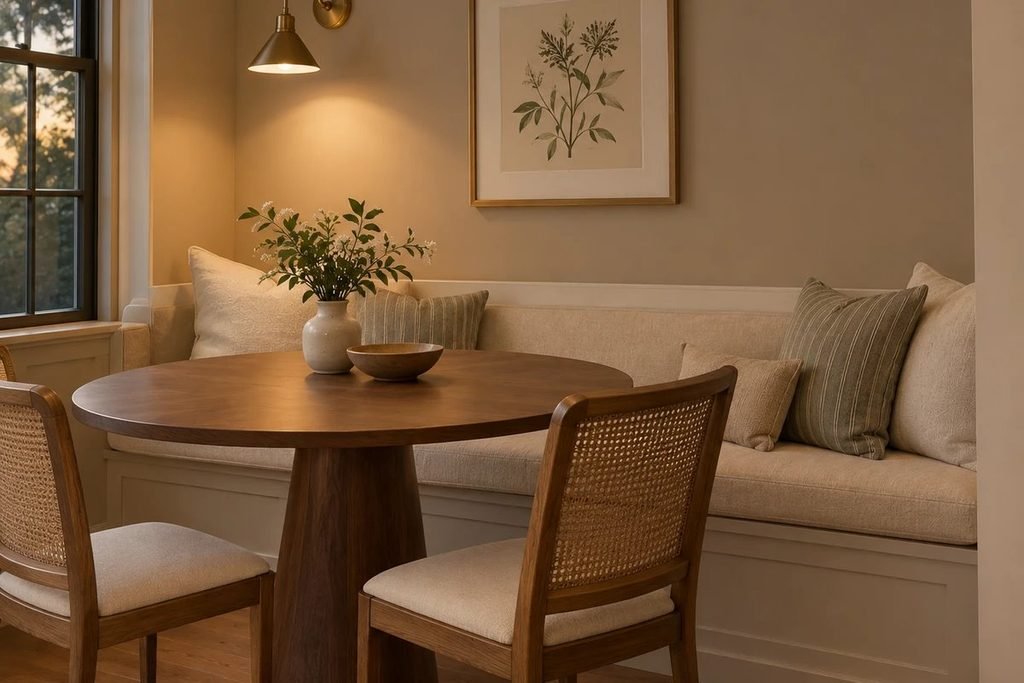
Warm mid-tones such as clay, warm greige and soft brown flatter food, skin and candlelight, and they glow instead of going flat in the evening. They are easier to live with than a deep color and suit rooms with plenty of daylight. Pair them with walnut, cane and ceramics.
Palette 5: Terracotta and Warm Brown
Terracotta and warm brown feel earthy and welcoming. They look best with rattan, linen and black metal, and they suit rooms with a warm wood floor. Test them carefully, since a small shift can turn a terracotta orange or pink.
Palette 6: Near-Black
A near-black wall is dramatic and works well in a room with plenty of lamp light. One palette guide suggests a near-black with a published LRV of about 5 to 10 keeps some depth and forgiveness. Warm black with a brown or charcoal base is easier to live with than a flat black. Add brass, white linen and warm wood so it does not feel cold.
Light Walls and Adding Depth
If you prefer a light dining room, add depth elsewhere: a deep-stained table, bold art, a patterned rug or dark chairs. Without something deep, a pale dining room can look unfinished. A lighter wall also suits a small room or a dining area open to another space.
Matching the Wood
Your table, chairs and floor affect which color looks best, since paint undertones pull out the grain of the wood. Warm woods suit warm walls and deep greens, and cooler woods suit navy and gray-greens. Hold a sample next to your biggest piece of furniture before you choose.
Small Dining Rooms
In a small dining room, a deep color can feel cozy if you commit to it: paint all four walls and the trim, keep furniture light and use warm lamps. A lighter wall keeps the room open. Our guide on how to arrange a small dining room shows layouts that work with any wall color.
Lighting and Lamps
Use warm bulbs, around 2700K, and layer the light: a pendant over the table, a lamp on a sideboard and candles on the table. A dimmer helps. For pendant size and height, see our guide to pendant light size over a dining table. Never leave candles unattended or near curtains.
Painting the Ceiling and Trim
A white ceiling keeps a deep wall from feeling heavy, while painting walls, trim and ceiling the same color gives a seamless, cocooning look. Our guide to color drenching ideas for every room explains how to choose finishes. Use matte or eggshell on walls and a satin on trim.
Doing This as a Renter
Renters can change the mood without painting: deep curtains, a large piece of art, a dark tablecloth, warm lamps and a rug. If you may paint, ask your landlord, choose a color that is easy to cover and keep the paint name for touch-ups.
Budget and Timing
Paint is the cheapest way to change a dining room, and a sample costs far less than repainting. An average dining room takes a weekend, with an extra coat for deep colors. Buy samples first, and prime if you are covering a dark color with a light one.
Where to Start If This Is Your First Time
Paint large sample boards, at least about two feet wide, and put them on more than one wall. Look at them at night with your lamps on, then in the morning. If one still looks good at dinner time, it is probably the one. Using this approach, the best of the dining room wall color ideas for your home will become clear.
Safety and Ventilation
Open windows while painting, follow the label directions on the can and keep candles away from fabric and paper. Use a stable ladder when you cut in near the ceiling.
Quick Recap
Choose by evening light, test large swatches at night, keep bulbs warm and match the color to your wood. The best dining room wall color ideas are the ones that look good at dinner time.
How to Choose in 3 Steps
First, decide how you use the room: daily meals, family dinners or occasional entertaining. Second, check the daylight and the lamps, since a north-facing room and a sunny room need different colors. Third, hold samples next to your table and floor. Following these three steps turns the dining room wall color ideas above into one clear choice.
Real-Room Examples
A small, windowless dining nook can take a deep green or navy and feel like a jewel box. A bright dining room open to the kitchen may suit warm greige or a soft clay so the two spaces flow together. A formal room with a dark wood table can handle wine or deep blue. Whichever of the dining room wall color ideas you pick, keep the trim and ceiling consistent.
Matching the Rest of the Home
If your living room is light, the dining room can go one step deeper for a more intimate feel. If the rooms are open to each other, choose colors in the same family so the home feels connected. Good dining room wall color ideas respect the rooms around them.
Common Mistakes to Avoid
- Choosing the color at noon. Test it at night.
- Using cool bulbs with cool walls. Food can look gray.
- Skipping a sample. Deep colors look darker on a full wall.
- Ignoring the wood. Check undertones against your table.
FAQs
What color is best for a dining room? Deep blues and greens, wines and warm mid-tones all work well.
Should a dining room be dark? It can be, since it is used in the evening.
Can I use a light color? Yes, if you add depth with art, wood or a rug.
What bulbs suit a dining room? Warm bulbs around 2700K.
How do I test a color? Paint big swatches and look at them at night.
Should the ceiling match the walls? It can for a drenched look, or be white.
Tools and Basics to Gather
Large paint samples or sample boards, painter’s tape, drop cloths, an angled brush, a roller, a tray, a stepladder and a primer for deep colors. Keep windows open and follow the safety directions on the can.
The Bottom Line
The best dining room wall color ideas start with evening light: deep navy, green, wine or warm clay for a glowing room, or warm greige with some depth elsewhere. Test big swatches at night, keep your bulbs warm and match the color to your wood. Done that way, your dining room will look its best when the room is actually used.
Related:
How to Arrange a Small Dining Room · Dining Room Library for Small Homes