Banquettes have lived in kitchens and dining nooks for decades, but for 2026 designers are bringing them into the living room. A living room banquette is a long, bench-style seat, often built along a wall, with cushions and back support. It is a very different idea from the standard sofa-and-two-chairs arrangement, and it suits how many people actually use their living rooms: talking, hosting and sitting close.
This guide covers what a living room banquette is, where it works best and the layout rules that keep it comfortable instead of stiff.
Why Banquettes Are Moving Into Living Rooms
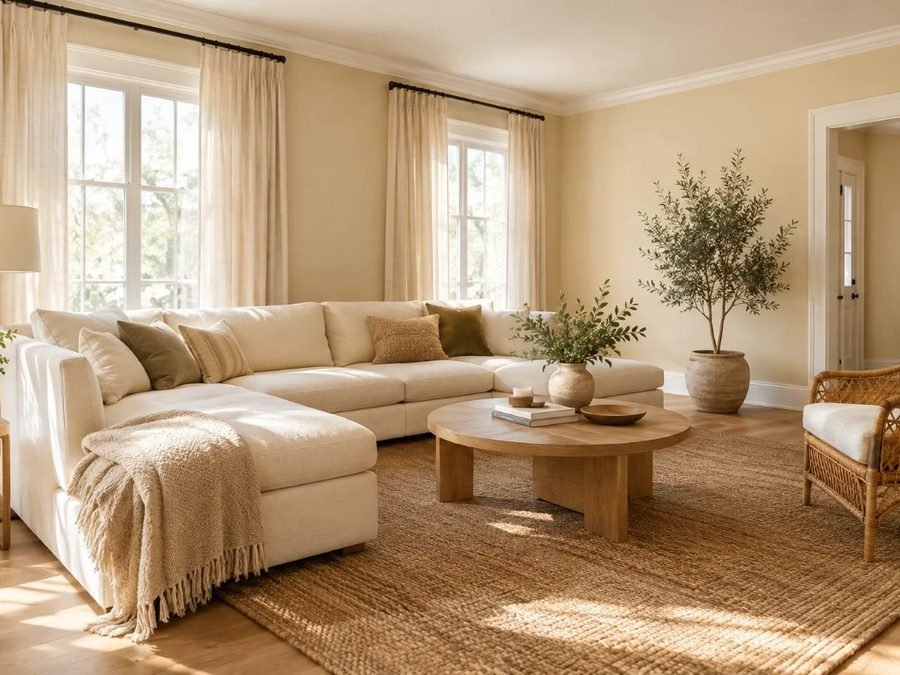
Trend reports for 2026 describe a return to old-school room layouts, such as extra-long sofas, more than one seating area in a room and even a conversation pit. The idea behind all of them is the same: seating that faces people, not just a television. A living room banquette fits that mood because a long bench seats more people in less floor space than several separate chairs.
The look is not new. The conversation pit of the mid-century era was built around the same social idea, and a banquette brings a lighter, easier version of it into an ordinary room.
What Exactly Is a Living Room Banquette?
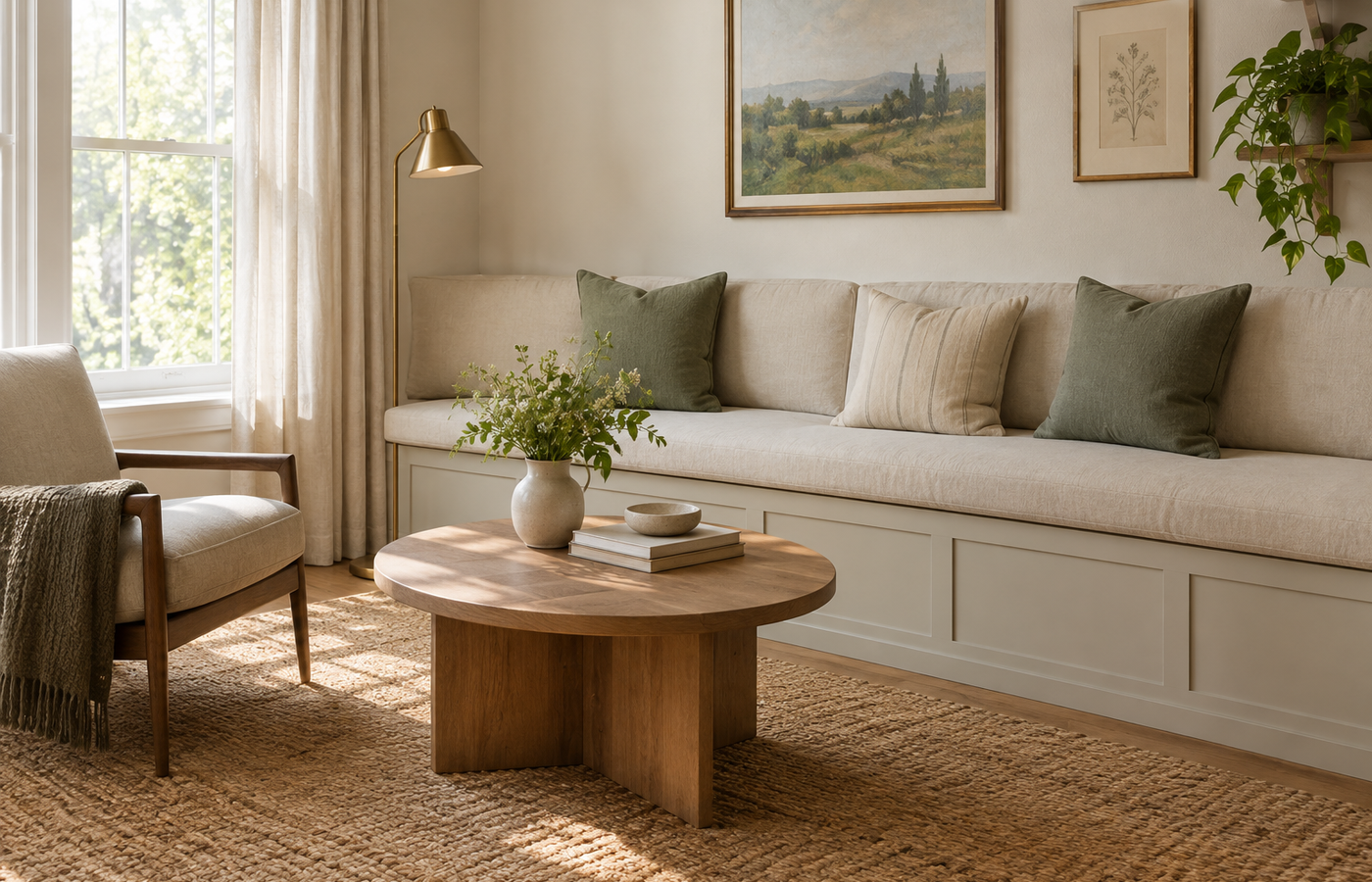
A banquette is a bench-style seat, usually fixed along a wall, with a cushion and often a padded or upright back. In a living room it can be a custom built-in, a long freestanding bench with wall cushions, an L-shaped corner seat or a deep window seat. The key difference from a sofa is that it is designed to sit flush to a wall and to seat people in a row, so it saves space and encourages people to face each other.
Rule 1: Put It Along the Longest Wall
A living room banquette works best against your longest uninterrupted wall. That wall gives you the most seating length and leaves the middle of the room open for a coffee table and walkways. If the room has a window on that wall, a banquette under it turns into a window seat and makes the space feel bigger.
Rule 2: Get the Seat Height and Depth Right
Comfort comes down to proportion. As a general guide, a seat height of around 17 to 19 inches feels natural, and a depth of roughly 20 to 24 inches works for upright sitting. Go deeper if you want a lounging seat, and add loose cushions so people can lean back. A living room banquette that is too shallow or too hard is the number one reason people stop using them.
Rule 3: Layer Cushions, Not Just One Pad
A single flat cushion looks like a bench in a cafe. Add a thicker seat cushion, two or three back cushions and a throw to make it feel like living room seating. Choose durable, cleanable fabric such as a performance linen or a tight-weave cotton blend, especially if the seat will be used every day.
Rule 4: Pair It With a Round or Oval Table
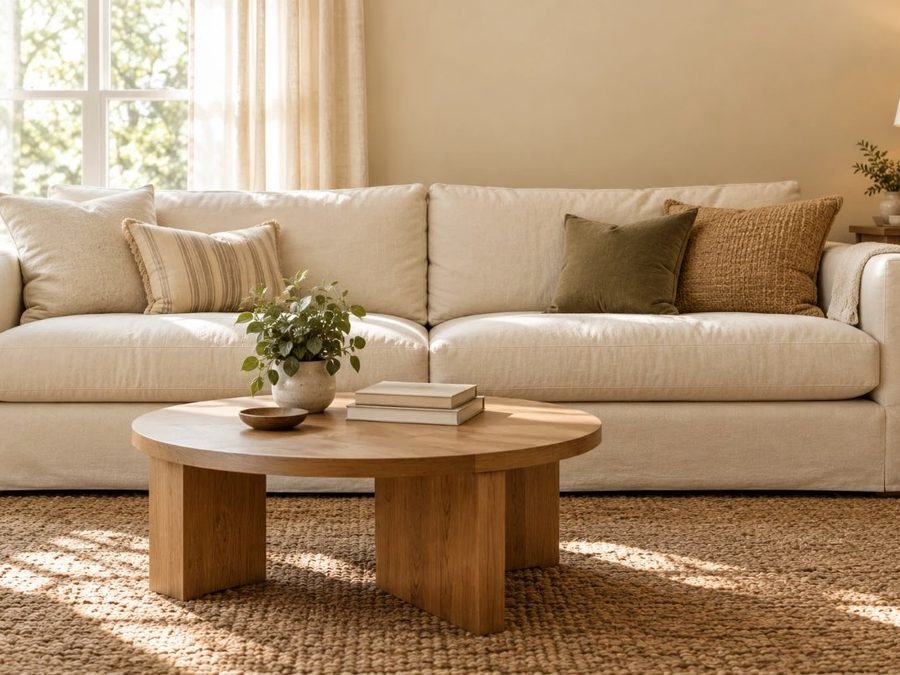
A round coffee table works better than a rectangular one in front of a banquette, because people slide along a bench and a round shape has no sharp corners to hit. If you like older pieces, a worn wood table looks lovely here. Our guide to vintage wood coffee tables shows how to choose and style one.
Rule 5: Add Side Seating for Flexibility
A banquette seats a row of people, but it does not let anyone face the person at the end. Add one or two armchairs or stools on the open side so the group can form a loose circle. This mix of bench and chairs gives a living room banquette the feel of a real conversation area.
Rule 6: Light It From the Side
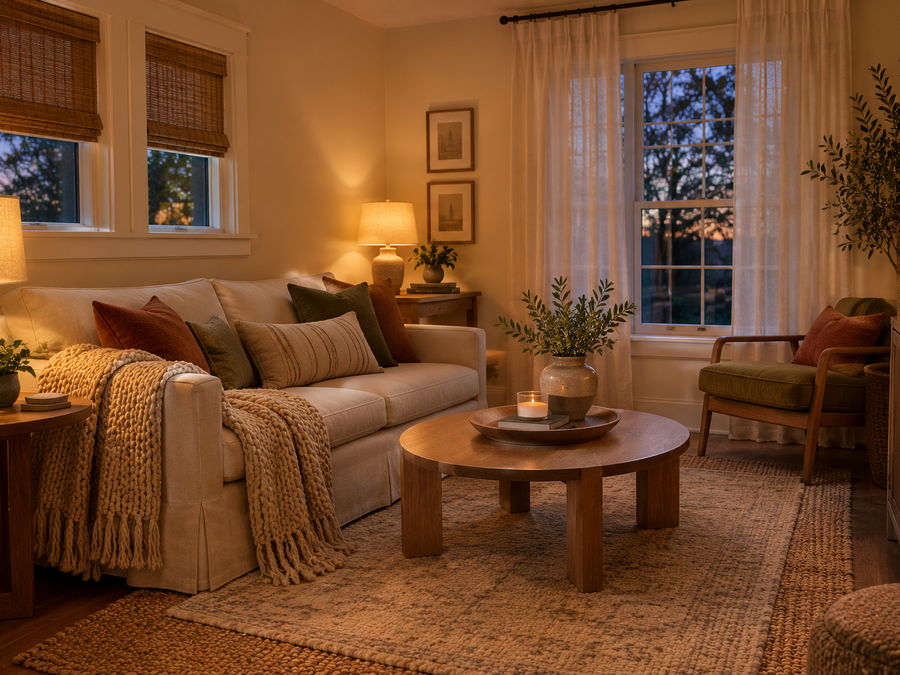
A banquette sits against a wall, so overhead lighting alone can leave the seating in a shadow. Add a wall sconce or a floor lamp at one end and a table lamp on the side table. Warm bulbs, generally 2700K to 3000K, make the bench look inviting in the evening.
Rule 7: Use It for Storage Where You Can
A built-in banquette can hide drawers or lift-up seats for blankets, board games and books. This makes it a smart choice in a small space. If the design is freestanding, choose a bench with a storage base or place baskets underneath.
Making It Work in a Small Living Room
A living room banquette is one of the best space-savers because it replaces bulky armchairs and a large sofa. Our guide to small living rooms covers other ways to make a compact room feel bigger, and a banquette fits neatly into that approach. Keep the upholstery light and the frame slim so the bench does not dominate the room.
Doing This as a Renter
A built-in banquette is usually not an option, but you can get a similar look with a long, low freestanding bench, an armless sofa pushed against a wall, or a set of floor cushions on a platform. Add wall cushions and a throw so it looks intentional. Everything can move with you.
Budget and Timing
A custom built-in can cost a few thousand dollars, while a freestanding bench with cushions can start much lower. A simple version made from a bench and cushions can be set up in an afternoon. If you want a built-in, plan a few weeks for design and building.
Where to Start If This Is Your First Time
Try a freestanding bench along one wall with two or three cushions before committing to a built-in. Live with it for a month to see whether you and your guests use it. If it works, upgrade to a custom piece later.
Common Mistakes to Avoid
- Making the seat too shallow or hard. Add cushions and check the depth.
- Forgetting the back support. People need something to lean against for longer sitting.
- Using a sharp-cornered coffee table. A round table is kinder and easier to reach.
- Ignoring lighting. A wall seat needs its own light.
FAQs
What is a living room banquette? A long, bench-style seat, often built along a wall, with cushions and back support.
Is a banquette comfortable enough for a living room? Yes, if the seat depth is right and you add layered cushions and back support.
Can I have a banquette in a small living room? Yes, it often saves space compared with a sofa and armchairs.
Can renters do this? Yes, with a freestanding bench or an armless sofa and wall cushions.
How many people can it seat? It depends on length, but a bench of around six to seven feet seats three to four comfortably.
Should I still have a sofa? You can replace the sofa with a banquette, or use both in a larger room.
Tools and Basics to Gather
For a simple freestanding version you need a sturdy bench, a seat cushion, two or three back cushions, a throw and a good floor lamp. For a built-in, you will want a carpenter or a well-planned flat-pack unit and a fabric that suits daily use.
Styling a Living Room Banquette
Keep the fabric calm and the pillows varied in texture. Cream, oatmeal or sage upholstery suits most rooms. Add a wood side table, a plant and a lamp, and hang art or a mirror above the seat. A living room banquette looks best when it feels like a cozy corner, not a formal piece.
The Bottom Line
A living room banquette is a social, space-saving seat that suits the way people use their homes in 2026. Place it along the longest wall, get the seat depth and cushions right, add a round table and side seating, and light it well. Try a freestanding version first, and you will soon know whether it belongs in your home.
Related:
Vintage Wood Coffee Table Ideas That Are Genuinely Easy · 22 Living Room Ideas That Make a Small Space Feel Bigger