Every year the paint brands announce a color, and every year most people ignore it. Benjamin Moore Silhouette is harder to ignore. It is a deep, warm brown that has already started showing up in living rooms, offices and dining rooms, and it is a big change from the cool grays and bright whites of recent years.
If a color that dark feels risky, you are not alone. This guide explains what Benjamin Moore Silhouette actually looks like, what to pair it with and how to use it without making a home feel like a cave.
What Is Benjamin Moore Silhouette?
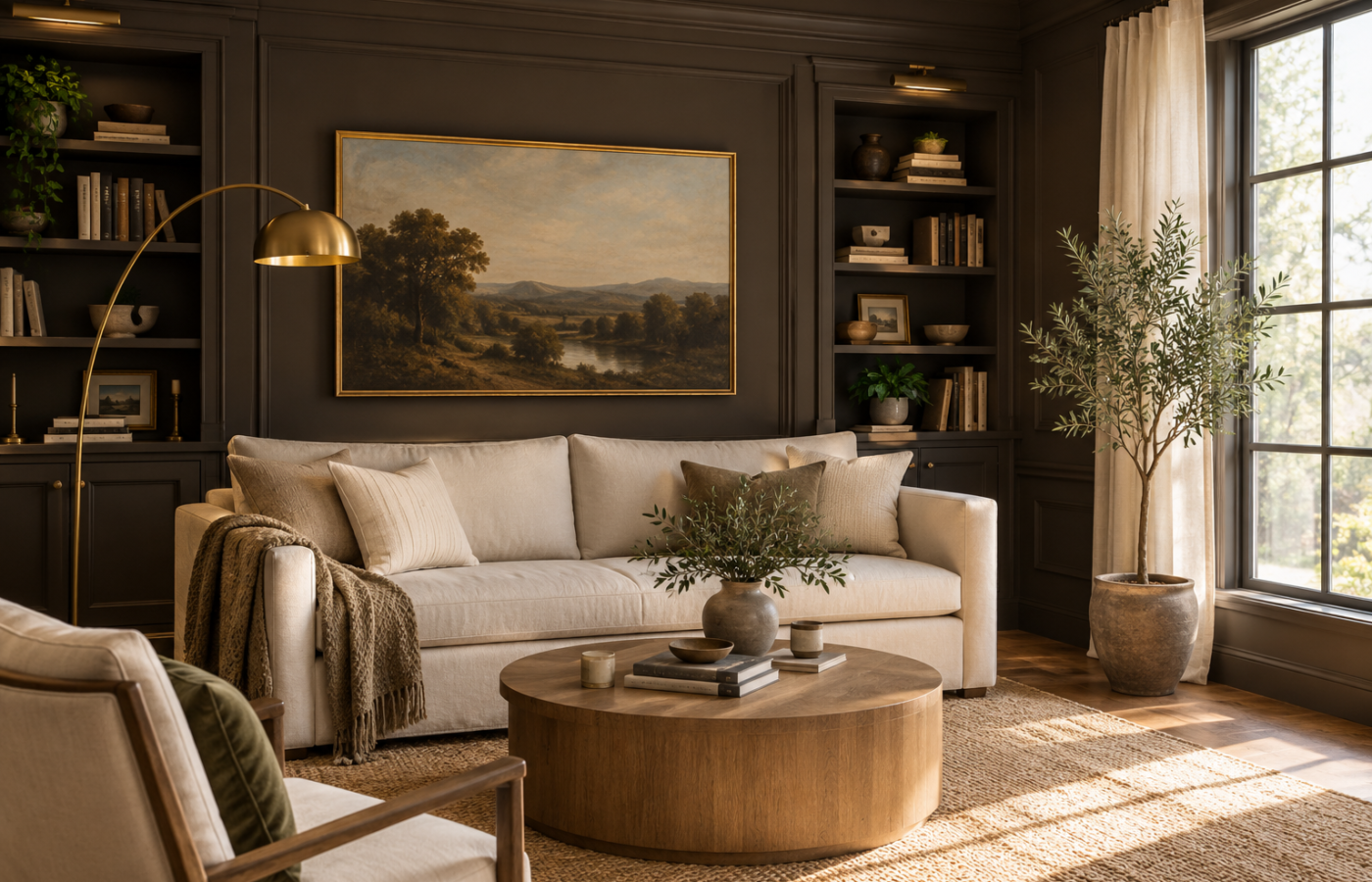
Benjamin Moore Silhouette (AF-655) was named the brand’s Color of the Year for 2026. It is a rich brown that sits close to dark espresso, with soft charcoal and hints of violet in the undertone, which keeps it from looking flat or muddy. It is not a gray and it is not a greige, so it behaves very differently from the neutrals most people are used to.
You can see the official swatch on the Benjamin Moore Silhouette page, but always test it in your own room before buying a full gallon.
How Dark Is It?
The light reflectance value, or LRV, of Benjamin Moore Silhouette is around 10 on a scale where 0 is black and 100 is white. That makes it a very dark color that absorbs most of the light in a room. It creates a cozy, intimate mood, but it also means lighting matters more than usual.
Where Benjamin Moore Silhouette Works Best
Because it is so deep, Benjamin Moore Silhouette works best where you want a room to feel wrapped and calm. Living rooms, dining rooms, home offices, reading nooks and bedrooms are all natural fits. It is also very good on built-in shelves and a single accent wall, where it makes cream objects and books stand out.
Pair It With Soft Whites and Warm Neutrals
Benjamin Moore suggests pairing Silhouette with soft whites such as Chantilly Lace or Simply White for a crisp look, or with warm beiges like Edgecomb Gray and Ballet White for a softer, more cohesive feel. For a bolder contrast you can add a deep blue such as Hale Navy. These pairings help Benjamin Moore Silhouette feel intentional rather than heavy.
Use Warm Wood and Brass to Keep It Cozy
Dark brown looks best with warm materials. Light oak, walnut, rattan, brass lamps and linen or wool textiles bring in warmth and texture. The same natural-wood approach shows up in a Japandi living room, and it works just as well with a darker wall color.
Get the Light Right
Very dark colors do best in rooms with plenty of natural light, or with good layered lighting. Add table lamps and a floor lamp instead of relying on one overhead fixture, and use warm bulbs. A slightly glossier finish can bounce a little more light around, while matte gives a softer, velvety look.
Try It on One Wall First
If you are unsure, start with a single accent wall behind a sofa or bed. Use the same prep and taping steps covered in these accent wall painting tips and live with it for a couple of weeks before painting more of the room.
Or Go All In With Color Drenching
For a dramatic, cocoon-like effect, some people paint the walls, trim and even the ceiling in the same color. Benjamin Moore Silhouette is a strong choice for this, and our guide to color drenching explains how to keep it looking intentional instead of flat.
Doing This as a Renter
If your lease allows painting, a dark color usually needs extra coats and primer to cover later, so ask first and budget for repainting when you move out. If painting is not allowed, bring the same feel in through a dark rug, curtains, a large piece of art or a peel-and-stick wall covering.
Budget and Timing
A gallon of premium paint usually costs somewhere from $60 to $90, and a single accent wall in a small room often needs less than a gallon. Dark colors typically need two coats, so plan for a full weekend including drying time. Buying sample pots first is a small cost that can save you from repainting.
Where to Start If This Is Your First Time
Pick a small, low-stakes space like a home office wall, a powder room or the back of a bookshelf. Paint a large sample board and move it around the room at different times of day. That way you can judge how Benjamin Moore Silhouette looks in morning light, evening light and lamplight before committing.
Common Mistakes to Avoid
- Skipping samples. Dark colors shift a lot with light, so always test in your own room.
- Using cold, bright lighting. Cool white bulbs can make deep brown look flat and harsh.
- Painting a dark color in a very small, windowless room without a plan. Add lighting and lighter accents, or choose a different room.
- Forgetting contrast. Pair it with cream, wood and brass so the room does not feel heavy.
FAQs
What color is Benjamin Moore Silhouette? It is a deep, warm brown close to espresso, with charcoal and slight violet undertones.
Is Benjamin Moore Silhouette too dark for a small room? It can work in a small room if there is good light and lighter accents, and it can be especially cozy in an office or bedroom.
What trim color goes with Benjamin Moore Silhouette? Warm whites like Simply White or Chantilly Lace are popular, and some people prefer painting the trim the same color for a drenched look.
Is it a good color for a living room? Yes, especially with cream furniture, warm wood and layered lighting.
Does it work with a matte finish? Yes, matte gives a soft, velvety look, while a slightly glossier finish reflects a little more light.
Can I use it in a rental? Only if your lease allows painting. Otherwise, bring the color in through textiles and decor.
How It Compares to Other 2026 Colors of the Year
Other brands picked very different colors for 2026. Pantone chose Cloud Dancer, a soft, billowy white. Sherwin-Williams picked Universal Khaki, a warm earthy neutral, and Behr chose Hidden Gem, a smoky jade green. Benjamin Moore Silhouette is the darkest and most dramatic of the group, but the choices share a theme: warmer, earthier, more grounded colors instead of cool grays. If Silhouette feels like too much, Universal Khaki gives a similar warm mood with far more light.
Tools Worth Having Before You Start
Get a good primer, quality painter’s tape, an angled brush for edges, a roller with a medium nap and plenty of drop cloths. A tinted primer can help dark colors cover more evenly, and a large sample board makes it easier to test the color around the room.
Styling Tips for a Dark Brown Room
Once the wall is painted, keep the styling simple. Choose cream or oatmeal upholstery, a light wool rug and a few pieces of art with wide mats. Add greenery to bring in freshness, and repeat a warm metal like brass two or three times so the room feels pulled together. Benjamin Moore Silhouette looks best when everything around it feels a little softer.
The Bottom Line
Benjamin Moore Silhouette is dark, but it is also warm and forgiving when used well. Test it on a large sample, get the lighting right and balance it with cream, wood and brass, and it can make a room feel calm and finished.
Related:
Color Drenching Ideas for 2026: Easy Techniques That Work · Accent Wall Painting Tips: 5 Easy Moves for a Clean Finish