One wall can change a whole room, but which finish should you use? The wallpaper vs paint accent wall question comes down to five checks: cost, durability, look, removal and how well it suits a rental.
This guide compares them on those five checks, with notes on peel-and-stick, surfaces and testing. Most of the cost guides I found come from sellers, so the numbers are rough examples and I flag where sources disagree.
Quick Answer: Wallpaper vs Paint Accent Wall
- Cost: paint is usually cheaper for one wall; one table lists about $50 to $80 for paint and $120 to $250 for peel-and-stick.
- Durability: traditional wallpaper is said to last longer; peel-and-stick estimates range from about 1 to 7 years.
- Look: paint gives a solid color; wallpaper gives pattern and texture.
- Removal: paint is repainted; peel-and-stick removes cleanly from smooth walls; traditional wallpaper takes more work.
- Easy pick: paint for a quick, low-cost color; peel-and-stick for pattern in a rental.
What Each Option Is
An accent wall is one wall treated differently from the rest of the room. Wallpaper is a printed or textured covering that is pasted or stuck to the wall, and peel-and-stick is a self-adhesive version that you can remove more easily. Paint is a coat of color that you roll or brush on. In the wallpaper vs paint accent wall decision, the key differences are pattern, cost and how easily you can undo it.
The 5 Checks at a Glance
| Check | Paint | Peel-and-stick wallpaper | Traditional wallpaper |
|---|---|---|---|
| Cost for one wall | Lowest, about $50 to $80 in one table | About $50 to $250 | Higher, plus installation |
| Durability | Easy to refresh | About 1 to 7 years, varies | Said to last longer |
| Look | Solid color | Pattern, texture | Pattern, texture |
| Removal | Repaint over | Peels off smooth walls | Takes effort |
| Renter fit | Needs permission | Usually the best fit | Rarely allowed |
Check 1: Cost
Paint is usually the cheaper way to make one wall stand out. One comparison table lists a painted accent wall at about $50 to $80 and peel-and-stick at about $120 to $250, while another estimates a 10 by 10 foot peel-and-stick wall at about $50 to $200 in materials. Traditional wallpaper costs more once installation is included; one estimate for a whole room is about $800 to $1,200 for wallpaper versus about $320 to $500 for paint. These are examples from sellers, so get your own quotes.
Check 2: Durability
Estimates for peel-and-stick vary widely, from about 1 to 3 years, with lifting edges, up to 2 to 7 years, and budget brands may last only 12 to 18 months while premium brands last 5 years or more. Traditional wallpaper is said to last longer than paint, though the figures I found were from sellers. Paint is easy to touch up or refresh by repainting. The wallpaper vs paint accent wall choice often depends on how long you plan to stay.
Check 3: Look and Style
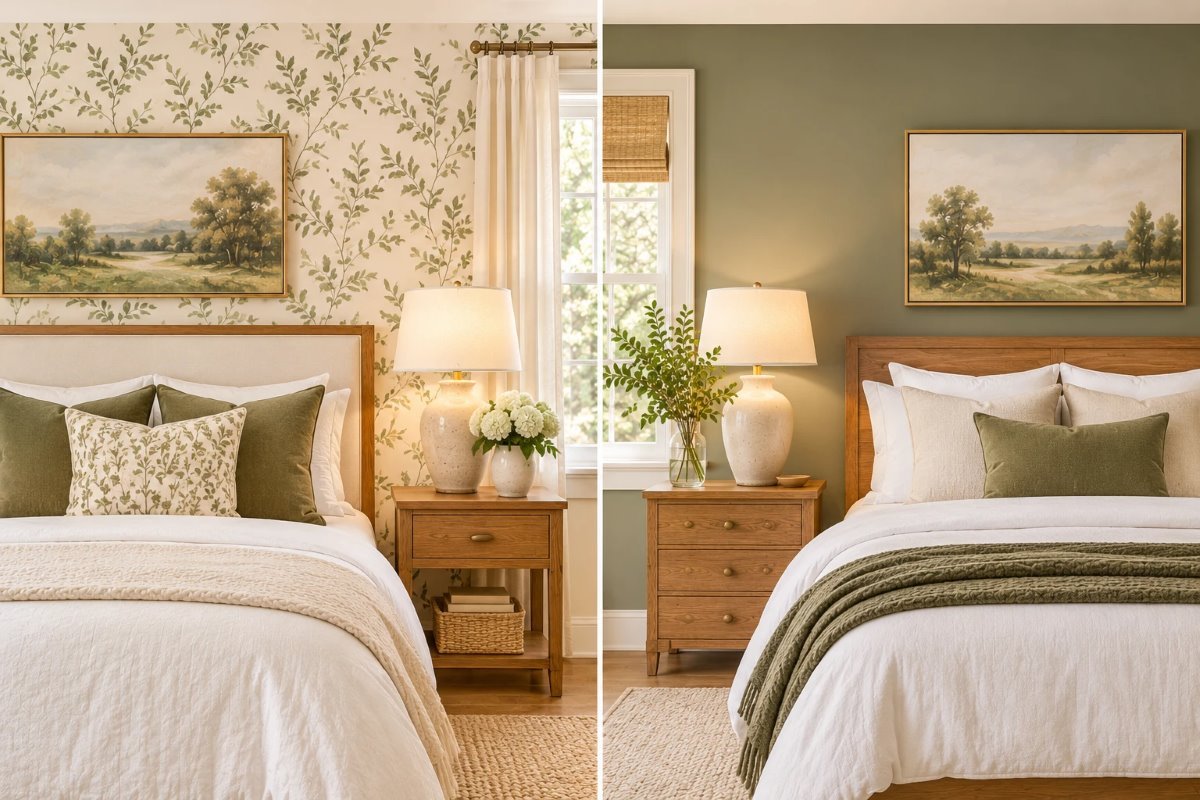
Paint gives a clean, solid color, from a calm sage to a deep navy, and suits modern and minimal rooms. Wallpaper adds pattern, texture and depth, and suits rooms where you want a statement, such as a bedroom headboard wall, a dining nook or an entryway. If you want color without pattern, see our magenta accent wall ideas for a bold painted look.
Check 4: Removal
Removing paint is really repainting, which is simple. Peel-and-stick usually comes off smooth, fully cured drywall with eggshell or satin paint cleanly, but matte and flat finishes are more porous and can pull paint, while semi-gloss and high-gloss resist adhesion, and textured walls are the biggest risk. Traditional wallpaper needs steaming or soaking and scraping, which takes the most effort.
Check 5: Renter Fit
Peel-and-stick is generally the renter-friendly choice because it installs without nails or paste and removes at move-out, and some panels can be reused. Paint needs the landlord’s permission and a plan to repaint. Always check your lease, and test a sample for 3 to 7 days on your own wall first.
Painting an Accent Wall
A painted accent wall is quick and low cost. Choose the wall behind the bed, sofa or table, tape the edges, cut in with a brush and roll two coats. For a clean finish, follow our accent wall painting tips. Use a matte or eggshell finish for a soft look.
Hanging Wallpaper
Smooth, clean walls give the best result. Fill holes, sand and wipe dust, then follow the maker’s directions, using a level for the first strip and a smoothing tool to remove bubbles. Match the pattern carefully at each seam, and buy extra for the pattern repeat. A helper makes it much easier.
Surfaces and Prep
Walls that are textured, freshly painted or glossy need extra care. Let new paint cure for the time on the can, often a few weeks, before applying peel-and-stick, and prime or smooth very textured walls. Good prep matters more than the product in the wallpaper vs paint accent wall comparison.
Other Accent Wall Options
If neither suits you, consider wood paneling, board and batten or a gallery wall. These add texture without pattern, and they work in both owned homes and, in removable forms, in rentals.
Doing This as a Renter
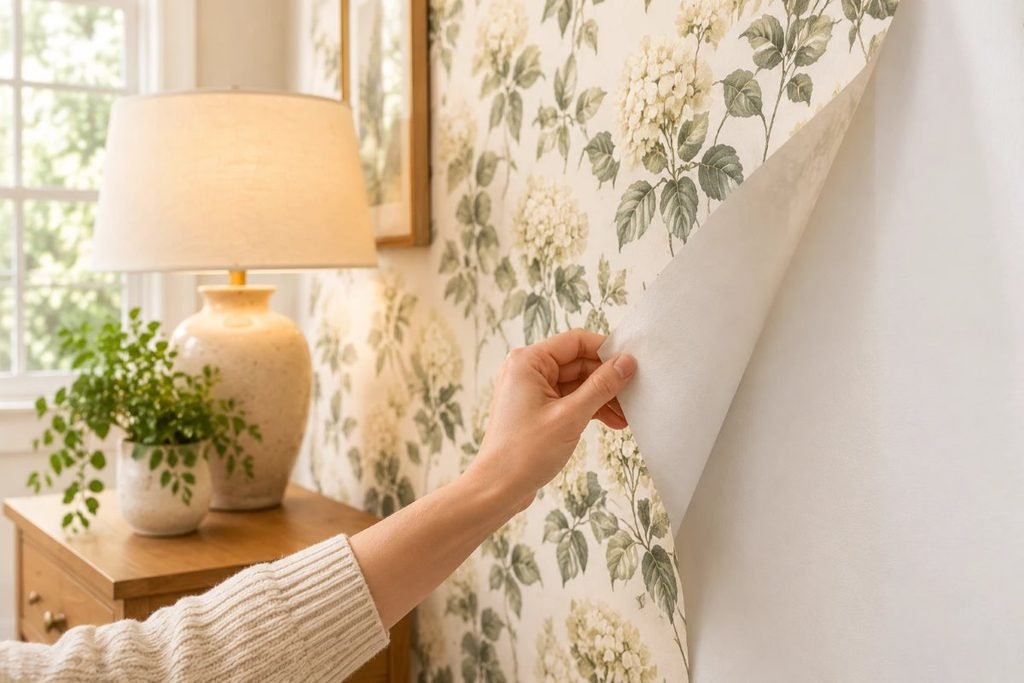
Renters should usually choose peel-and-stick wallpaper on a smooth, cured wall with a satin or eggshell finish, test a sample first and ask the landlord. Premium brands tend to remove more cleanly than budget ones. If you cannot change the wall at all, lean a large mirror or art against it. Our guide to a teal accent wall for renters shows renter-friendly ways to add color.
Budget and Timing
Paint is the cheapest and fastest, taking an afternoon for one wall, and peel-and-stick takes a few hours for a small wall. Traditional wallpaper takes longer and often costs more. Buy samples first.
Where to Start If This Is Your First Time
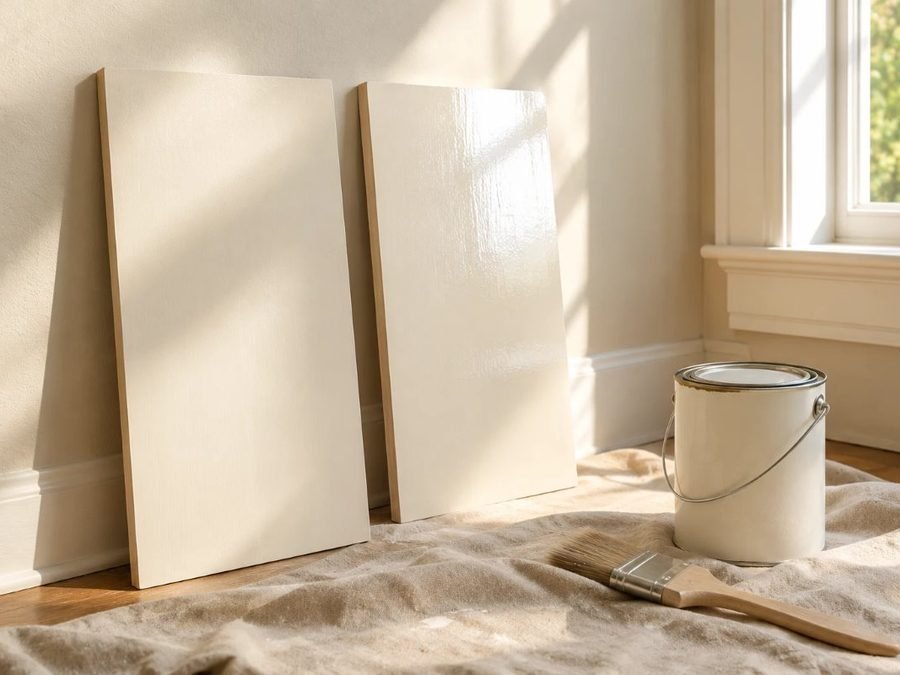
Choose the wall, then try a sample: a large paint swatch or a peel-and-stick sample taped up for a few days. Look at it in the morning and at night. If you decide on paint, follow our guide on how to paint a room. Testing is the easiest way to settle wallpaper vs paint accent wall.
Safety
Use a stable ladder, keep windows open when painting, follow adhesive directions and turn off power before working around outlets. Do not use a steamer near electrical outlets.
Quick Recap
Paint is cheaper and easy to redo; peel-and-stick gives pattern in a rental; traditional wallpaper lasts longer but takes effort to remove. Test a sample and prep the wall. The wallpaper vs paint accent wall choice depends on cost, time in the home and style.
Living With Your Choice
Whichever you pick, check the wall after a few weeks for lifting edges or marks, and keep a little leftover paint or wallpaper for repairs. The wallpaper vs paint accent wall decision is easier to live with when you have a plan for touch-ups.
Common Mistakes to Avoid
- Skipping the sample. Colors and patterns shift in your light.
- Applying peel-and-stick to a fresh or textured wall.
- Choosing budget wallpaper for a long stay.
- Forgetting to check the lease.
FAQs
Is wallpaper or paint cheaper for an accent wall? Paint, in most guides.
How long does peel-and-stick last? Estimates range from about 1 to 7 years, depending on the brand.
Will peel-and-stick damage my walls? Not on smooth, cured eggshell or satin walls, but matte and textured walls are riskier.
Can renters use paint? Only with the landlord’s permission.
Which lasts longer? Traditional wallpaper is said to, but paint is easy to refresh.
Should I test a sample? Yes, for 3 to 7 days.
Tools and Basics to Gather
For paint: samples, painter’s tape, drop cloths, an angled brush, a roller and a tray. For wallpaper: a level, a smoothing tool, a sharp knife, a measuring tape and a helper. Keep windows open and follow the safety directions on the product.
The Bottom Line
The wallpaper vs paint accent wall choice is simple: paint is cheaper and easy to change, peel-and-stick brings pattern and works in rentals, and traditional wallpaper suits long stays. Test a sample, prep the wall and check your lease. Either way, one wall can make the whole room feel finished.
Related:
Accent Wall Painting Tips for a Clean Finish · Teal Accent Wall for Renters