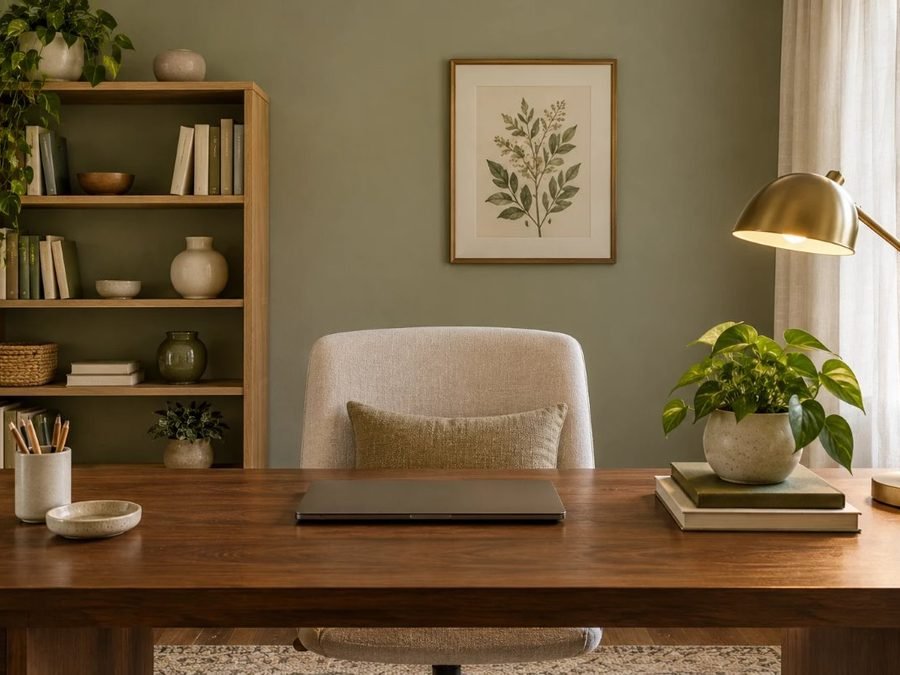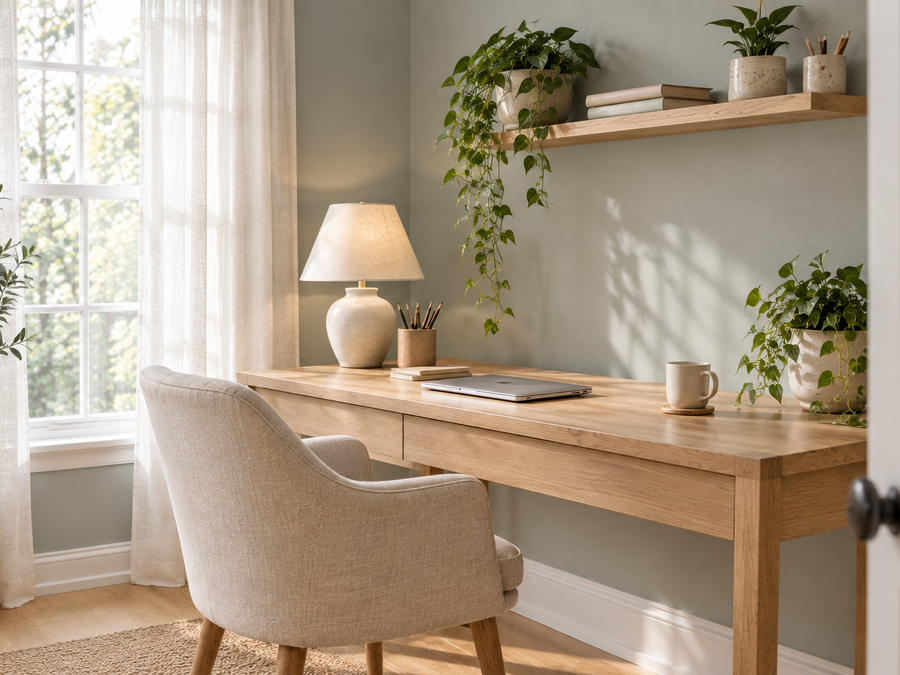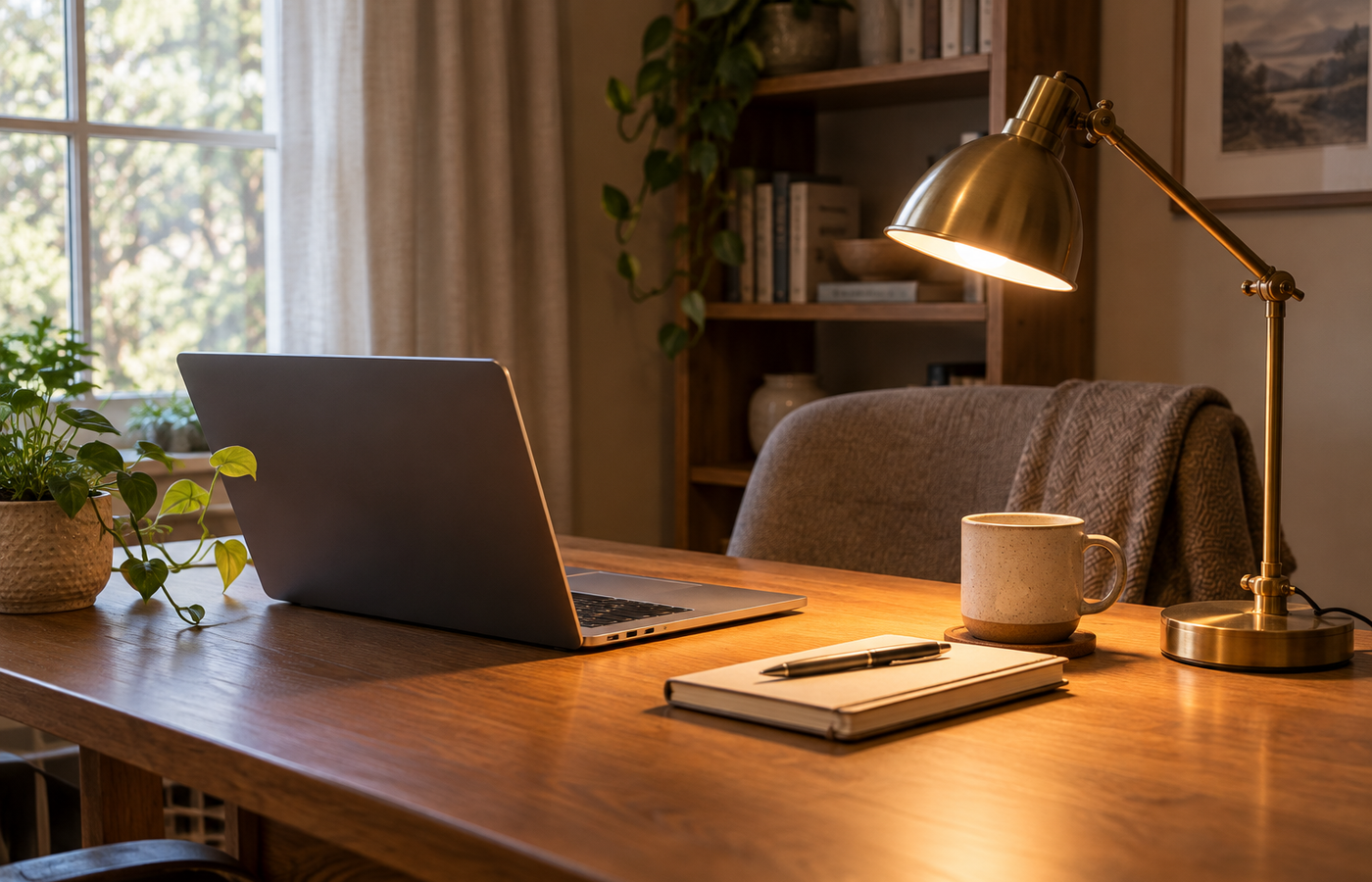
A lamp that is too high throws light everywhere except your keyboard, and one that is too low creates a hot glare right in your eyes. The right desk lamp height for a home office is not really about a fixed number of inches. It is about where the light lands once you sit down to work.
This guide gives you a simple test to find the right height, plus where to place the lamp and how bulb choice changes the result.
Why Height Matters More Than Style
A beautiful lamp still fails at its job if it is positioned wrong. Good task lighting reduces eye strain during long work sessions and stops the flat, tired feeling that comes from working under one dim overhead light. Getting the desk lamp height for a home office right is a small adjustment that makes a real difference by the end of a workday.
The Elbow Test
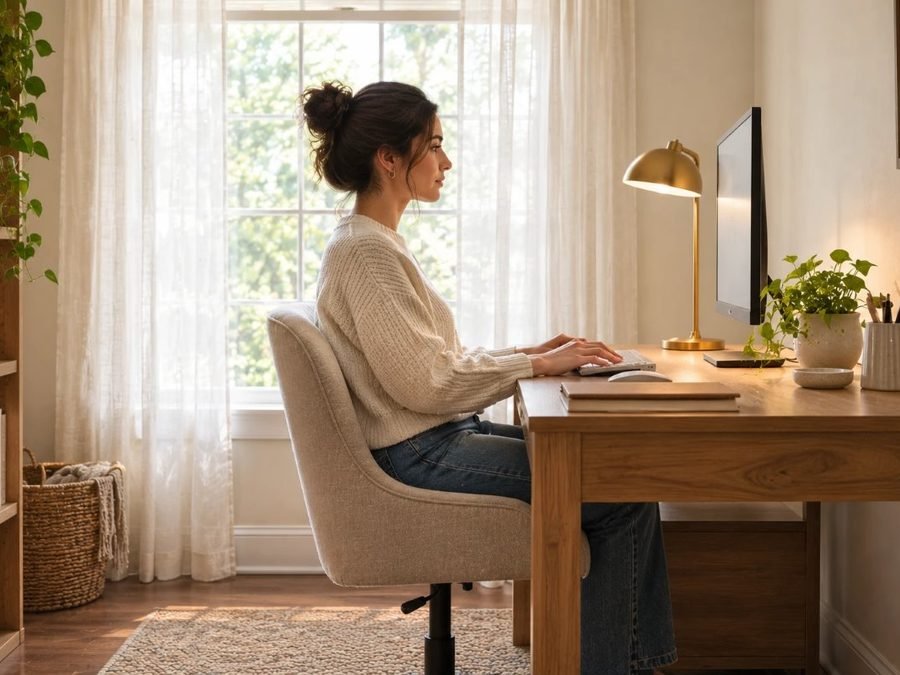
Sit at your desk in your normal working position. The bottom of the lamp shade should land at roughly the height of your bent elbow, or a little above it, once your arm rests on the desk. At that height, the shade blocks the bulb from your direct line of sight while still throwing light down onto your papers, keyboard or notebook. If the light feels harsh or you can see the bulb from your seat, the desk lamp height for a home office needs to come down slightly or the shade needs to be adjusted to angle more steeply.
A Rough Number to Start From
If you want a number to start with, aim for the bottom of the shade to sit about 15 to 20 inches above the desk surface for most adjustable task lamps. Taller desks or higher chairs shift this up a little, and a laptop screen that sits close to your eyes may need the light angled slightly further away so it does not reflect off the screen.
Where to Place the Lamp
Position the lamp to the side of your main work area, not directly behind your screen, so the light does not create glare on the display. If you write more than you type, place the lamp on the side opposite your writing hand, so your hand does not cast a shadow over your work. A lamp about 15 inches to the side of your keyboard or notebook usually lights the work surface well without crowding it.
Choosing an Adjustable Lamp
Getting the desk lamp height for a home office right the first time is harder with a fixed lamp. An adjustable arm or gooseneck lamp is more forgiving, since you can raise, lower and angle it as your tasks change through the day. This flexibility matters if you switch between typing, reading and video calls, each of which benefits from a slightly different light angle. If you’re setting up a compact work nook, our guide to a closet home office covers other lighting options for a small space.
Bulb Temperature and Brightness
Warm bulbs around 2700K to 3000K feel cozy but can feel dim for close, detailed work. A cooler bulb around 4000K to 5000K feels brighter and more alert, which suits focused tasks, though some people find it harsh for long sessions. Many people find a middle ground, using a warmer bulb for the room’s ambient light and a slightly cooler one in the task lamp itself.
Reducing Screen Glare
Position the desk lamp height for a home office so the light falls on your desk and papers rather than directly onto your monitor. A lamp positioned behind or beside the screen, angled toward the desk surface, avoids most reflections. If you notice glare on the screen, try angling the shade a little further downward or moving the lamp slightly further from the monitor.
Layering With Overhead and Natural Light
A single desk lamp works best alongside other light sources, not alone. Natural daylight from a window, a wall sconce or an overhead fixture fills in the rest of the room so your eyes are not adjusting between a bright task area and a dark background. Our guide to setting up a home office for small spaces covers layering light in a compact room.
Doing This as a Renter
A plug-in desk lamp needs no installation, and an adjustable model can move with you to a new desk or a new home. Choose a lamp with a stable, weighted base if your desk gets bumped often, since a light lamp can tip more easily than a heavier one.
Budget and Timing
A simple adjustable desk lamp costs from about $20 to $80, and a well-made brass or metal model can cost more. Setting the height and angle takes a couple of minutes once the lamp is on the desk, and it is worth revisiting after a few work sessions to fine-tune it.
Where to Start If This Is Your First Time
Sit at your desk with the lamp on and adjust the height and angle slowly while doing a normal task, such as typing or reading. Stop when the glare disappears and the work surface looks evenly lit. This live test is more reliable than measuring with a tape measure alone.
Common Mistakes to Avoid
- Placing the lamp directly behind the screen. This causes glare on the display.
- Setting the desk lamp height for a home office too low. A low shade creates harsh, direct glare.
- Using only a desk lamp with no other light in the room. Your eyes will tire faster switching between bright and dark areas.
- Ignoring bulb temperature. A very cool or very warm bulb can feel wrong for the task at hand.
FAQs
What is the right desk lamp height for a home office? Roughly at elbow height when seated, or about 15 to 20 inches above the desk surface for the bottom of the shade.
Should the lamp be behind my screen? No, place it to the side to avoid glare on the display.
What bulb temperature is best for a desk lamp? A cooler bulb, around 4000K to 5000K, suits focused tasks, while some people prefer a warmer bulb for comfort.
Do I need an adjustable lamp? It helps, since you can change the height and angle for different tasks through the day.
Can I use just a desk lamp with no other lighting? It’s better to layer it with natural or ambient light so your eyes are not straining between bright and dark areas.
How do I know if the height is wrong? If you can see the bulb from your seat or notice glare on your screen or desk, adjust the height or angle.
Tools and Basics to Gather
Testing the desk lamp height for a home office needs very little gear: an adjustable task lamp, a bulb in your preferred temperature and a tape measure if you want a starting reference point are all you need. A dimmer switch or a lamp with adjustable brightness gives extra flexibility through the day.
Adjusting Through the Day
Light needs change with the hours. In the morning, a lower brightness paired with daylight is usually enough. By late afternoon, as natural light fades, raise the lamp’s brightness or add the overhead light to keep the desk lamp height for a home office doing its job without leaving the rest of the room dim and mismatched.
The Bottom Line
The right desk lamp height for a home office comes down to the elbow test: the shade should sit around elbow height, throwing light onto your work without glare in your eyes or on your screen. Start around 15 to 20 inches above the desk, place the lamp to the side, choose a bulb temperature that suits your tasks, and adjust as you go.
Related:
Closet Home Office: 6 Steps That Make It Easy to Build · How to Set Up a Home Office: 7 Easy Wins for Small Spaces