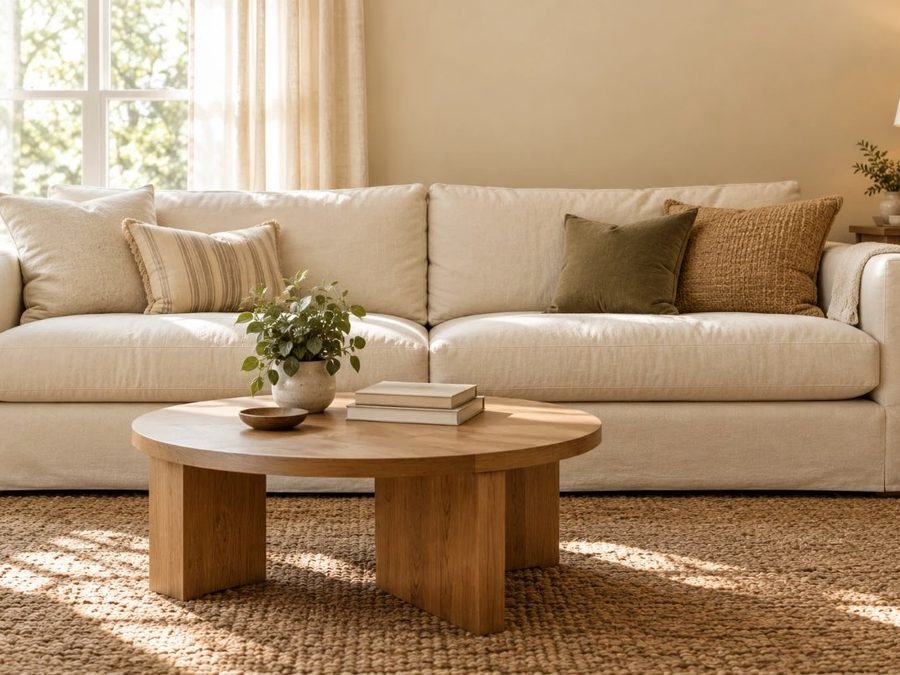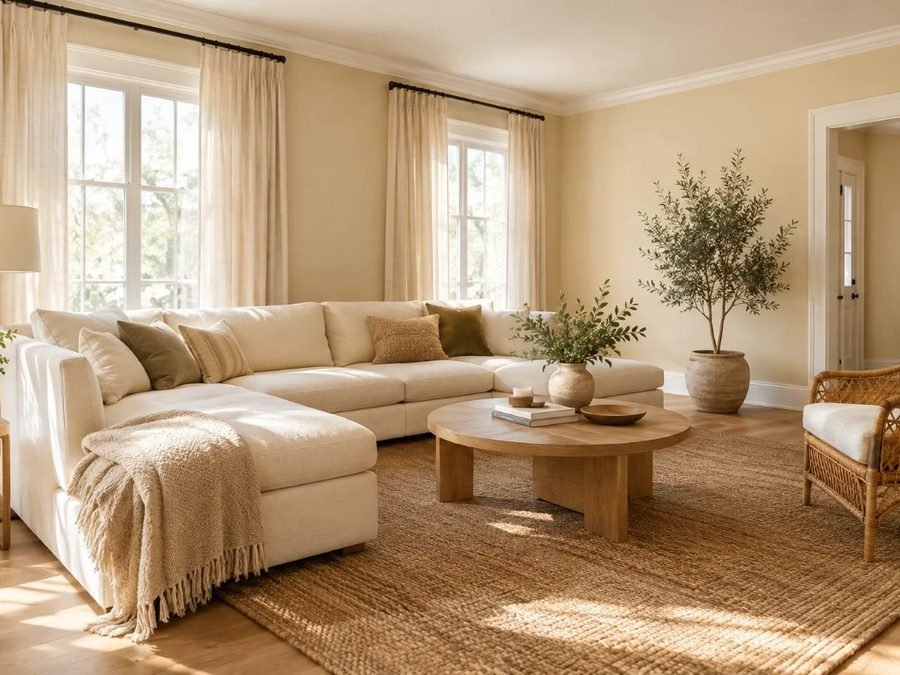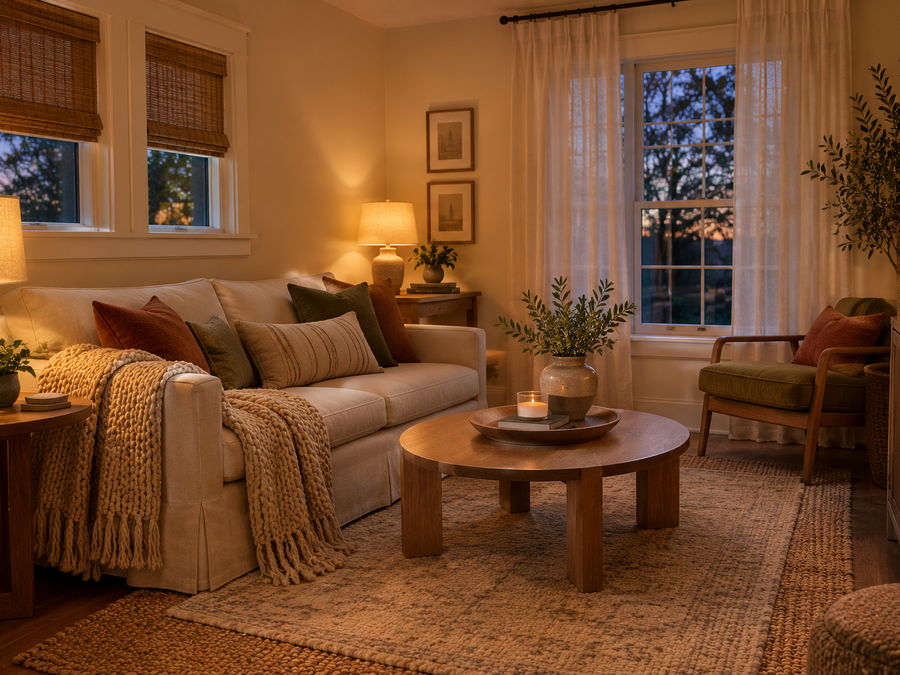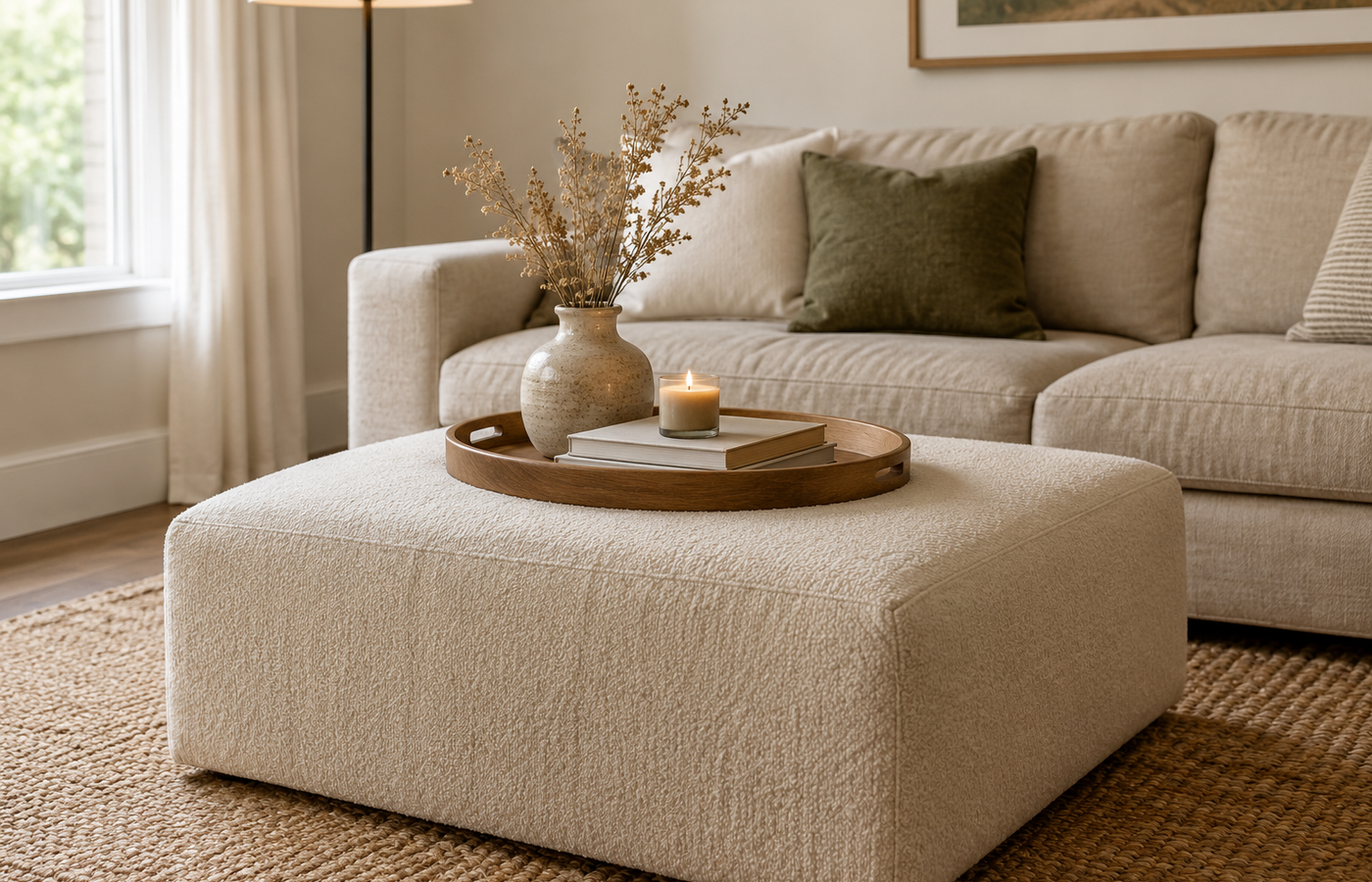
A hard coffee table is a bruise waiting to happen, especially in a small living room where you walk right past it. An ottoman coffee table solves that with soft edges, a cushioned top and a shape that works as a footrest, extra seat or table. It is one of the most flexible pieces you can put in front of a sofa.
If you are considering one, these five styling moves show how to choose the size, add a stable surface, layer texture and make an ottoman coffee table look intentional instead of like a spare footstool.
What Is an Ottoman Coffee Table?
An ottoman is a padded, upholstered seat without a back, and an ottoman coffee table is a larger version used in the middle of a seating area. Some are solid, some have a storage compartment under a lift-off lid, and some have a small wood frame or legs. The soft surface is the main difference from a wood, glass or metal table.
Why It Works in a Small Living Room
A small living room needs furniture that moves easily and does not create sharp corners in a walkway. An ottoman coffee table has no hard edges, so children and pets are safer, and you can push it aside when you need more space. It also adds an extra seat for guests, which saves the space that another chair would take.
Move 1: Add a Tray for a Stable Surface
The biggest complaint about an ottoman coffee table is that drinks and books do not sit well on a soft top. A large tray solves this. Choose a wood, rattan or metal tray with raised edges and a flat base, big enough to hold a couple of mugs, a book stack and a candle. A tray also lets you lift everything off in one move when you want to use the ottoman as a seat or footrest.
Move 2: Choose the Right Size and Height
Aim for a table that is roughly two-thirds the length of your sofa, and check the height against your seat cushions. A height of about 16 to 18 inches, similar to or an inch or two below the seat, is comfortable to reach. Leave around 14 to 18 inches between the sofa and the ottoman so you can walk and reach without straining. If you are also thinking about a sofa that can change shape, our modular sofa guide explains how an ottoman fits into different layouts.
Move 3: Pick a Fabric That Can Take a Beating
An ottoman coffee table is used every day for feet, trays, pets and toys, so choose a tough fabric. Performance fabrics, tight-weave cotton blends and leather all clean easily and wear well. Textured fabrics like bouclé or a chunky weave hide marks, but they can snag with pets. A darker or mid-tone color is more forgiving than a very pale one.
Move 4: Layer Texture, Not Pattern
Because the ottoman is a large, soft block, it looks best when the rest of the room adds contrast. Pair it with a jute or wool rug, a wood tray and a smooth ceramic vase. If the sofa is a plain neutral, a slightly textured ottoman adds interest. Keep the colors close to the rug or sofa so the ottoman coffee table blends in rather than competing.
Move 5: Use the Hidden Storage
A storage ottoman coffee table hides blankets, remotes, board games or toys in a place that is easy to reach. This is especially useful in a small living room, where a separate storage cabinet would take up floor space. Check that the lid lifts easily, stays open safely and has a soft-close hinge if you have children.
Choosing the Right Shape
Round and oval shapes suit tight walkways, while a square or rectangle suits a larger sofa. A round ottoman coffee table is often the easiest choice in a small room. In a long, narrow room, a rectangular ottoman echoes the shape of the sofa and helps the seating area feel connected.
Using Two Smaller Ottomans
If one large piece feels heavy, try two smaller ottomans of the same height side by side. You can move them apart for guests, use them as extra seats or push them together as a table. A pair also fits into a narrow gap more easily than a single large piece.
Styling the Tray Through the Seasons
A tray is a small stage you can change all year. In spring, add a small vase of fresh flowers and a light-colored candle. In summer, use a woven bowl with lemons or a bunch of herbs. In autumn, swap in dried stems, a wooden bowl and a warm-toned candle. In winter, stack a few heavy books and add a small lantern. Rearranging an ottoman coffee table tray takes a couple of minutes and freshens the whole room.
Making It Work With Kids and Pets
Soft surfaces are friendly for children, but they need a plan. Choose a washable or performance fabric, and keep a spare tray or a small basket for toys. If you have a cat, avoid loose, looped weaves that snag. A leather or wipeable material is a practical choice for a busy family, and it develops a nice patina over time. An ottoman coffee table is one of the best options for a home with active children.
Doing This as a Renter
An ottoman coffee table needs no installation and moves with you. It is an easy way to soften a room without any permanent changes. Choose a fabric that is easy to spot clean, and place felt pads under any legs to protect floors.
Budget and Timing
A simple ottoman can cost under $100, while a large storage ottoman in a performance fabric costs more. You can also reupholster or slipcover an older one. Buying takes an afternoon, and delivery of larger pieces can take a couple of weeks.
Where to Start If This Is Your First Time
Try a large tray on an existing footstool or ottoman before you buy. If you like using it as a table, look for a proper ottoman coffee table in the right size and fabric. This is a cheap way to test the idea.
Common Mistakes to Avoid
- Skipping a tray. Drinks will not sit securely on a soft surface.
- Choosing a pale, delicate fabric. It will show marks quickly.
- Buying the wrong size. A table that is too small looks lost in front of a big sofa.
- Forgetting the height. A table much lower than the sofa is hard to reach.
FAQs
Can an ottoman work as a coffee table? Yes, especially with a tray on top for a stable surface.
Is it good for a small living room? Yes, it has soft edges, moves easily and can double as extra seating.
What fabric is best? A performance fabric, tight weave or leather that cleans easily.
How high should it be? Around 16 to 18 inches, close to the seat height of the sofa.
Can I use it for storage? Yes, a storage ottoman hides blankets and toys.
Can renters use one? Yes, it needs no installation.
Tools and Basics to Gather
A large tray, felt pads, a fabric protector, a tape measure and a few decorative objects for the tray are all you need. A lint roller helps keep textured fabrics tidy.
Caring for an Ottoman
Vacuum the surface regularly, treat spills quickly by blotting, and rotate the ottoman occasionally so wear is even. If the fabric is removable, follow the care label. A fabric protector applied before use makes cleaning easier.
The Bottom Line
An ottoman coffee table brings softness, seating and storage to a small living room. Choose the right size and height, add a tray, pick a tough fabric and layer texture around it. Try the idea with a tray on a footstool first, and you will soon know whether it belongs in your home.
Related:
Modular Sofa for a Small Living Room: Easy Layouts for 2026 · 22 Living Room Ideas That Make a Small Space Feel Bigger