For many homes, the dining room is the least used room: a table that gets used for a few holiday dinners and the rest of the year holds mail and laptops. In 2026, designers are giving that room a second job. A dining room library adds shelves of books, a warm palette and comfortable seating, so the room works for dinner, reading, homework and quiet evenings.
This guide shows how to plan a dining room library, from shelves and color to lighting, chairs and storage, and how to make it work even in a small home.
Why the Dining Room Library Is Trending
Design writers say the formal, rarely used dining room is turning into something more useful and lived in. Blending it with a library is one of the most talked-about ways to do that. A dining room library gives the room a purpose all week, adds storage and makes the space feel personal instead of staged. It is also a natural fit for people who have a home office or a reading habit but no spare room.
What a Dining Room Library Actually Is
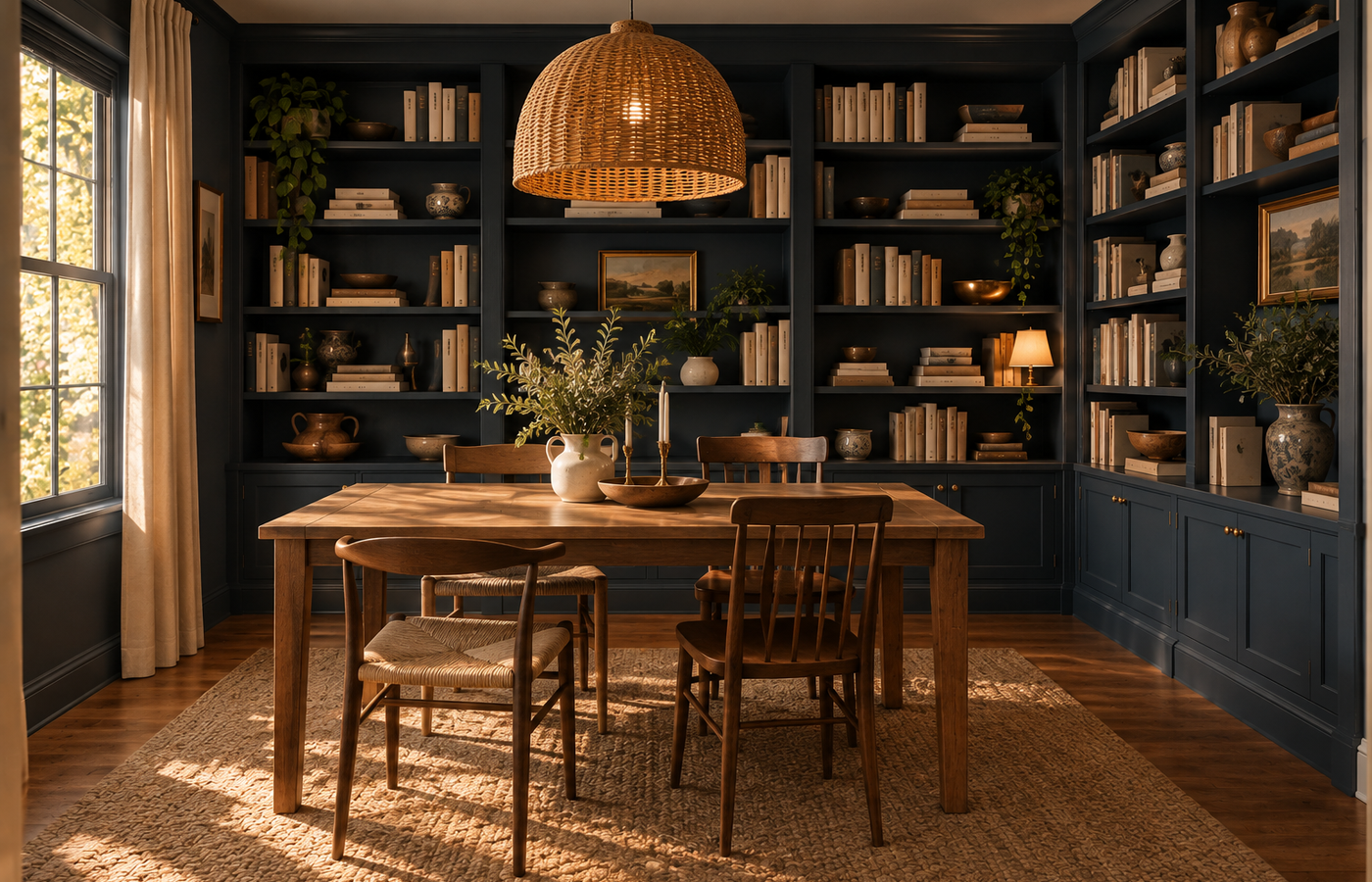
It does not need to be a grand, wood-paneled room. A dining room library is simply a dining room with real shelving for books, plus a table that doubles as a reading or work table. The shelves can be built in, freestanding or a mix of both. The key is that the books are part of the room’s design, not stored in another room.
Step 1: Choose Where the Shelves Go
Pick the wall with the least interruption, usually the longest one. If your dining room has a window on one wall and a door on another, shelves on the remaining wall are enough. In a very small room, a single tall bookcase or two matching cases side by side can create the same effect as a full wall.
Step 2: Consider a Vintage-Style Bookcase
Trend coverage points to a vintage-style bookcase as a key piece for a dining room library. An older or old-looking case with glass doors, wood trim or a slightly worn finish adds character and pairs well with a wood dining table. Worn wood and visible grain suit the mood of the room better than a perfectly new finish.
Step 3: Paint the Shelves a Deep Color
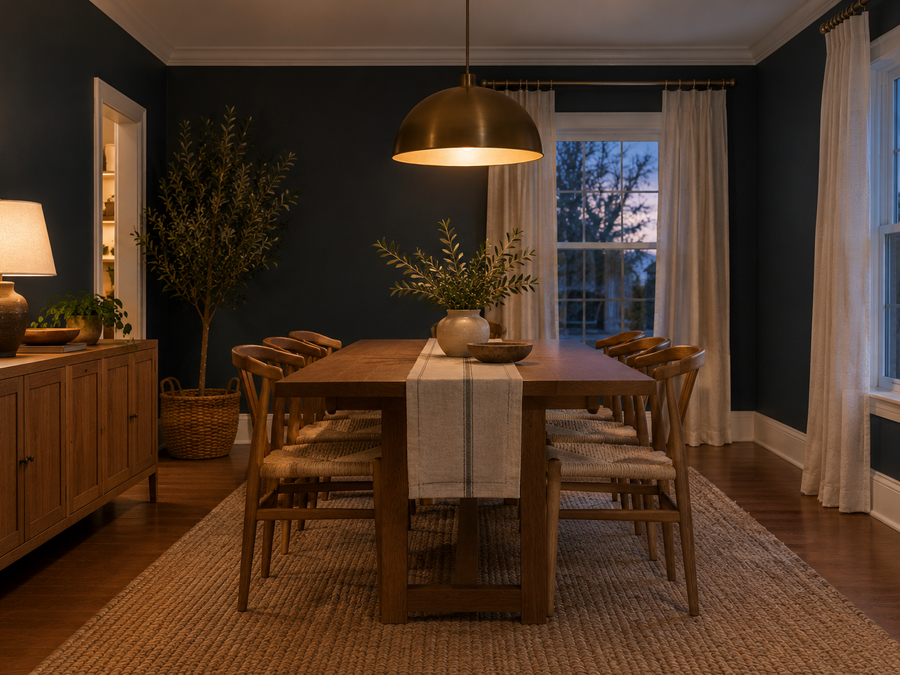
A deep green, navy or warm brown on the back of the shelves makes books and objects stand out and gives the room a cozy library feeling. Painting the shelves and the wall the same color makes them look built in. A dining room library feels especially inviting in the evening with dark walls and warm lamps. Our guide to a home library office covers the same shelving and paint steps in more detail.
Step 4: Mix Books With Tableware
A shelf full of only books can look heavy in a dining room. Mix in glassware, ceramics, serving bowls and a few plants. Keep everyday items on lower shelves and pretty objects higher. This blend of books and tableware is what makes a dining room library feel like a dining room, not a study.
Step 5: Choose a Table That Works Twice
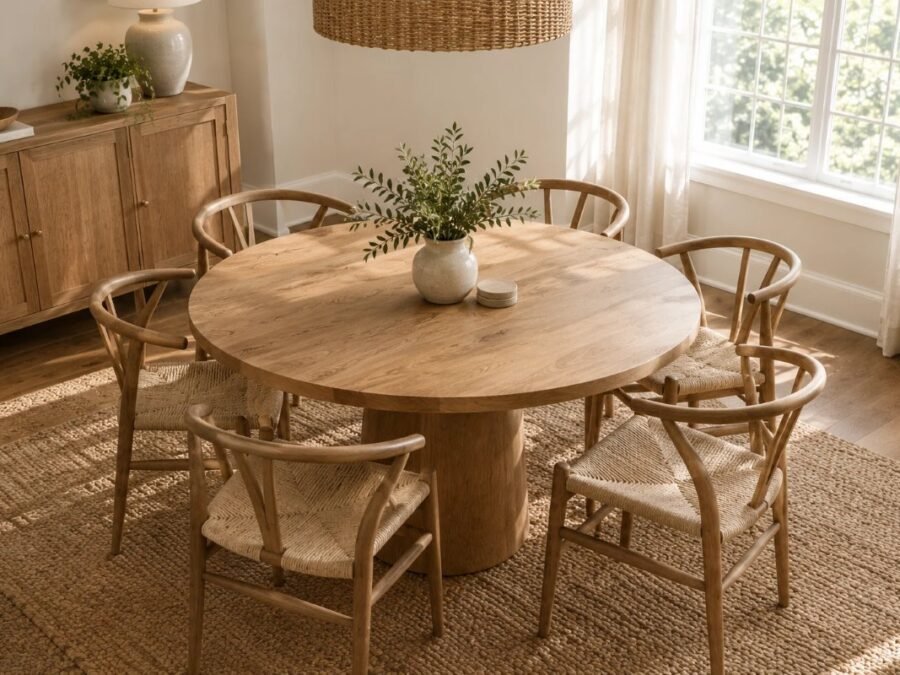
A wood table with a simple top is easy to use for both meals and work. Add a linen runner for dinners and remove it for laptops or homework. If you often eat casually, a bench on one side, as in our guide to dining room bench seating, saves space and makes the table feel relaxed.
Step 6: Layer the Lighting
A pendant over the table gives good general light, and small picture lights or table lamps on a sideboard make the shelves glow. Dimmers are helpful, since the room needs to work for reading and for dinner. Warm bulbs, generally 2700K to 3000K, suit the cozy mood.
Step 7: Add Comfortable Seating
Dining chairs are not always comfortable for a long read. Use upholstered chairs or add cushions, and think about a small armchair in the corner for reading. A comfortable chair encourages people to stay in the room, which is the point of a dining room library.
Making It Work in a Small Home
A dining room library does not need a separate dining room. In an open-plan space, a bookcase behind or beside the table can define the dining zone and add storage. A tall, narrow case takes up little floor area, and a low bookcase works as a room divider. Keep the palette simple so the room feels cohesive.
Doing This as a Renter
Freestanding bookcases, lamps, cushions and a rug need no permanent changes. Anchor tall cases to the wall with anti-tip straps if your lease allows, or use lower cases. If you cannot paint, bring in deep color with fabric, art and dark bookcases.
Budget and Timing
Freestanding bookcases can cost from under $100 to a few hundred each, while built-ins cost more and take longer. You can create a simple dining room library in a weekend with one or two cases, a lamp and a few plants.
Where to Start If This Is Your First Time
Start with one bookcase against a wall and fill it thoughtfully. Add a lamp and a comfortable chair, then decide whether to add more shelves. A small start keeps the cost low and shows you how the room works.
Common Mistakes to Avoid
- Filling every shelf. Leave gaps so it does not feel heavy.
- Forgetting the lighting. A library room needs soft, layered light.
- Choosing uncomfortable chairs. People will not linger.
- Ignoring safety. Anchor tall bookcases.
FAQs
What is a dining room library? A dining room with real bookshelves and a table that works for meals, reading and work.
Can I do it in a small dining room? Yes, a single tall bookcase or a low case behind the table is enough.
What color should the shelves be? Deep green, navy or warm brown are popular, but warm white also works.
Do I need built-in shelves? No, freestanding cases can look built in when placed side by side.
Is it renter-friendly? Yes, if you use freestanding pieces.
How many books do I need? Not many. Mix in ceramics, glassware and plants.
Tools and Basics to Gather
A few bookcases, a lamp, anti-tip straps, a rug and some baskets cover most needs. If you plan to paint, add primer, painter’s tape and a small roller.
Styling the Room
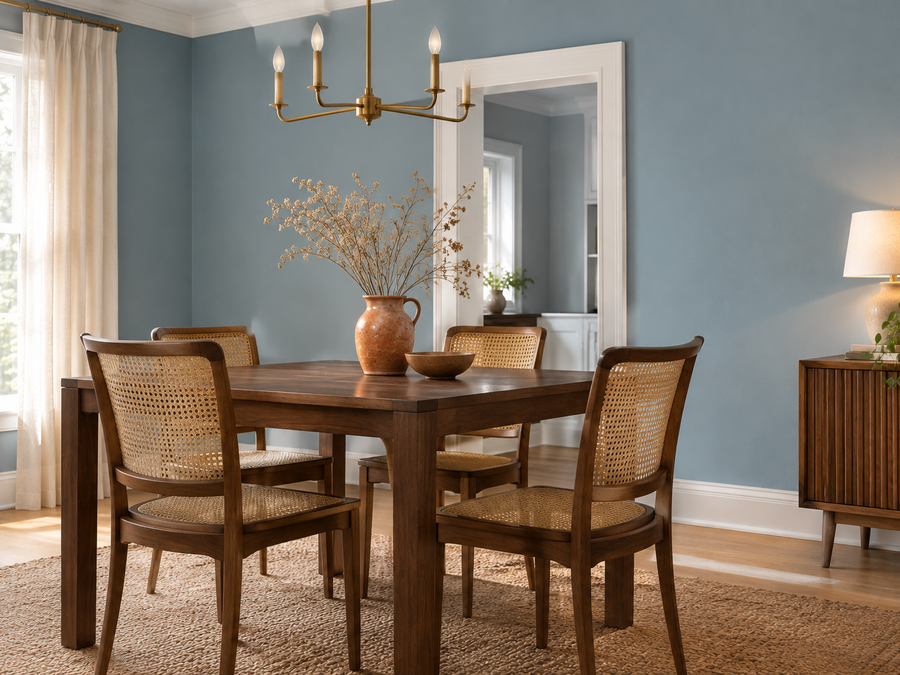
Keep the styling relaxed. A linen runner, a bowl of fruit, a vase of dried branches and a few candles suit the room. Hang a piece of art on any open wall space. A dining room library feels best when it looks lived in, with a couple of books left on the table.
Using the Room Through the Week
A good dining room library earns its keep every day. Mornings can start with coffee and a book at the table, afternoons can hold homework or remote work, and evenings turn back into dinner and conversation. Keep a basket for laptops and papers, so the table can switch roles in a minute. When guests arrive, the shelves already make the room look warm and interesting.
Caring for Books and Shelves
Books last longer away from direct sunlight and damp. Dust the shelves regularly and leave a little space between books so air can circulate. If the room gets steam from cooking or a lot of sun, choose glass-front cases to protect the books.
The Bottom Line
A dining room library turns a rarely used room into one that works every day. Choose a wall for shelves, paint them a deep color, mix books with tableware, choose a table that works twice, layer warm lighting and add comfortable seating. Start small, and your dining room may become the room you use most.
Related:
Home Library Office: Easy Ways to Build a Cozy One in 2026 · Dining Room Bench Seating: 6 Cozy Ways to Skip the Chairs