Apartment living can feel cut off from nature, with small windows, shared walls and not much green in sight. Biophilic design fixes that by bringing plants, daylight and natural materials indoors, and it’s one of the calmest, most practical trends heading into 2026.
The good news is that biophilic design ideas don’t need a big budget or a garden. These ideas work in studios, rentals and small living rooms, and most of them can be started this weekend.
What Biophilic Design Actually Means
The word sounds technical, but the idea is simple: people feel better when their homes connect them to nature. Biophilic design ideas use living plants, natural light, organic materials and nature-inspired color to create that connection. The biophilic design approach has been studied for years in architecture, and it has moved from offices and hospitals into everyday homes.
1. Maximize Natural Light First
Daylight is the most powerful natural element you can have. Keep windows clear, use sheer curtains instead of heavy drapes, and place mirrors where they bounce light deeper into the room. Among all biophilic design ideas, this costs the least and improves every other item on the list, since plants need light to thrive too.
2. Layer Plants at Different Heights
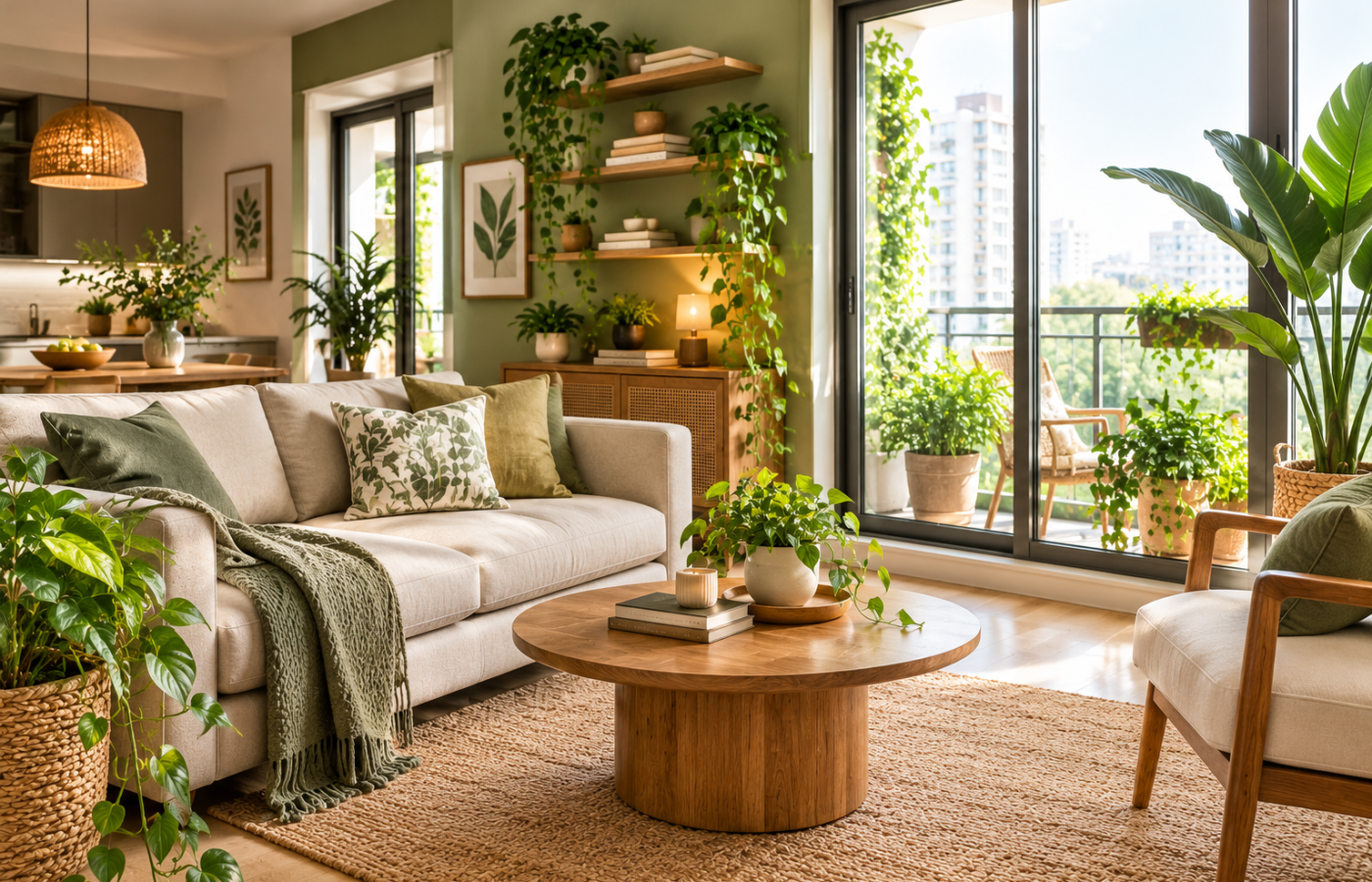
One plant on a shelf looks like decor, but plants at three heights look like a small indoor garden. Try a floor plant in a basket, a plant on a side table and a trailing plant on a shelf or hanging. Layering is one of the most effective biophilic design ideas for small apartments because it uses vertical space instead of floor space.
3. Choose Natural Materials Over Synthetic Ones
Wood, rattan, jute, linen, cotton and stone bring texture that feels organic and calm. Swap a plastic storage bin for a woven basket, or a synthetic rug for jute. These material choices are some of the easiest biophilic design ideas to layer in, and they pair well with a cozy look like the one in this cozy apartment aesthetic guide.
4. Use a Nature-Inspired Color Palette
Soft greens, warm earth tones, sand, clay and sky blue echo the outdoors and keep a room feeling restful. Rather than painting everything, use color through pillows, throws and art. Nature-based color is one of the simplest biophilic design ideas to change with the seasons.
5. Start a Small Herb Garden
A windowsill with basil, mint and rosemary adds greenery, scent and something useful. Herbs are a beginner-friendly way to try biophilic design ideas because they’re inexpensive, and you get to use what you grow in the kitchen.
6. Bring in Nature Through Art and Pattern
If you can’t have a view of trees, you can hang a botanical print, a landscape photo or a leaf-patterned textile. Studies on biophilic design suggest that even images and patterns of nature can help a room feel calmer. It’s one of the lowest-effort biophilic design ideas for dark apartments with few windows.
7. Add Gentle Sound and Scent
A small tabletop fountain, a diffuser with a natural scent like cedar or eucalyptus, or a window cracked open for outdoor sound engages senses beyond sight. Not every one of these biophilic design ideas is for everyone, so pick the ones that feel calming to you.
Doing This as a Renter
Almost all biophilic design ideas are renter-friendly: plants, baskets, textiles, art and light changes require no permanent changes. Hanging plants can use removable hooks, and a plant shelf can sit on the floor instead of the wall. The same portable approach appears in these studio apartment ideas for renters.
Budget and Timing
You can start for under $50 with two or three plants, a basket and a pillow cover. Larger pieces like a big floor plant or a wood shelf cost more, but you can build over a few months. Most biophilic design ideas can be done in a single afternoon, and plants can be added gradually as you learn what thrives in your light.
Where to Start If This Is Your First Time
Begin with the room where you spend the most time and add three plants, a jute rug or basket, and one botanical print. Live with it for a couple of weeks, then adjust. Starting small means fewer mistakes and helps you see which biophilic design ideas actually suit your daily routine.
Common Mistakes to Avoid
- Buying plants that don’t match your light. Check whether your window gets bright, medium or low light before you shop.
- Overwatering. More houseplants die from too much water than too little.
- Filling every surface. A few thoughtful plants look calmer than a crowded jungle.
- Ignoring pots and drainage. A pot with drainage and a saucer protects floors and roots.
FAQs
What are biophilic design ideas? They’re ways of bringing nature into a home through plants, natural light, organic materials and nature-inspired colors and patterns.
Do biophilic design ideas work in a small apartment? Yes. Vertical plant layering, mirrors for light and natural textiles all suit small spaces.
What are the best plants for low light? Snake plants, pothos, ZZ plants and peace lilies tolerate lower light better than most.
Are biophilic design ideas expensive? No. You can start with a few plants and a basket for under $50.
Can I do this in a rental? Yes. Plants, textiles, art and light changes are all removable.
Do I need a green thumb? Not at all. Start with hardy plants like pothos and snake plants, which forgive missed waterings.
Tools Worth Having Before You Start
A small watering can, a few pots with drainage, a saucer or two, a spray bottle for humidity-loving plants and a little houseplant soil cover most needs. Removable hooks help hang lightweight plants without drilling into rental walls.
Easy Low-Light Plants for Dark Apartments
Not every apartment gets strong sun, and that’s fine. Pothos trails beautifully from a shelf, snake plants stand upright in a corner and ZZ plants handle weeks of neglect. Choosing plants that suit your light is one of the most practical biophilic design ideas, because healthy plants keep looking good with almost no effort.
Biophilic Design Room by Room
In a living room, focus on a large floor plant near the window, a jute rug and a wood coffee table. In a bedroom, keep it restful with a trailing plant, linen bedding and soft green or sand tones. In a home office, a small plant on the desk and a view of the window help reduce screen fatigue. In an entryway, a basket, a small tree and a botanical print make a calm first impression when you walk in.
Refreshing the Look Through the Seasons
Nature changes through the year, and your space can too. In spring, add fresh flowers or a small pot of tulips. In summer, open the windows and use lighter linen textiles. In autumn, bring in dried grasses, warm wood tones and rust-colored throws. In winter, group plants near your brightest window and use warm lamps to keep the room feeling alive when the days are short.
Making Biophilic Design Feel Cohesive
Because these ideas involve many small pieces, pick a simple palette and repeat it. Use similar pots, keep wood tones consistent and let one or two larger plants anchor the room. When you plan biophilic design ideas as a set rather than a random collection, the space feels intentional and calm instead of cluttered.
The Bottom Line
The best biophilic design ideas start with light, add plants at different heights, and lean on natural materials and calm color. You don’t need a big space or a big budget, just a few thoughtful choices that make your apartment feel a little more like the outdoors.
Related:
Cozy Apartment Aesthetic: 10 Easy Ideas on Any Budget · Studio Apartment Ideas for Renters