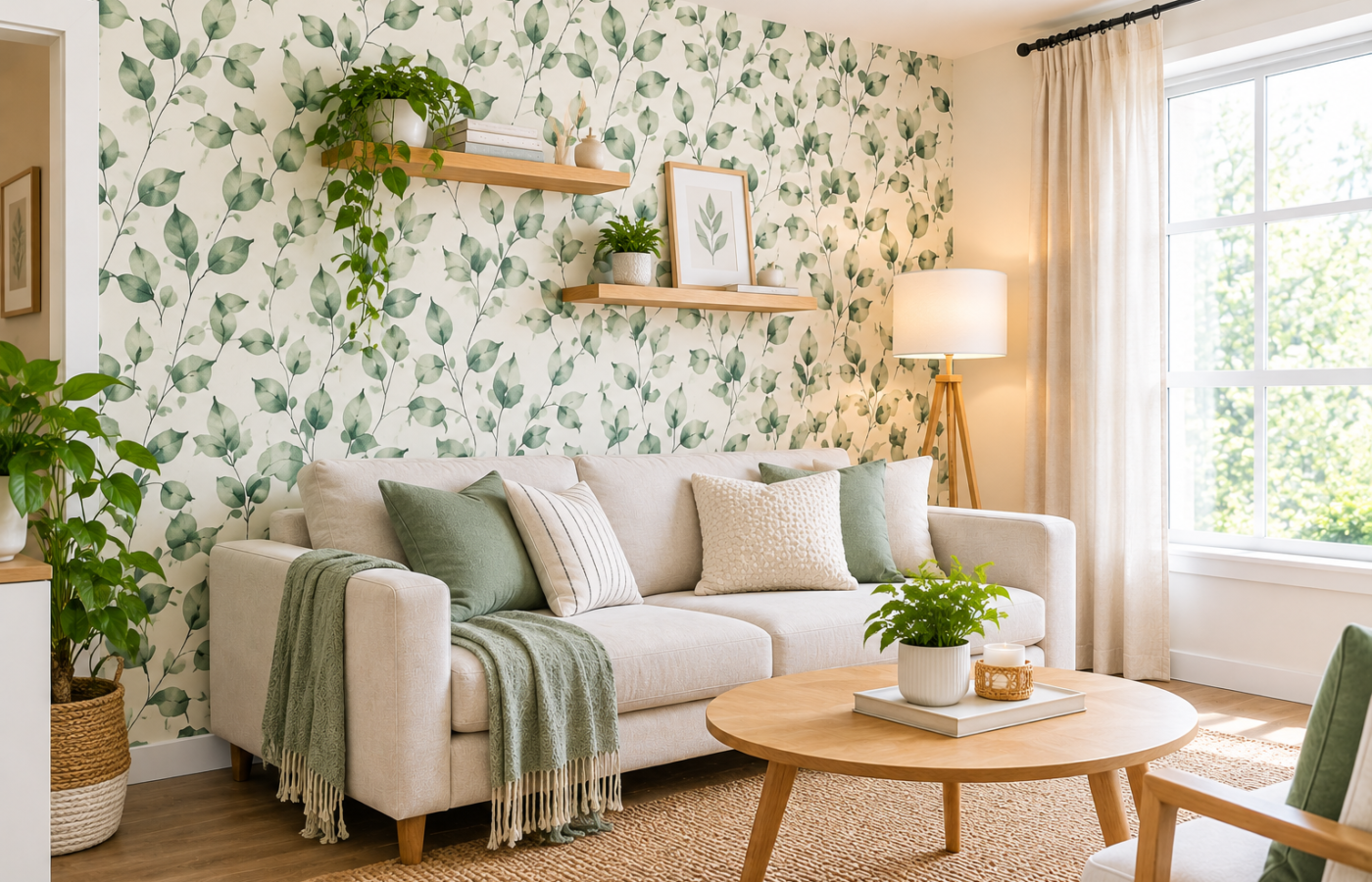
Wallpaper spent the better part of a decade out of favor, and it’s making a real comeback going into 2026 — driven almost entirely by how good the peel-and-stick versions have gotten. These peel and stick wallpaper ideas skip the two things that used to keep renters away from wallpaper altogether: a permanent installation and a steep learning curve.
The category has improved enough that a careful application can be difficult to tell from traditional wallpaper in photos, which is exactly why these peel and stick wallpaper ideas are worth taking seriously rather than treating as a temporary placeholder look.
Why Peel and Stick Wallpaper Is Having a Moment
Pattern and print are back in a big way after years of flatter, more minimal walls, and peel and stick wallpaper ideas are the lowest-risk way to try that shift without a long-term commitment. Because the material lifts off cleanly, it fits both a rental lease and a homeowner who isn’t ready to commit to something permanent.
1. Start With a Single Accent Wall
Covering just one wall — rather than a full room — is the easiest entry point among peel and stick wallpaper ideas, and it keeps both the cost and the pattern-matching work manageable for a first attempt. A bedroom headboard wall or a hallway end wall are both forgiving, low-traffic choices to start with.
2. Choose a Scale That Fits the Room
A large, bold print can overwhelm a small room, while a tiny print can disappear in a large one — matching pattern scale to room size is one of the most overlooked peel and stick wallpaper ideas. As a rough guide, a smaller room generally reads better with a smaller or more subtle repeat.
3. Use a Smoothing Tool, Not Just Your Hands
A plastic smoothing tool (sold alongside most rolls) pushes out air bubbles far more effectively than hands alone, and it’s the detail that separates a bubbled, obviously temporary result from one that looks properly installed. Of all the peel and stick wallpaper ideas here, this is the cheapest tool upgrade with the biggest visible payoff.
4. Line Up the First Strip With a Level
A true vertical line on the first strip matters more than any other single step, since every following strip lines up against it — a slightly off first strip compounds visibly by the third or fourth panel. This is one of the peel and stick wallpaper ideas most people rush past, and it shows immediately if skipped.
5. Try a Small Space Before a Full Wall
A powder room, a closet interior, or the inside of a bookshelf back panel is a genuinely good place to test peel and stick wallpaper ideas before committing to a larger wall. The smaller surface area means less material used and a lower cost if the pattern or application technique needs adjusting.
6. Pair Bold Pattern With Simple Furniture
Because peel and stick wallpaper already carries strong visual interest, the furniture and decor in front of it generally read better kept simple — the same logic behind limewash paint and other high-texture wall treatments. A busy pattern behind an equally busy room can start to feel cluttered rather than curated.
7. Remove It Slowly and at an Angle
Pulling a strip down and away at a low angle (rather than straight out from the wall) is what keeps peel and stick wallpaper from tearing or leaving adhesive residue behind at move-out. This last step matters as much as the application itself for anyone renting, since a clean removal is what makes the whole category worth using in the first place.
Doing This as a Renter
Nearly every lease that allows any wall decoration allows peel and stick wallpaper, since the entire category is built around leaving zero permanent trace. It pairs well with the same tape-and-prep mindset behind accent wall painting, just with adhesive-backed material instead of paint, and it’s arguably the single most reversible way to add real pattern to a rented space.
Budget and Timing
A single accent wall typically runs $40-100 depending on the pattern and brand, and takes an afternoon rather than a full weekend for most rooms. Plan for extra material beyond the exact wall measurement — pattern matching at seams uses more wallpaper than a plain wall would, and having a spare strip on hand avoids a mid-project scramble if one section needs a redo.
Where to Start If This Is Your First Time
A small, low-stakes wall — inside a closet, behind a bookshelf, in a powder room — is a far more forgiving place to try peel and stick wallpaper ideas than a large, highly visible living room wall. Once the smoothing and alignment technique feels comfortable on a small surface, the same approach scales up to a bigger wall with much more confidence.
Common Mistakes to Avoid
- Skipping the level on the first strip. Every following strip lines up against it, so a small error compounds fast.
- Rushing the smoothing step. Hands alone tend to leave air bubbles that a proper smoothing tool would catch.
- Pulling straight out at removal. This is what causes tearing and leftover adhesive, not the material itself.
- Choosing a pattern scale that fights the room size. An oversized print in a small room, or a tiny one in a large room, both read as a mismatch rather than a considered choice.
FAQs
Does peel and stick wallpaper actually come off cleanly? Yes, when removed slowly at a low angle rather than pulled straight out — this is the single biggest factor in a clean, residue-free removal.
Is peel and stick wallpaper as good-looking as traditional wallpaper? Modern versions have improved significantly, and a careful application with proper smoothing and alignment can be difficult to distinguish from traditional wallpaper in most rooms.
Where should a beginner start with peel and stick wallpaper ideas? A small, low-visibility space — a closet interior, a powder room, or a single accent wall — is the most forgiving place to practice the technique before a larger room.
How much does a peel and stick wallpaper wall cost? Typically $40-100 for a single accent wall, depending on the pattern and brand, plus extra material to allow for pattern matching at the seams.
Can I use peel and stick wallpaper in a rental? Yes — it’s specifically designed to be fully removable without damaging the wall underneath, making it one of the most rental-friendly ways to add real pattern to a space.
What’s the most common mistake with peel and stick wallpaper? Rushing the smoothing step or skipping the level on the first strip — both show up clearly in the finished result and are hard to fix after later strips go up.
Tools Worth Having Before You Start
A smoothing tool, a level, a sharp utility knife for trimming edges, and a tape measure cover the basics for most peel and stick wallpaper ideas. A cutting mat or scrap cardboard underneath protects the floor or baseboard while trimming excess material at the top and bottom of each strip.
The Bottom Line
The best peel and stick wallpaper ideas treat the material as seriously as permanent wallpaper — a true first strip, proper smoothing, and a pattern scaled to the room — while keeping the genuine advantage of a clean, damage-free removal when it’s time to change the look. Done this way, a single afternoon brings back real pattern and print without any of the commitment that used to come with it.
Related:
Accent Wall Painting Tips: 5 Easy Moves for a Clean Finish · Limewash Paint Ideas for 2026: Easy DIY Texture for Beginners