Afrobohemian home decor ideas have grown fast over the past year, and it’s easy to see why — the style pulls from West and Central African craft traditions and lands somewhere warmer and more grounded than standard boho. It’s less about pattern for pattern’s sake and more about pieces that actually mean something.
These are the elements that separate a genuinely afrobohemian room from a generic bohemian one, and how to bring them into a space without it looking assembled from a single shopping trip.
What Makes Afrobohemian Different From Generic Boho
Most afrobohemian home decor ideas share a few things standard boho doesn’t lean on as heavily: a specific warm earth-tone palette, traditional textile patterns with real cultural roots, and an emphasis on structural, intentional pieces over scattered small decor. The overlap is real, but the details matter.
1. Commit to a Warm Earth-Tone Palette
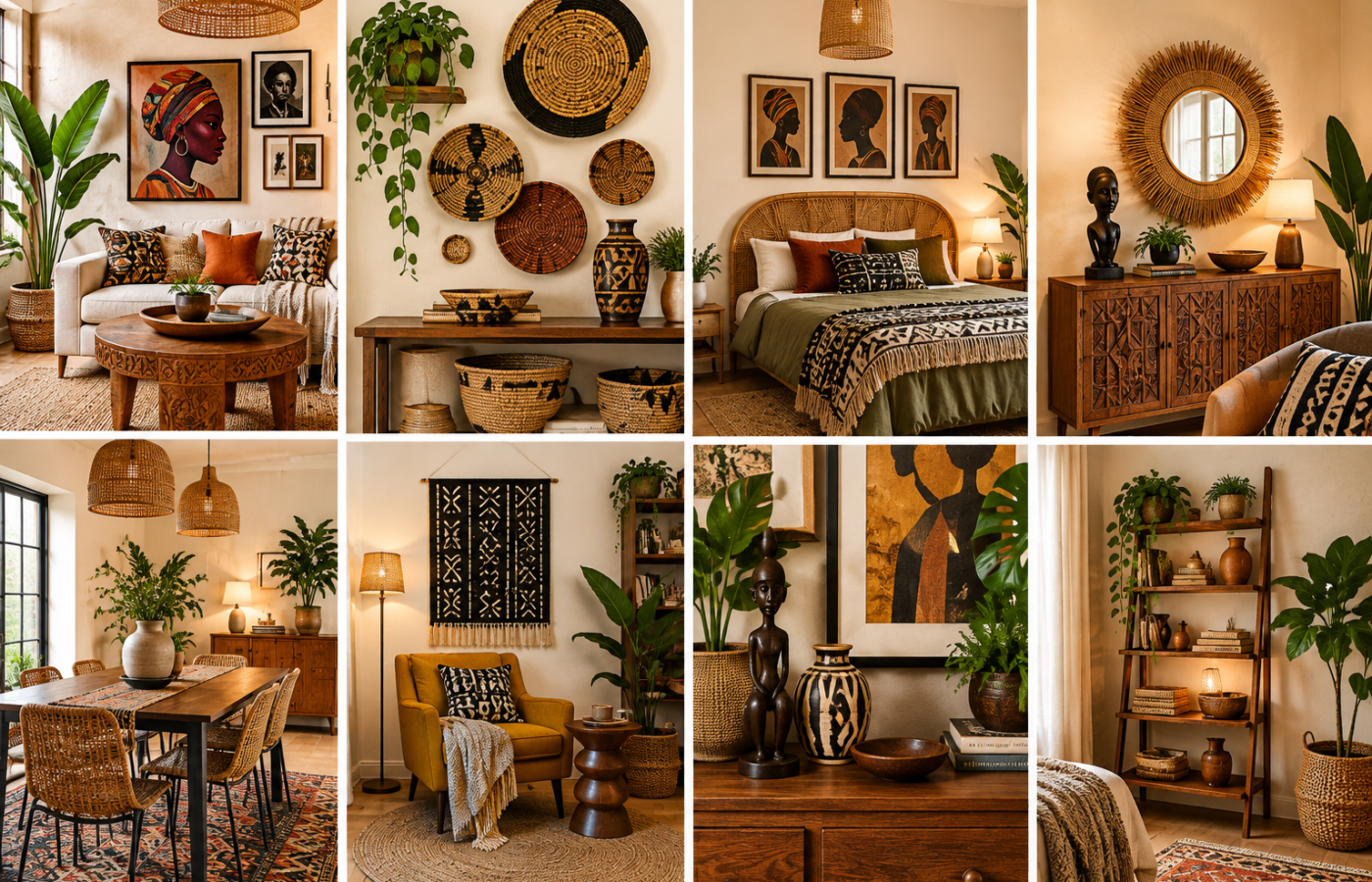
Deep terracotta, burnt sienna, ochre yellow, forest green and warm ivory form the base of most afrobohemian home decor ideas — commit one full wall to a warm tone rather than treating these colors as small accents. This palette is the foundation everything else builds on.
2. Add Woven Elements Throughout the Room
Rattan pendant lights, wall-hung baskets, and floor baskets add texture and dimension while keeping the room feeling light rather than heavy. Woven pieces are one of the most consistent afrobohemian home decor ideas across nearly every version of the style.
3. Mix Traditional Patterns With Real Roots
Mudcloth and kente cloth textiles bring pattern into the room with actual cultural history behind them, rather than a generic “tribal print.” Using a genuine textile — even in a single throw pillow or wall hanging — adds more authenticity than a large quantity of unrelated pattern.
4. Choose One Large Structural Plant
A single large plant in a hand-thrown terracotta pot contributes more to the look than a collection of small ones scattered around the room. Going structural rather than decorative with greenery is one of the afrobohemian home decor ideas that’s easiest to apply immediately, using a plant already on hand.
5. Layer Natural Materials
Wood, clay, rattan and woven fiber all belong in the same room without needing to match exactly — the material variety is part of what gives the style its depth. Mixing two or three of these materials in one space is a reliable way to bring several afrobohemian home decor ideas together at once.
6. Add One Grounding Dark Accent
Aubergine, midnight blue, or another deep tone used sparingly — a chair, a piece of pottery, a wall — keeps an otherwise warm, light palette from feeling flat. This contrast anchor is a detail that shows up in nearly every well-executed afrobohemian home decor ideas roundup for a reason.
7. Choose Objects That Actually Mean Something
The style leans on intentionality — a piece with a story or a real origin reads as far more authentic than something bought purely to complete a look. This is arguably the most important of all the afrobohemian home decor ideas here, since it’s what keeps the room from feeling like a themed set rather than a lived-in space.
8. Balance Pattern With Breathing Room
Afrobohemian style embraces layered pattern and texture, but it still needs some visual rest — a plain wall, a simple piece of furniture — so the patterned elements don’t compete with each other for attention. Getting this balance right is what separates a curated room from an overwhelming one.
Bringing This Into a Rental
Nearly all of these afrobohemian home decor ideas are fully portable. The palette can come from textiles and a single accent wall rather than a full repaint, woven pieces and plants are entirely freestanding, and even wall art or fabric can use removable hanging methods. A renter can build this look in full and take it to the next apartment.
Where to Source Pieces Thoughtfully
Since intentionality is central to this style, where pieces come from matters as much as how they look. Look for artisan marketplaces, fair-trade importers, and makers who credit the specific region or tradition a textile or basket comes from, rather than mass-produced items using the aesthetic without the context. Several of the best afrobohemian home decor ideas start with a single well-sourced piece — a specific basket, a specific cloth — built around slowly rather than filling a room with unrelated pattern all at once.
Budget Priorities If You Can Only Do a Few
If budget only allows for two or three changes, start with the earth-tone palette and one structural plant — these two afrobohemian home decor ideas cost the least and shift a room’s feel the most. Woven pieces, patterned textiles and the dark accent color can all be added gradually as specific, well-chosen pieces are found.
Common Mistakes to Avoid
- Using generic “tribal print” instead of specific textiles. Real mudcloth, kente or ankara patterns read as far more authentic than an unrelated print.
- Going too pattern-heavy with no breathing room. Even a layered style needs a few calm surfaces to rest the eye.
- Choosing decorative plants over one structural one. A single large plant does more for the look than many small scattered ones.
- Skipping the earth-tone base. Without the warm palette underneath, the other elements read as generic boho rather than specifically afrobohemian.
FAQs
What colors define afrobohemian home decor? Deep terracotta, burnt sienna, ochre yellow, forest green and warm ivory form the base palette, with a dark accent color like aubergine or midnight blue used sparingly for grounding.
How is afrobohemian different from regular bohemian style? Afrobohemian leans specifically on West and Central African textile traditions (mudcloth, kente, ankara) and a warmer, more grounded earth-tone palette than generic boho typically uses.
Can I create an afrobohemian look on a budget? Yes — the palette, one large plant, and a few woven pieces do most of the visual work, and none of it requires expensive furniture to start.
Is this a passing trend or a lasting style? Search interest has grown significantly over the past year, and the style’s roots in specific, real textile traditions tend to make it more durable than decor trends built purely around a visual aesthetic.
Where should I buy authentic afrobohemian pieces? Artisan marketplaces and fair-trade importers that credit the specific maker or region a piece comes from tend to offer more authentic afrobohemian home decor ideas than mass-produced items using the look without the sourcing.
Does afrobohemian decor work in a small apartment? Yes — the style’s emphasis on a few well-chosen, structural pieces over large quantities of decor actually suits a small space well, since it doesn’t rely on filling every surface to read as complete.
Why This Style Is Growing Right Now
Part of what’s driving interest in afrobohemian home decor ideas is a broader shift toward rooms that feel personal and specific rather than generically styled. As more people search for decor with real cultural roots and a clear story behind each piece, styles built on authentic tradition — rather than a purely visual trend — tend to hold interest longer than something built around a single viral aesthetic.
The Bottom Line
The most authentic afrobohemian home decor ideas come down to a warm earth-tone base, real textile patterns with cultural roots, natural materials, and one large structural plant rather than scattered small decor. Get those elements right, and the room reads as intentional and collected, not assembled from a single trend-chasing shopping trip.
Related:
16 Boho Living Room Ideas (Without the Clutter) · 22 Living Room Ideas That Make a Small Space Feel Bigger