A wellness room used to mean a spa. In 2026 it means something much simpler: a quiet spot in your home that exists only for slowing down. Searches for wellness rooms have climbed sharply this year, and the good news is that you do not need a spare bedroom to have one.
A wellness room at home can be a corner of a bedroom, a section of a living room or even a wide hallway nook. This guide shows how to set one up with light, color, seating and storage, without spending much.
What a Wellness Room Actually Is
There is no strict definition. A wellness room is a space set aside for calm activities such as stretching, yoga, reading, journaling or simply sitting quietly. Some people add a meditation cushion, while others prefer a comfortable chair and a good lamp. What matters is that the space feels restful and is not used for work or scrolling.
Step 1: Pick the Right Spot
Look for the quietest corner with the least foot traffic and, if possible, some natural light. A spot near a window is ideal. If your home is small, a corner of the bedroom or the end of a living room can work well. A small home does not stop you from having a wellness room at home, it just means you use one corner wisely, the same way you would zone a studio apartment layout.
Step 2: Start With Soft Natural Light
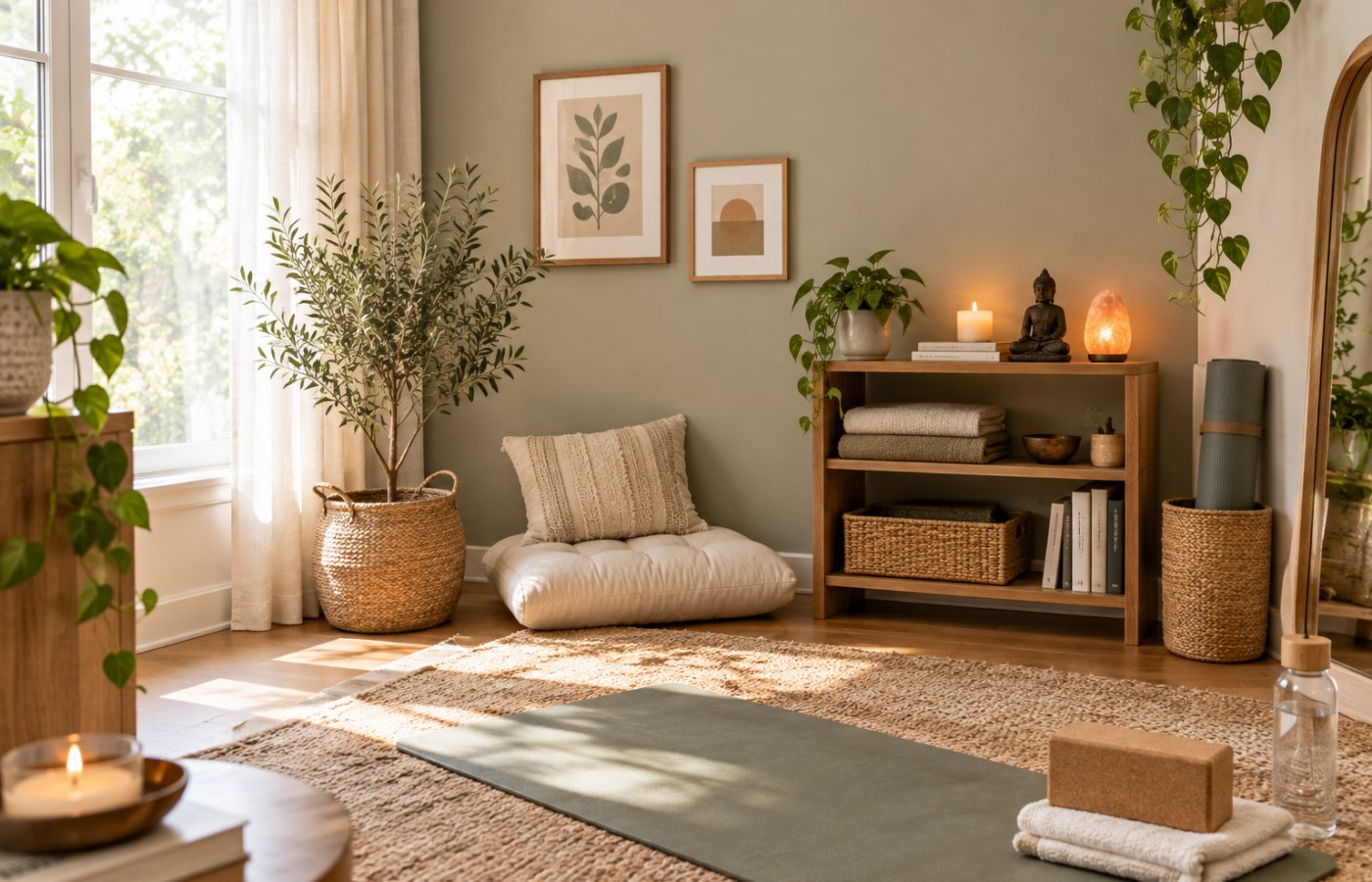
Daylight is the easiest calming feature. Use sheer curtains so light comes in gently, and avoid harsh overhead bulbs. In the evening, switch to warm lamps or a dimmable light so the space feels different from the rest of the home. Light is the first thing to get right in any wellness room at home.
Step 3: Choose a Calm Color Palette
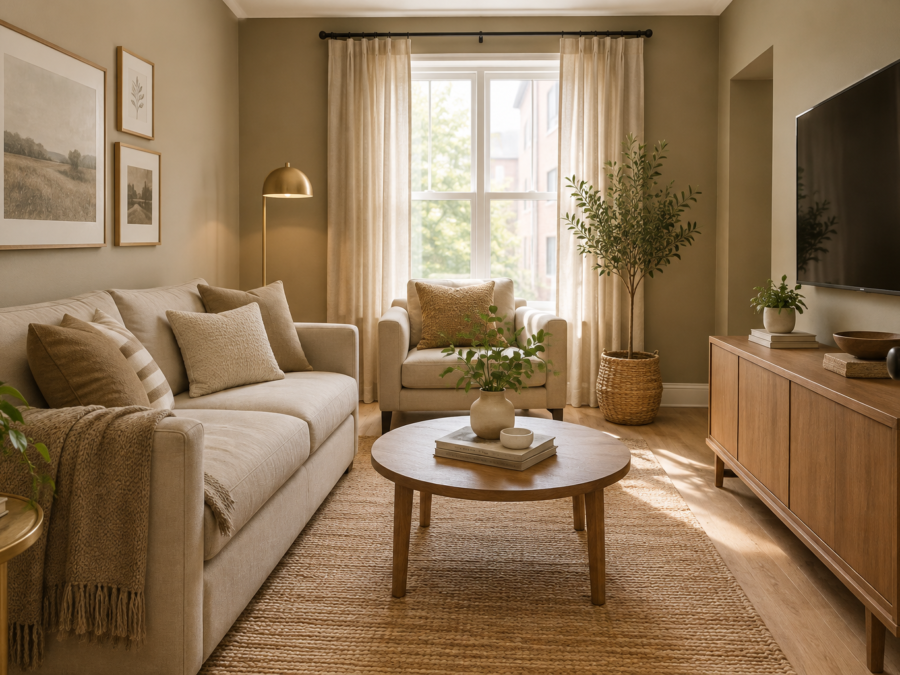
Soft neutrals, warm whites, sage green, sand and clay tones are the most popular colors for wellness spaces. You do not have to repaint the whole room. A couple of pillows, a throw and a linen curtain can set the mood. If you do want to paint, a single soft wall in a muted green or warm beige is enough.
Step 4: Add Comfortable Floor or Seating Space
A large cushion, a thick yoga mat or a low chair gives you somewhere to settle. A jute or wool rug underneath adds warmth and defines the zone. Keep this area clear so you can stretch out, and avoid crowding it with furniture that does not belong.
Step 5: Bring in Plants and Natural Textures
Plants make a space feel alive and fresh. Wood, linen, cotton, rattan and stone add texture without visual noise. If you want more ideas, our guide to biophilic design covers plants and natural materials for apartments in detail.
Step 6: Think About Sound and Scent
A small speaker for soft music, a tabletop fountain or a natural-scented candle can make the space feel more separate from the rest of the home. Keep it subtle. Strong fragrances can be overwhelming, and not everyone enjoys the same scents.
Step 7: Keep Storage Simple and Hidden
A basket for a blanket, a small shelf for a book and a hook for a mat are usually enough. Clutter defeats the purpose of a quiet room, so store anything that does not belong in the space. A tidy corner is one of the most important parts of a wellness room at home.
Step 8: Make It Screen-Free
Many people choose to keep phones and laptops out of the space. A wellness room at home works best when it is a place to disconnect. If you use a guided meditation app, put the phone on silent and leave it face down.
Doing This as a Renter
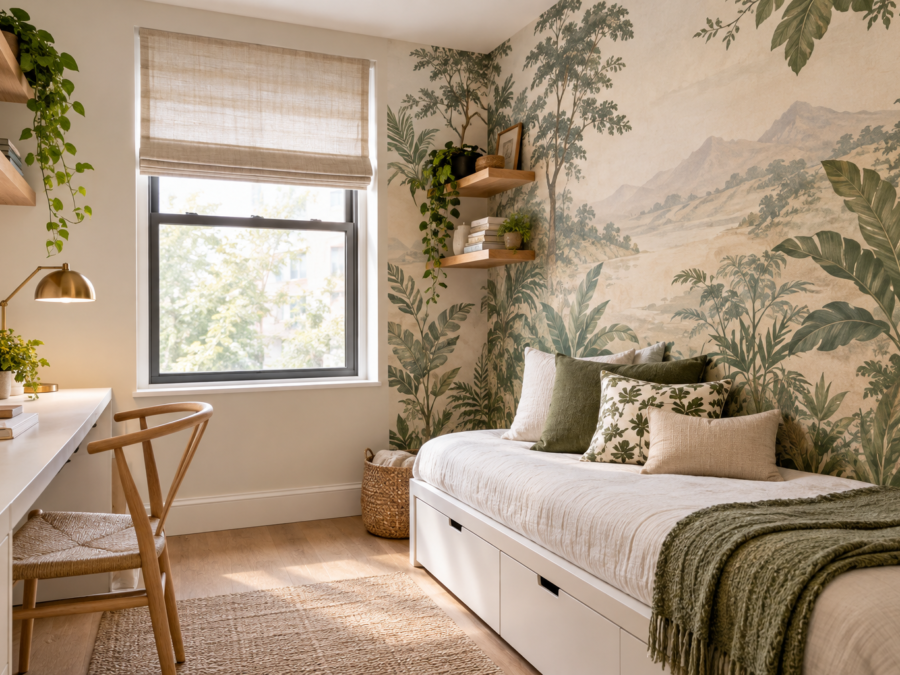
Almost everything in a wellness room at home is portable. Rugs, cushions, lamps, plants, baskets and curtains do not need any permanent changes. If you want a soft accent wall, a removable wall covering is an easy way to add color without repainting.
Budget and Timing
You can create a simple wellness space for under $100 with a rug, two cushions, a lamp and a plant. Adding a good yoga mat, a linen curtain and a small shelf may bring the total to a few hundred dollars. Most people set the space up in a single afternoon, then add pieces over time.
Where to Start If This Is Your First Time
Begin with one corner and just three things: a comfortable seat, warm light and one plant. Use it for a week before buying anything else. This lets you see how you actually use the space, and it prevents you from filling it with items you do not need.
Common Mistakes to Avoid
- Choosing a spot with too much traffic. A corner people walk through every few minutes will not feel calm.
- Using bright, cold overhead lighting. Warm, low light suits a relaxing space far better.
- Filling it with too much decor. A wellness room at home should feel open and simple.
- Using it as a storage or work zone. Keep the area for rest, not for laundry piles or emails.
FAQs
What is a wellness room at home? It is a quiet, calm space set aside for activities like stretching, reading, journaling or meditation.
Do I need a spare room? No. A corner of a bedroom or living room is enough.
What colors are best for a wellness space? Soft neutrals, sage green, sand and warm white are popular choices.
How much does it cost? A basic setup can cost under $100, and you can build it up slowly over time.
Can I set one up in a rental? Yes. Rugs, cushions, lamps, plants and curtains are all removable.
Do I need special equipment? No. A comfortable seat, warm light and a little quiet are enough to begin with.
Tools and Basics to Gather
You do not need much. A yoga mat or thick rug, two cushions, a soft blanket, a warm lamp and a plant cover most needs. If you plan to use the space for stretching, choose a mat that does not slip and enough floor space for your arms and legs.
Adapting a Wellness Room to Your Home
The best setup depends on the space you have. In a studio, a folding screen or a tall bookshelf can separate the corner from the bed. In a bedroom, the space beside the window often works well. If you share your home, agree on a few quiet hours so the space stays peaceful. A wellness room at home does not have to look the same for everyone, and it can change as your needs change. Some people use it for a morning stretch, others for an evening read, and both are equally valid.
Making Small Spaces Feel Calmer
In a small home, calm often comes from reducing visual noise. Use fewer colors, keep surfaces clear and choose furniture with simple lines. A tidy, quiet corner gives your eyes somewhere to rest, and it helps a wellness room at home feel like a real retreat instead of a leftover corner. The same simple approach works in a home office for a small space.
The Bottom Line
A wellness room at home does not need to be big or expensive. Choose a quiet corner, add soft light, a comfortable place to sit, a plant and a calm palette, and keep it free of clutter and screens. In a few hours you can turn an unused corner into your favorite spot in the house.
Related:
Biophilic Design Ideas for Apartments: Easy Green Wins in 2026 · Studio Apartment Layout Ideas: 10 Ways to Zone One Room