Both shiplap and board and batten give a plain wall some texture, and both are popular for accent walls, entryways and bedrooms. But they are not the same. Shiplap vs board and batten comes down to direction, depth, cost and how hard each is to install.
This guide compares the two on six points, shows which rooms suit each style, and helps you choose before you buy a single board.
Quick Answer: Shiplap vs Board and Batten
- Shiplap: horizontal overlapping boards, a clean, cozy, coastal or farmhouse look.
- Board and batten: vertical boards or strips with narrow battens, a taller, more traditional look.
- Easiest to install: shiplap, because the joints space themselves.
- Cheapest: depends on materials; MDF board and batten is often the lowest-cost option.
- Best for height: board and batten.
What Each Wall Style Is
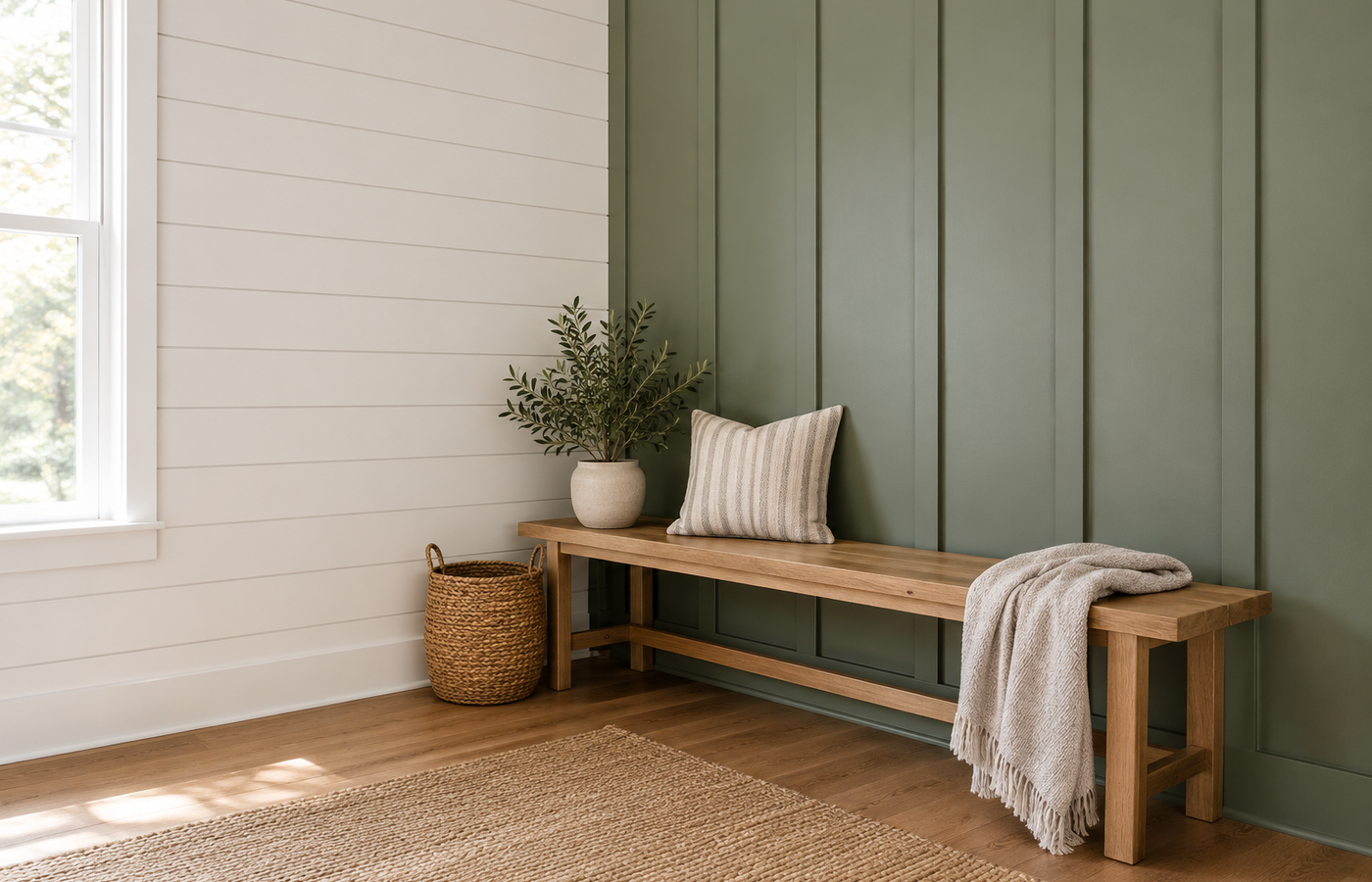
Shiplap is a type of wooden board with a groove (a rabbet) cut along the edge so each plank overlaps the next, which gives the wall a neat line between each board. Board and batten uses wider vertical boards, or a flat panel with narrow strips (battens) fixed over the seams and spaced evenly. In shiplap vs board and batten, the biggest visual difference is direction: horizontal lines for shiplap and vertical lines for board and batten.
The 6 Differences at a Glance
| Point | Shiplap | Board and batten |
|---|---|---|
| Direction | Horizontal | Vertical |
| Feels | Wider, cozier | Taller, more formal |
| Spacing | Nearly self-spacing | Needs careful measuring |
| Install | Easier and faster | More marking and cutting |
| Cost | Real wood about $2.50-7.00 per sq ft (reported) | Depends on MDF vs wood |
| Style | Coastal, farmhouse, cottage | Traditional, modern farmhouse, craftsman |
Look and Feel
Horizontal shiplap makes a room feel wider and more relaxed, which is why it is common in bedrooms and living rooms. Vertical board and batten draws the eye up, so it makes ceilings feel higher. If you have a low ceiling, board and batten usually works better; in a narrow hallway, shiplap can widen the look. That visual effect is the main reason many people pick one in the shiplap vs board and batten debate.
Spacing and Installation
Shiplap boards overlap by a set amount, so they are close to self-spacing; you mostly need to keep the first row level. Board and batten needs more planning: you measure and mark where each batten goes so the gaps are even, and you check that the wall is plumb. A laser level or a long level helps with both. Whichever you choose, find the studs first and check for wires and pipes before nailing.
Cost
Reports put real-wood shiplap at roughly $2.50 to $7.00 per square foot, though prices vary widely by wood and region. Board and batten can be cheaper if you use MDF sheets with thin strips, and more expensive if you use solid wood. Check local prices and add paint, primer, caulk and nails. In the shiplap vs board and batten cost question, material choice matters more than the style.
Which Rooms Suit Each Style?
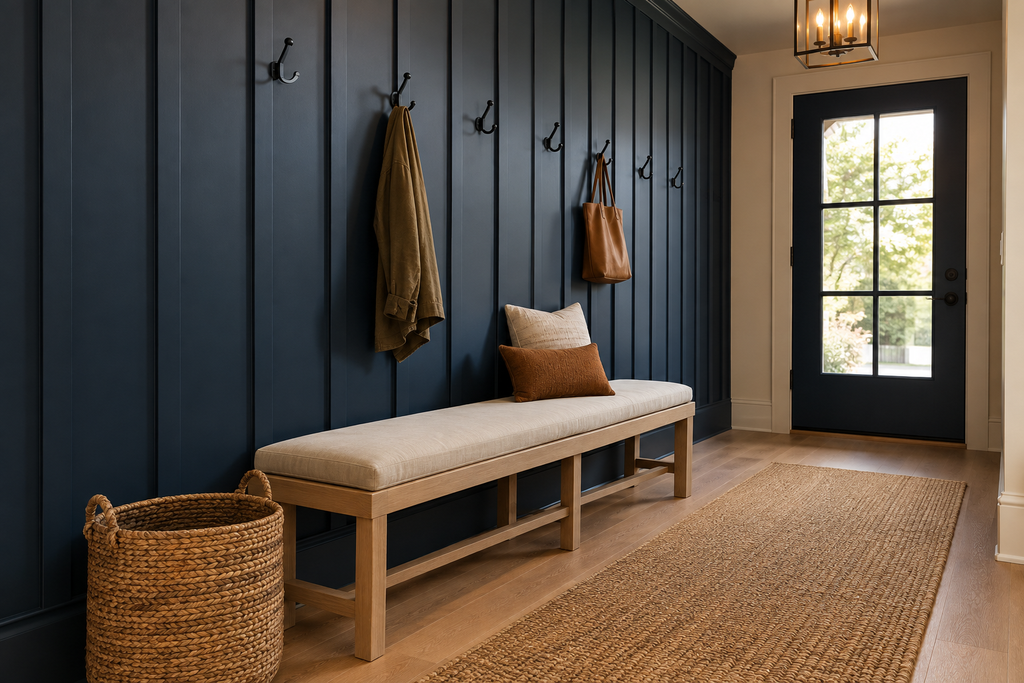
Shiplap suits bedrooms, bathrooms, cottages and accent walls behind a bed or fireplace. Board and batten suits entryways, hallways, dining rooms and mudrooms, since the top rail can hold hooks. For a small entry, see our guide to small entryway ideas for apartments. In kitchens, either can appear on an island or a wall, and our modern farmhouse kitchen ideas show how warm the look can be.
Other Wall Trim Options
If neither feels right, there are more options: beadboard, tongue and groove, nickel gap and wall molding. A framed look with thin trim is quicker and gentler on a budget; see our picture frame molding ideas for how to place the frames.
Painting the Wall
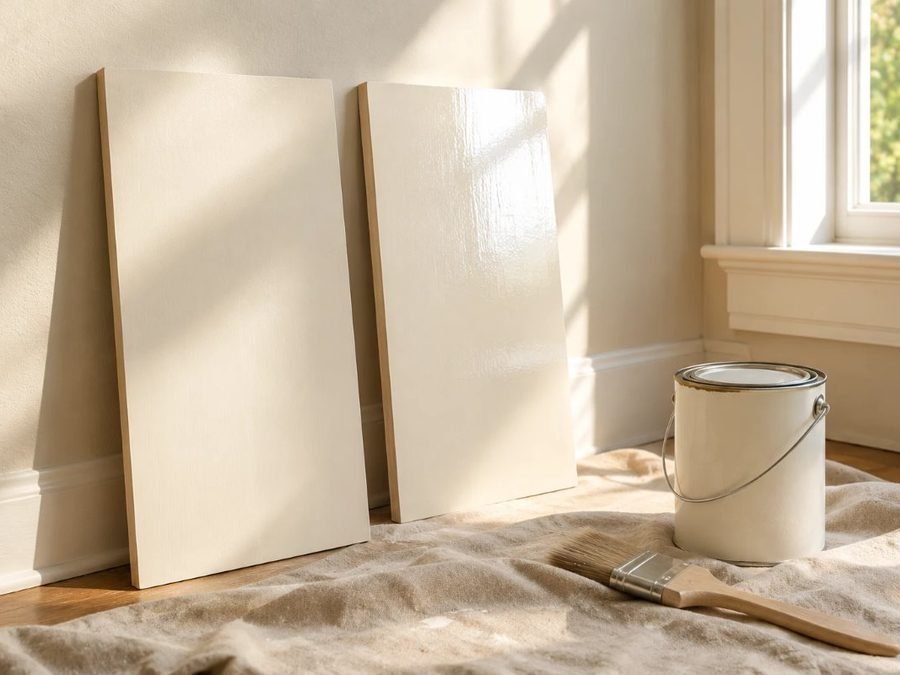
Both styles look best painted. Fill nail holes, caulk the seams and use a primer first. On shiplap, paint the grooves with a small brush so they do not show bare wood; on board and batten, caulk where the batten meets the board. A satin or semi-gloss sheen wipes clean. For crisp edges, follow our accent wall painting tips.
Colors That Work
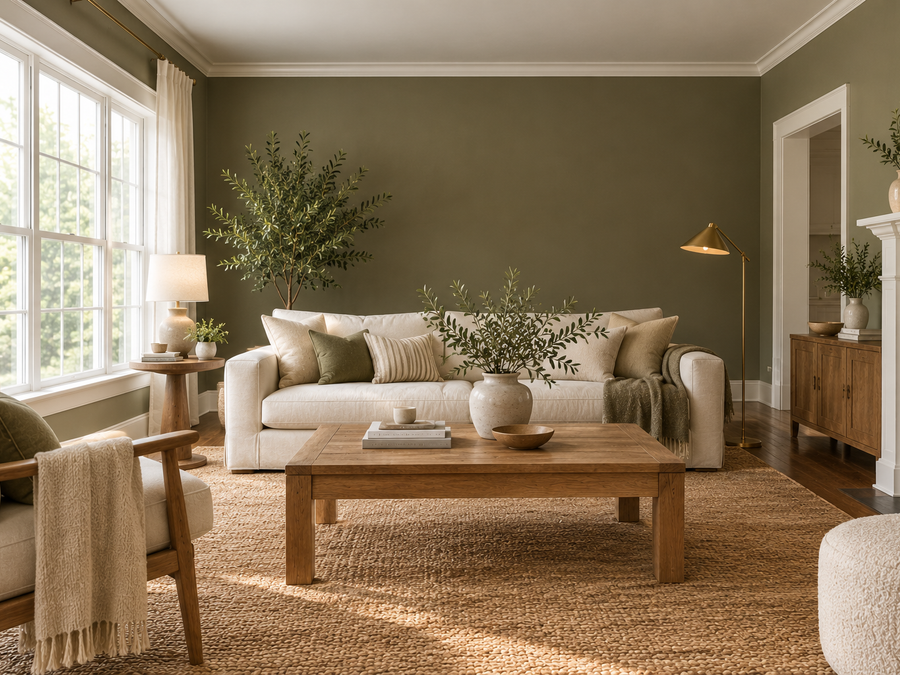
White and cream feel classic with either style. Deep green, navy and charcoal look striking on board and batten and make a room moody. Soft gray or sage works well on shiplap. Dark colors show shadow lines more, so the texture stands out.
Doing This as a Renter
Renters can use peel-and-stick shiplap panels or lightweight board and batten kits if the landlord allows them, or paint thin MDF strips and hang them with removable strips. Avoid nailing into the wall without permission.
Budget and Timing
A small accent wall usually takes a weekend. Plan time to cut, nail, fill, caulk and paint, and give caulk and paint time to dry. Buy about 10 percent extra material for waste and mistakes.
Where to Start If This Is Your First Time
Start with one small wall. Measure the height and width, find the studs, and decide the board or batten spacing on paper. Cut a few pieces and tape them up to preview. If you are still torn in shiplap vs board and batten, use the ceiling height as the tie-breaker: low ceilings favor vertical.
Safety
Wear a dust mask and glasses when cutting. Check for wires and pipes before nailing, use a stud finder and keep power tools unplugged when changing blades. Paint in a ventilated room.
How to Decide
Ask three questions. How tall is the ceiling? How much time and skill do you have? What style is the rest of the room? Low ceiling and a tailored room point to vertical board and batten; a cozy, relaxed room and a first-time DIYer point to shiplap. If you are still stuck in shiplap vs board and batten, tape paper strips to the wall in both directions and look at them for a day.
Maintenance and Durability
Both styles are easy to clean when painted with a satin finish. Shiplap grooves can collect dust, so wipe them with a damp cloth. Board and batten has fewer grooves but more edges to caulk. In humid rooms like bathrooms, choose moisture-resistant materials and seal the edges. Either way, the shiplap vs board and batten choice is about looks, not durability.
Common Mistakes to Avoid
- Skipping the level. A crooked first row throws off the whole wall.
- Not finding studs. Boards can pull away.
- Uneven batten spacing. Mark every position first.
- Forgetting to caulk and fill. Gaps and nail heads show once painted.
FAQs
Is shiplap cheaper than board and batten? It depends on the material; MDF board and batten is often the lowest cost.
Which is easier to install? Shiplap, because the joints space themselves.
Does board and batten make a room look taller? Yes, vertical lines draw the eye up.
Can I mix shiplap and board and batten? Yes, in different rooms or on different walls, but not on the same wall.
Is shiplap still in style? It remains popular, especially when painted and kept simple.
Can I paint either one? Yes, with a good primer and a satin or semi-gloss finish.
Tools and Basics to Gather
A level, stud finder, tape measure, saw, brad nailer or hammer, wood filler, caulk, primer, paint, brushes, painter’s tape, dust mask and safety glasses.
The Bottom Line
Shiplap vs board and batten is a choice between wide and cozy or tall and tailored. Choose shiplap for an easy, relaxed look and board and batten for height and structure. Check the ceiling height and room use, and start with one wall to learn the technique.
Related:
Picture Frame Molding Ideas · Accent Wall Painting Tips for a Clean Finish