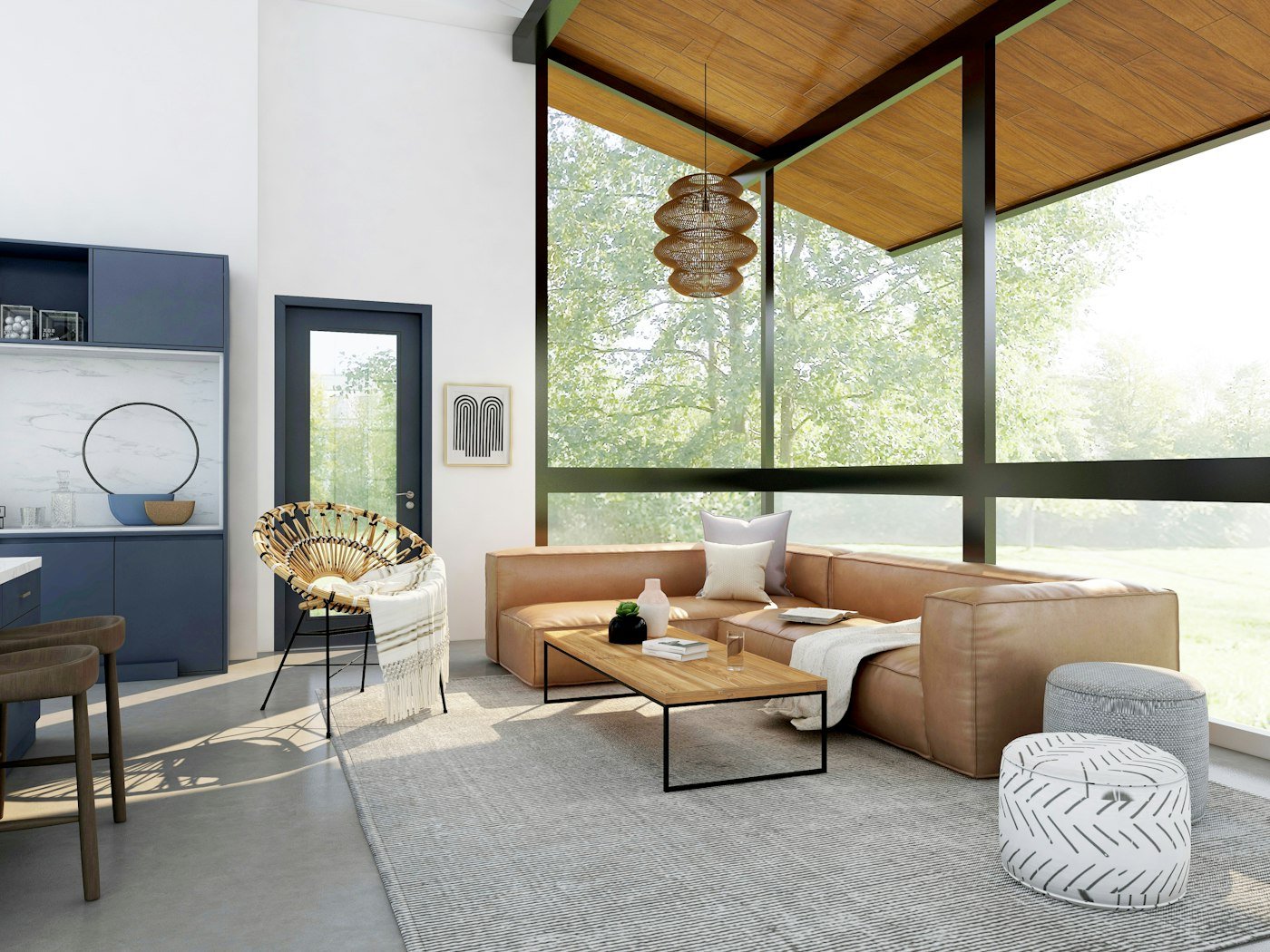
A good dining room is about three decisions: a table that fits the room and the people, a light that hangs at the right height, and chairs you can sit in for two hours. Get those right and the rest is styling. Here is how each of the rooms below did it.
Get the table size right first
| People | Rectangular table | Round table | Room needed (clearance 90 cm each side) |
|---|---|---|---|
| 4 | 120 x 80 cm | 100 cm diameter | 300 x 260 cm |
| 6 | 160 x 90 cm | 120 cm diameter | 340 x 270 cm |
| 8 | 200 x 100 cm | 150 cm diameter | 380 x 280 cm |
1. A round table in a square room
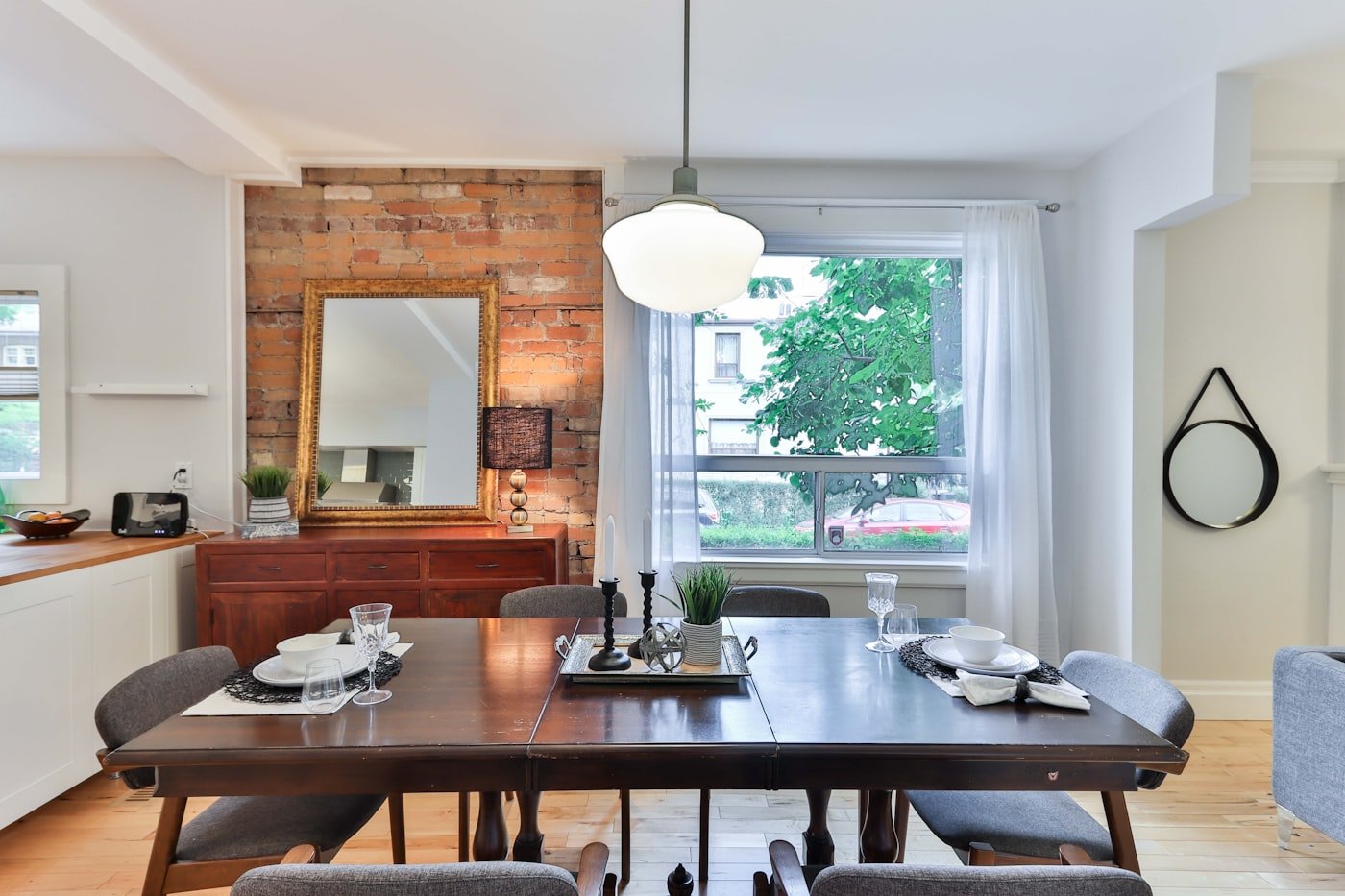
If the room is roughly square, a round table uses the space better and feels more social because everyone can see everyone. A 120-centimetre round seats six for dinner and eight for drinks.
2. Hang the pendant 75 centimetres above the table
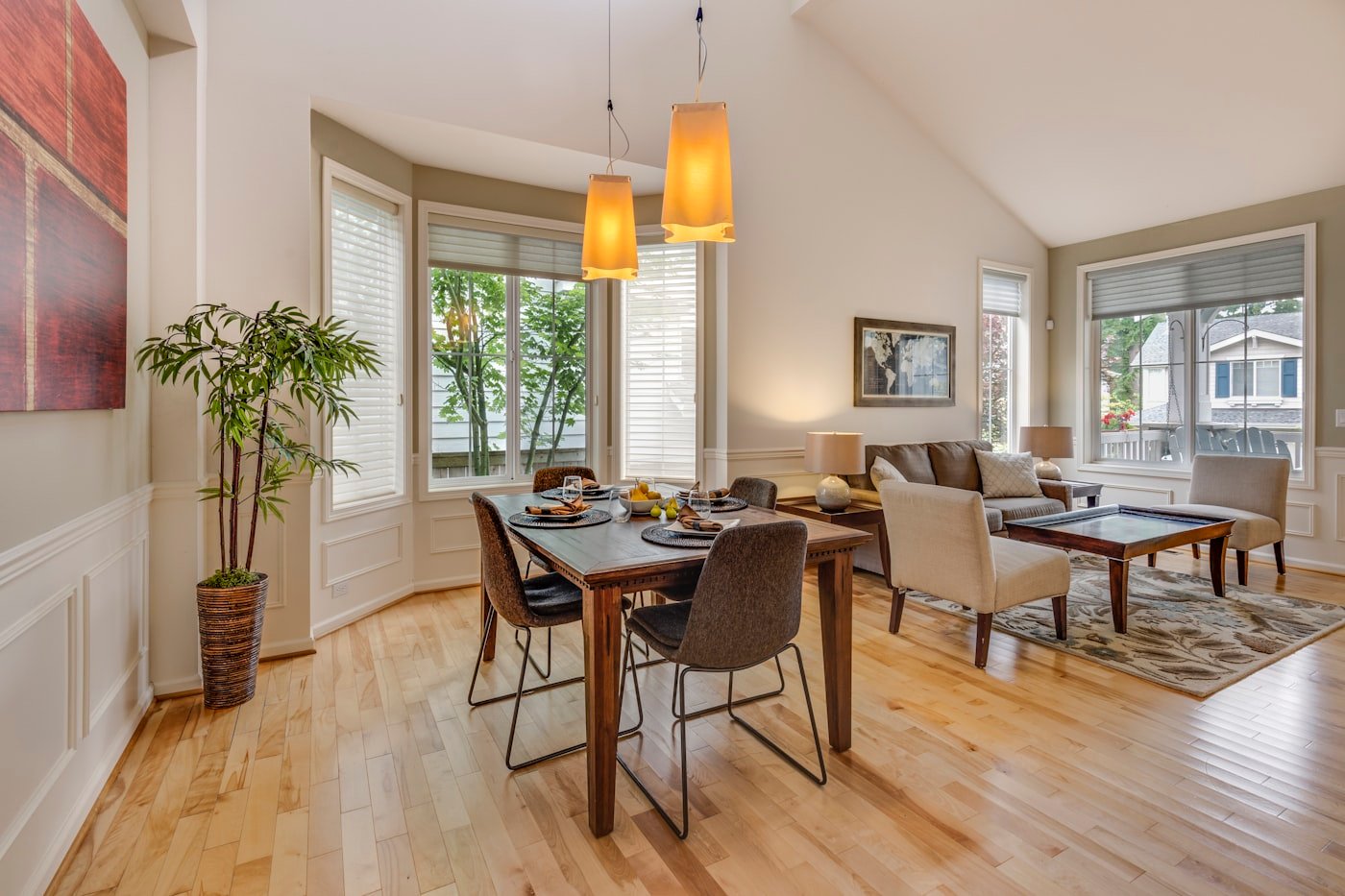
The most common dining room mistake is a pendant hung too high. Bottom of the shade 75 to 80 centimetres above the tabletop, centred on the table, not the room. Put it on a dimmer.
3. A bench on one side
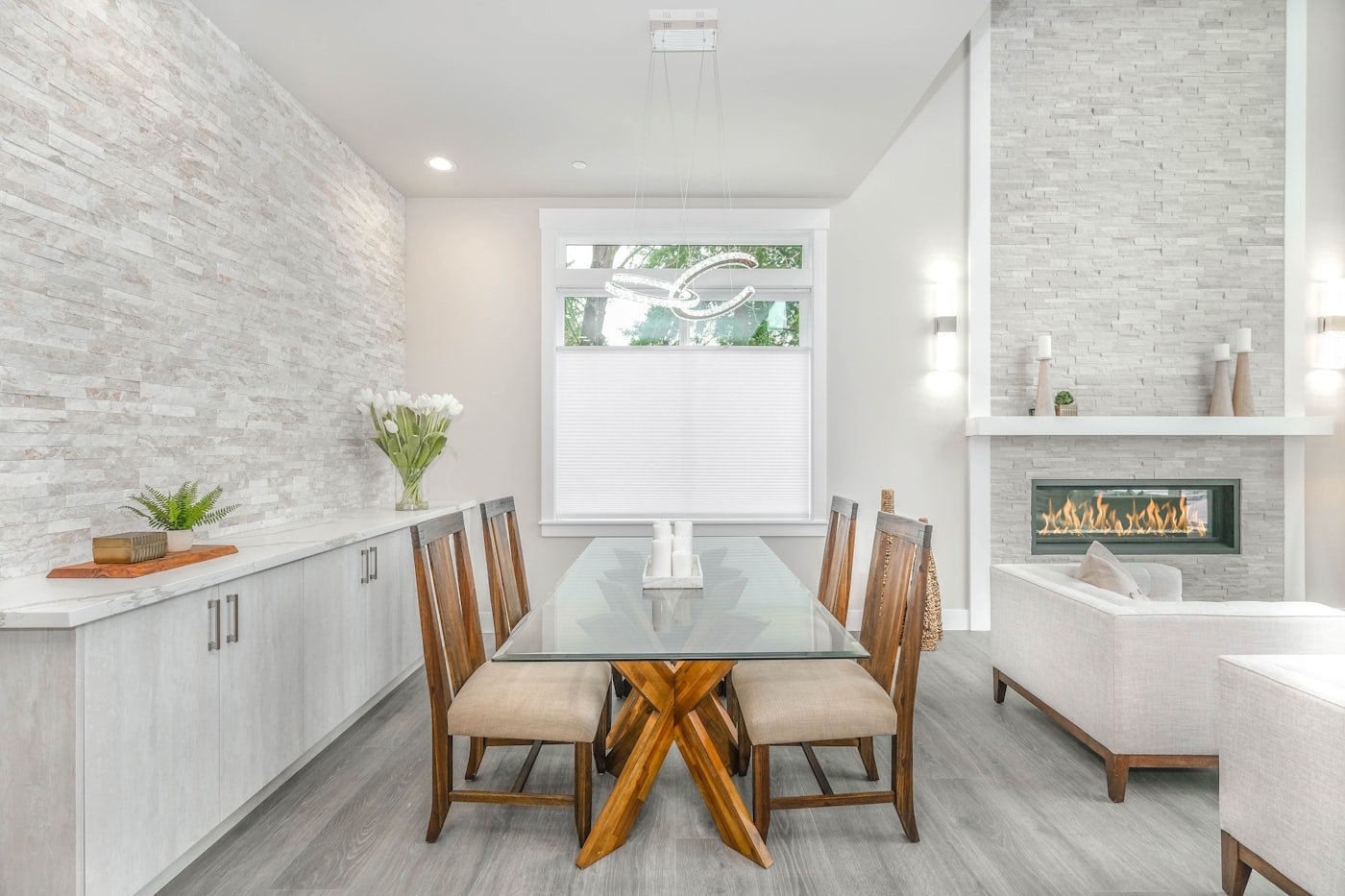
A bench on the wall side saves 40 centimetres of pull-out space and seats more people. Add a long cushion and two back cushions and it is comfortable for a full evening.
4. Upholstered chairs, if you actually linger
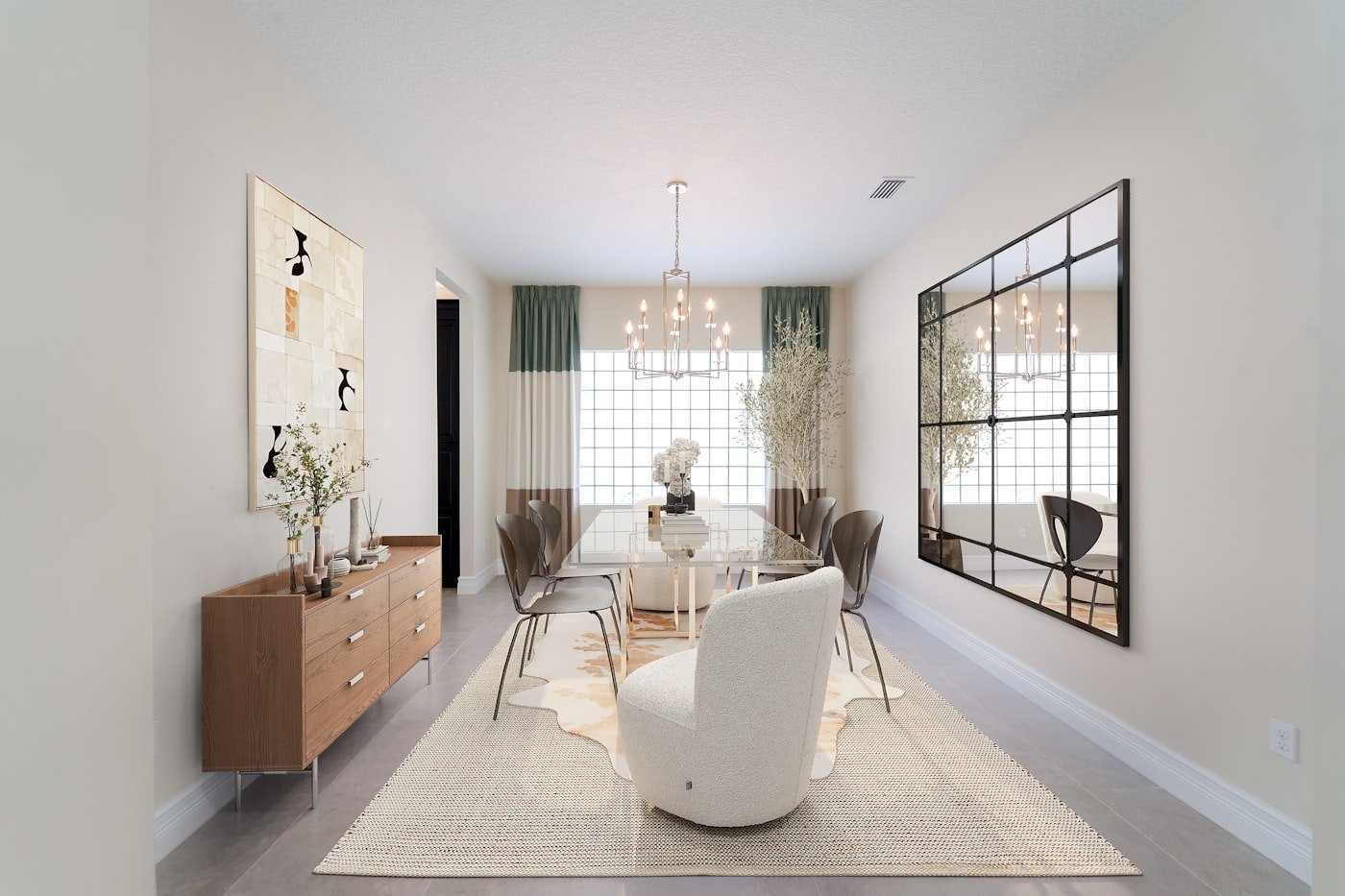
If your dinners run long, upholstered seats and backs are worth it. Choose a performance fabric or a removable washable cover and a mid-tone colour that hides marks.
5. One big piece of art, not a gallery
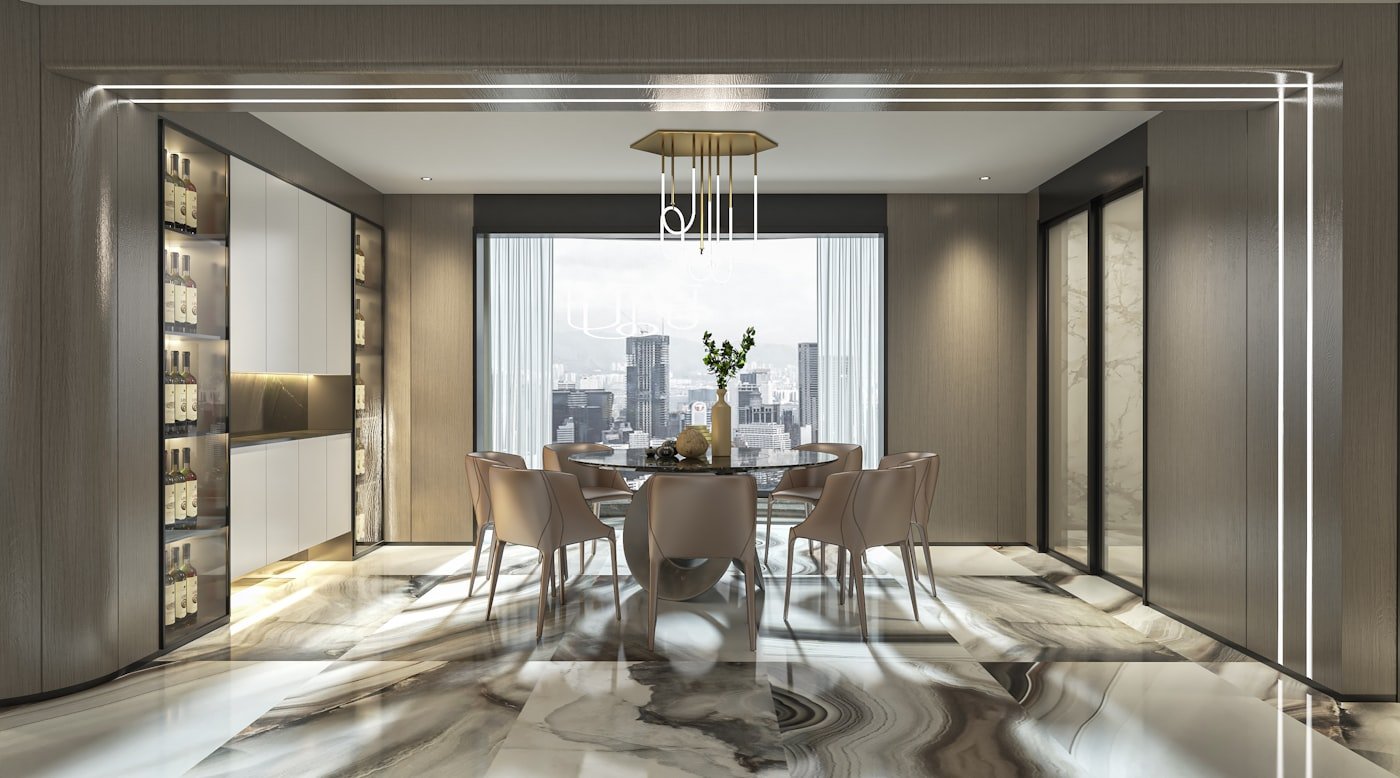
A single canvas at least two-thirds the width of the table, hung with its centre at 145 centimetres. A gallery wall in a dining room competes with the table for attention.
6. A sideboard for everything that is not on the table
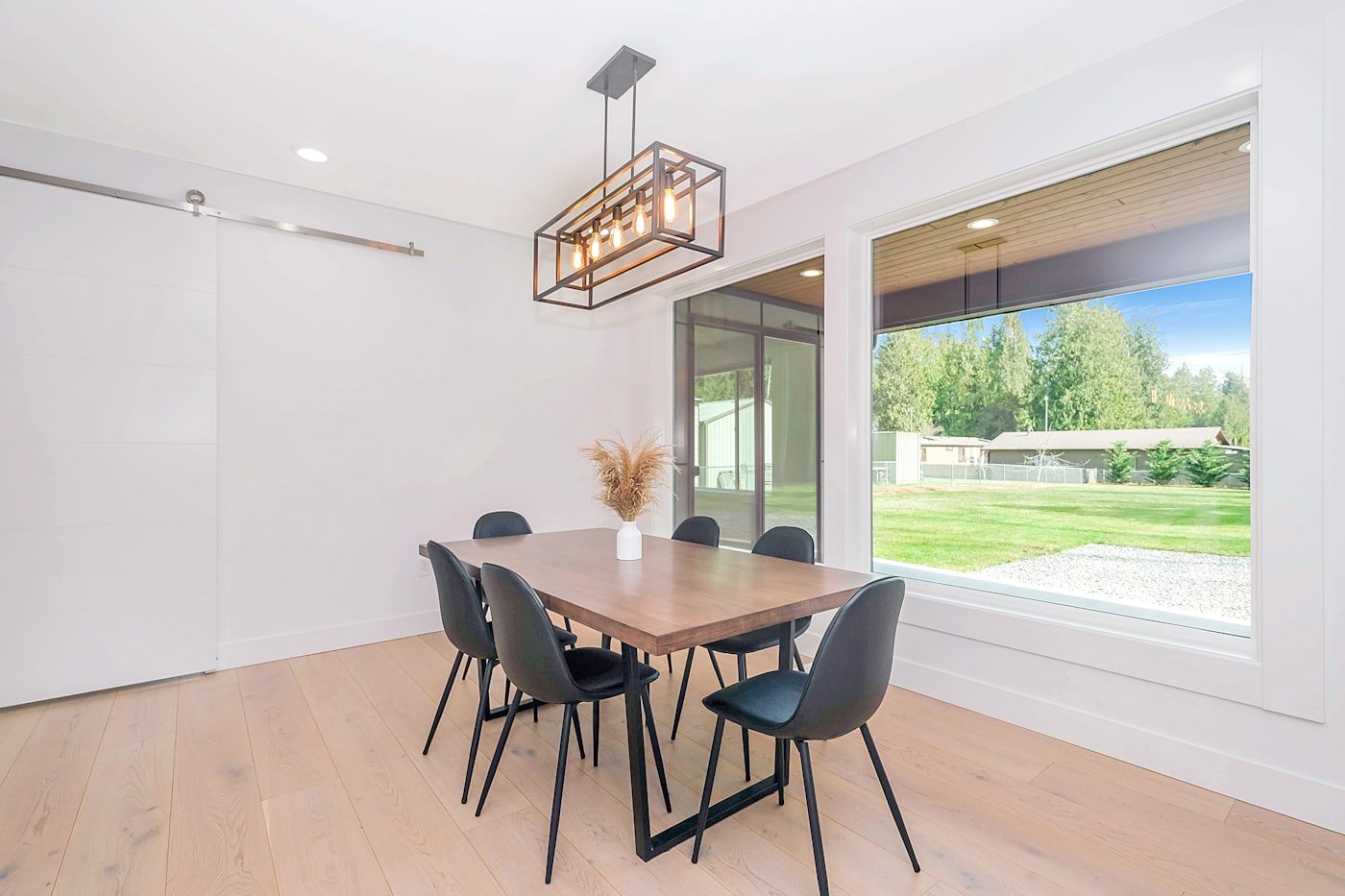
Match the sideboard length roughly to the table. Keep the top mostly empty: a lamp, a bowl, a plant. Closed storage below, because dining room clutter is mostly things with no home.
7. A rug that extends 60 centimetres past the chairs
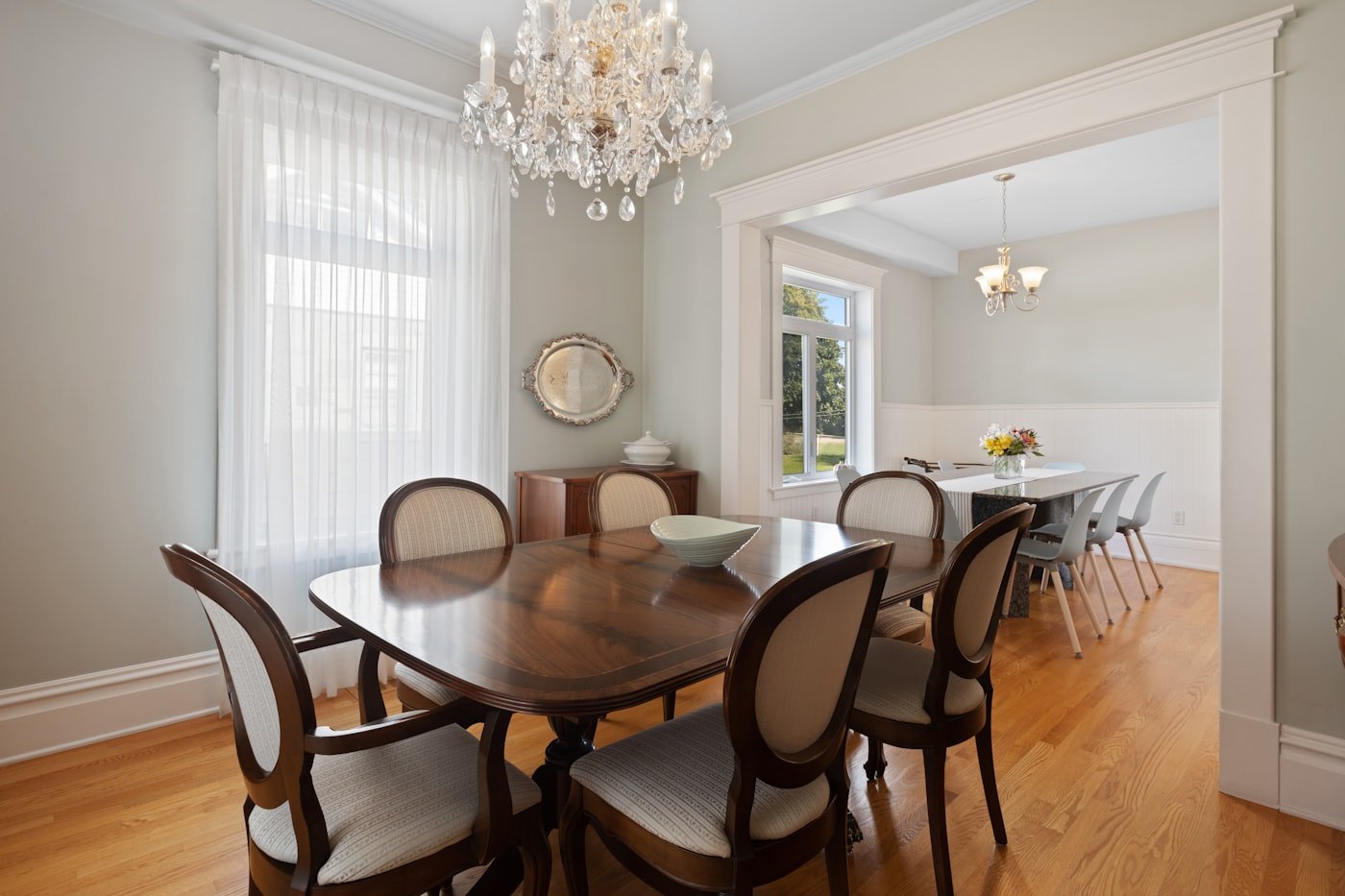
Measure the table, add 60 centimetres on every side, and buy that size. Flat-weave or low pile only; anything thick catches chair legs and crumbs.
8. A dark wall colour for evening rooms
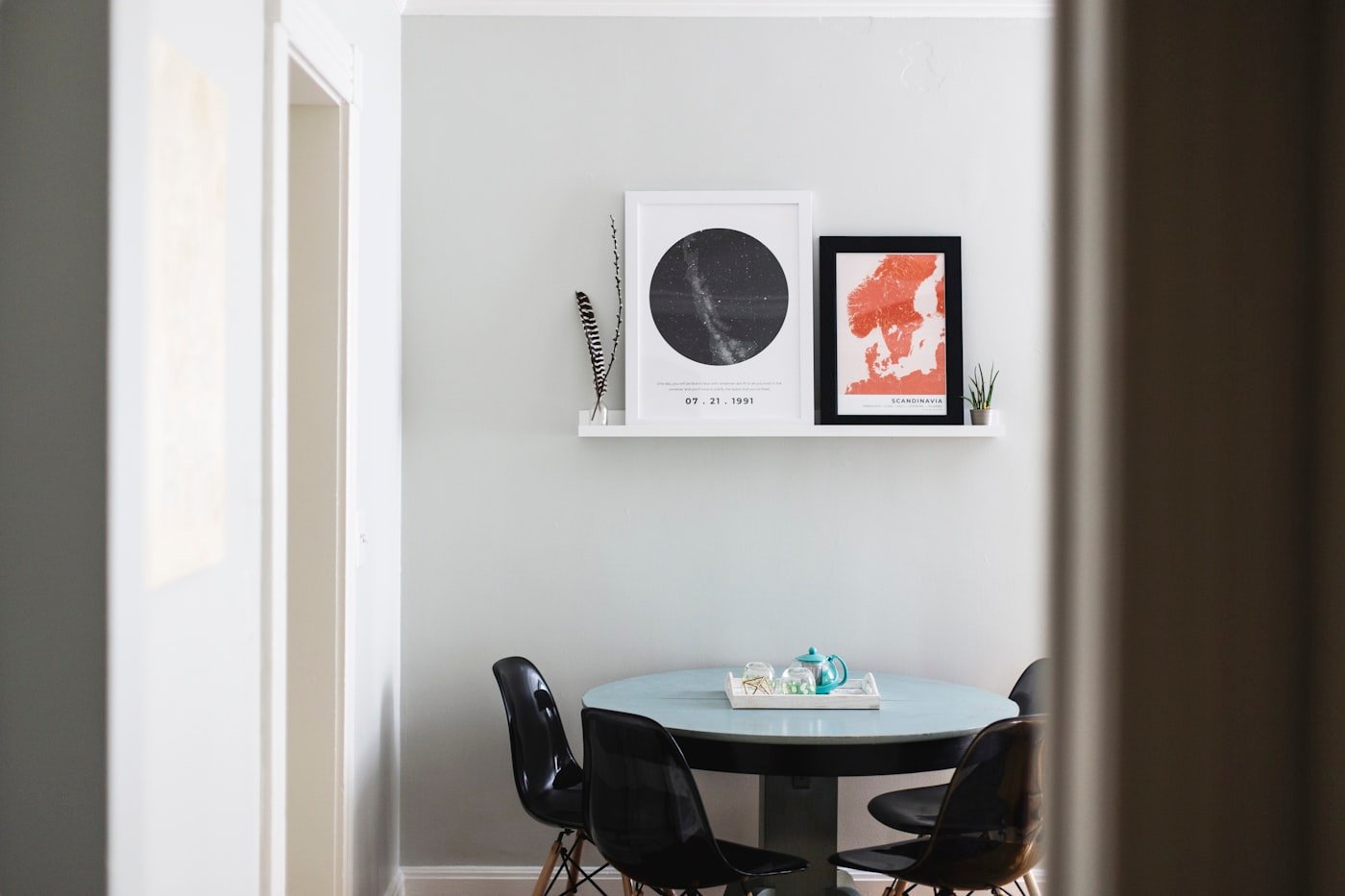
Unlike a kitchen or bedroom, a dining room is mostly used after dark. Deep green, navy, aubergine or a warm brown make lamp light glow. Keep the ceiling light and add a couple of wall lights or table lamps on the sideboard.
Four more ideas for small dining areas
- Extendable table. A 90-centimetre square that opens to 180 seats two most nights and eight at Christmas.
- Wall-mounted drop-leaf. For studio apartments, a drop-leaf on the wall disappears when not in use.
- Banquette in a corner. Built-in seating on two walls with a table pulled up to it seats six in the space of a table for four.
- Mirror on the wall opposite the window. Doubles the daylight and the candlelight.
Frequently asked questions about dining rooms
How much space do you need around a dining table?
90 centimetres from the table edge to the wall or nearest furniture, so a chair can be pulled out and someone can walk behind it. 75 centimetres is the bare minimum on one side.
How low should a dining pendant hang?
The bottom of the fitting should sit 75 to 80 centimetres above the table surface.
Should dining chairs match the table?
They should relate, not match. A wood table with upholstered chairs, or a painted table with wood chairs, looks more considered than a set.
What is the best dining table shape for a small room?
Round for square rooms, a narrow rectangle (80 centimetres wide) for long rooms. Both leave more walking space than a standard rectangle.