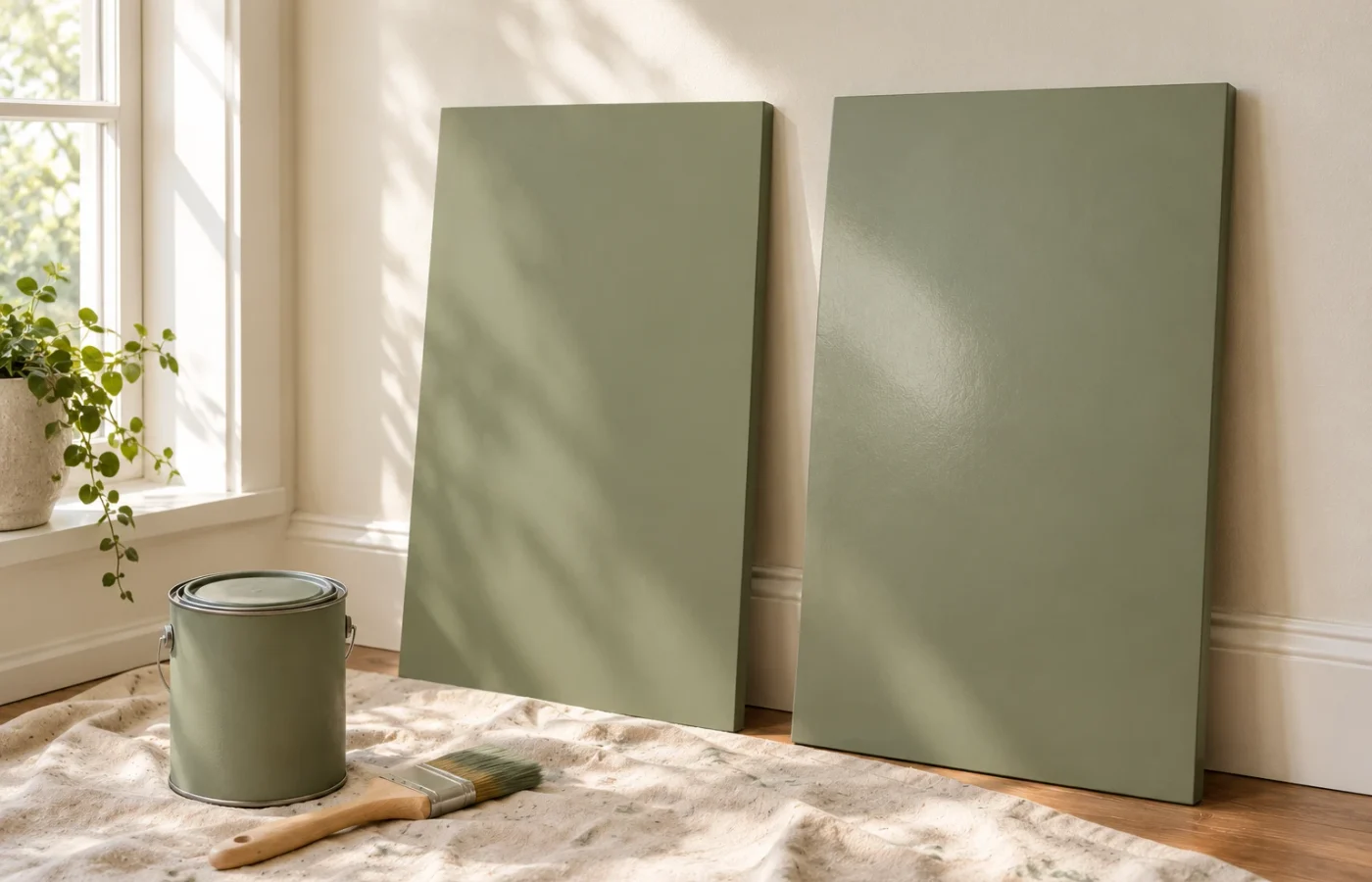
The finish you pick changes how a wall looks and how it lasts. Two of the most common choices for interior walls are matte and eggshell, and the difference is small enough to be confusing. The matte vs eggshell paint finish choice comes down to how much you want to hide flaws and how often you will wipe the wall.
This guide explains the difference, gives an easy pick for six rooms, and covers cleaning, trim and common mistakes. It follows common paint-guide advice, so check the can for your brand’s exact sheen names and scrub rating.
Quick Answer: Matte vs Eggshell Paint Finish
- Matte (flat): no shine, hides bumps and patches best, least durable and hardest to wipe.
- Eggshell: a soft sheen, hides flaws a little less, wipes clean better, a common default for walls.
- Easy rule: matte for calm rooms and rough walls; eggshell for rooms that get touched or wiped.
- Trim and doors: use a higher sheen than the walls.
- Quality matters: a good matte can outlast a cheap eggshell.
What Sheen Means
Sheen is how much light a dried paint reflects. It ranges from flat or matte, with almost no shine, through eggshell and satin, to semi-gloss and high-gloss. The more resin a paint has, the harder and shinier it is. In the matte vs eggshell paint finish choice, matte is flatter and softer, and eggshell has a faint glow, like the surface of an egg.
Matte vs Eggshell at a Glance
| Feature | Matte | Eggshell |
|---|---|---|
| Sheen | None or very low | Soft, low sheen |
| Hides flaws | Best | Good, a little less |
| Wipes clean | Harder | Easier |
| Durability | Lower | Higher |
| Best on | Ceilings, bedrooms, calm rooms | Living rooms, halls, dining rooms |
Easy Pick for 6 Rooms
Use this as a starting point. Sheen names vary by brand, so check the can.
| Room | Walls | Notes |
|---|---|---|
| Living room | Eggshell, or matte if walls are rough | Eggshell wipes clean |
| Bedroom | Matte or eggshell | Matte feels soft and calm |
| Dining room | Eggshell | Touched and splashed more |
| Hallway | Eggshell | High traffic |
| Kitchen | Eggshell or a higher sheen | A glossier finish helps with splashes |
| Kids’ room | Eggshell or a higher sheen | Easier to wipe |
Matte on Walls
Matte has a velvety look that hides patches, uneven drywall and old plaster very well, which is why it is popular in bedrooms and on ceilings. It also makes deep colors look rich. The downside is that it marks more easily and can show a shiny patch if you scrub it. For crisp edges and an even finish, follow our accent wall painting tips.
Eggshell on Walls
Eggshell has a soft sheen that reflects a little light, so it looks warmer and slightly more polished than matte. It hides flaws less well than matte but better than satin, and it wipes clean much more easily, which makes it a common default for living rooms, dining rooms and hallways. Choose eggshell if you have smooth walls and a busy household.
Eggshell vs Matte in Bedrooms
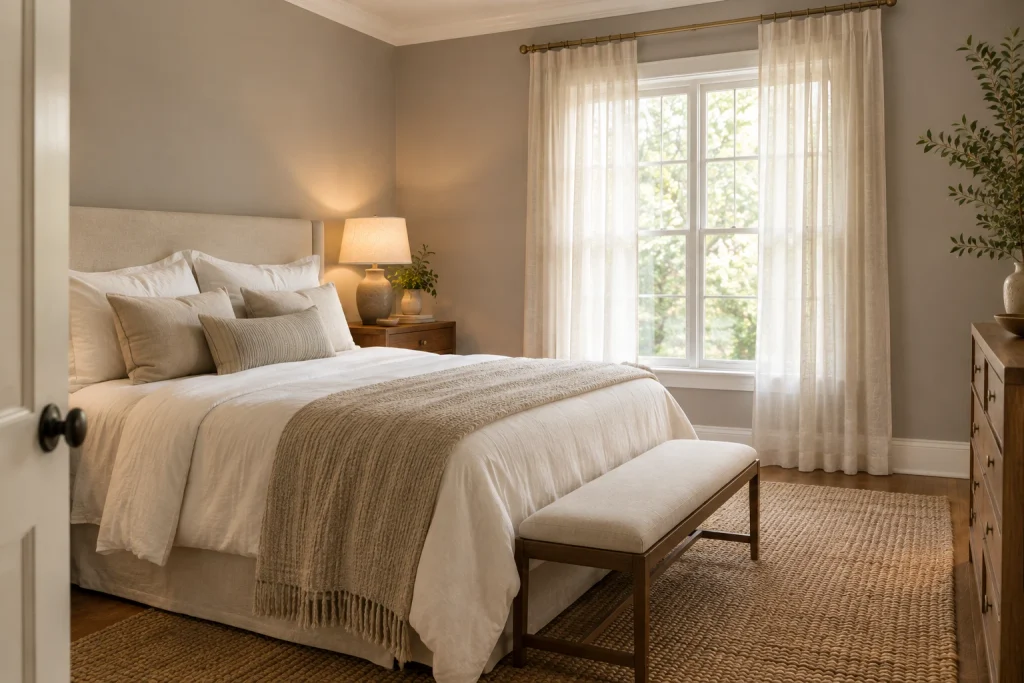
In a bedroom, walls are touched less, so matte is a good choice for a calm, soft look and for hiding small flaws. Choose eggshell if you have children or pets, or if the walls get bumped. For more bedroom ideas that suit either finish, see our guide to cozy bedroom ideas on a budget.
Kitchens, Bathrooms and Kids’ Rooms
These rooms need a more washable finish. Guides suggest a higher-sheen eggshell or satin for kitchens, bathrooms and children’s rooms, since matte can mark and is harder to scrub. In a bathroom, use a mildew-resistant paint and run the fan so moisture does not damage the finish.
Trim, Doors and Cabinets
Matte on woodwork may not be durable enough. Trim, doors and cabinets usually use a higher sheen than the walls, such as satin or semi-gloss, so they wipe clean and stand out crisply. For color ideas, see our kitchen cabinet colour ideas.
Walls With Flaws
If your walls are bumpy, patched or uneven, choose matte, since shine shows every flaw. Fill holes, sand smooth and prime patches before painting, whichever finish you use. For smooth walls and busy rooms, eggshell is the better choice in the matte vs eggshell paint finish question.
Does Color Change With the Finish?
Yes. The same color looks slightly deeper and softer in matte and slightly lighter and warmer in eggshell, because eggshell reflects a little more light. Test the finish you plan to use on a board in your own room, not just the color. Peel-and-stick samples may not match the finish exactly.
Cleaning and Care
Wait until the paint has fully cured, often a few weeks, before cleaning. Use a soft cloth or sponge and mild soap, dab rather than scrub, and avoid abrasive pads. Eggshell tolerates this better than matte. For stubborn marks on matte, spot-touch with leftover paint instead of scrubbing.
Doing This as a Renter
Many landlords specify the finish, so ask first. If you may choose, eggshell is a safe, neutral pick that wipes clean and suits most rooms. Keep the paint name, color and sheen so you can touch up later.
Budget and Timing
Matte and eggshell usually cost about the same within a brand, but prices vary by line and store, so check current costs. A quality paint matters as much as the finish, since a good matte can outlast a cheap eggshell. An average room takes a weekend.
Where to Start If This Is Your First Time
Decide the finish for walls, ceiling and trim before you buy, and write it on your list. Paint a test board in each finish, look at them in your light and then follow our guide on how to paint a room. Testing both makes the matte vs eggshell paint finish choice easy.
Safety and Prep
Open windows, use a fan and follow the label directions on the can. Wear a mask when sanding, wash grease and dust off the wall and prime patches so the finish looks even.
Quick Recap
Matte hides flaws and looks soft; eggshell wipes clean and suits busier rooms. Check the can for your brand’s sheen, test a board and prepare the wall. The matte vs eggshell paint finish decision gets easier once you test.
Matching the Finish Across the Home
It is common to use matte on ceilings, eggshell on living and dining walls and satin or semi-gloss on trim. Keeping one finish per room type makes touch-ups easier and keeps the home consistent. When you plan a matte vs eggshell paint finish for the whole house, write the choices in a simple list.
Touch-Ups and Repainting
Matte touch-ups can show as flat patches if the paint has aged or the wall was scrubbed, while eggshell touch-ups can look shinier than the surrounding wall. Repaint a full panel from corner to corner for the best match, and keep leftover paint in a sealed, labeled can. This is where the matte vs eggshell paint finish choice affects daily life.
Common Mistakes to Avoid
- Using matte in a busy hallway. It marks easily.
- Using eggshell on very bumpy walls. It shows more flaws.
- Choosing by color only. Check the sheen on the can.
- Scrubbing matte hard. It can leave shiny patches.
FAQs
Is matte or eggshell better for walls? Eggshell for busy rooms, matte for calm rooms and rough walls.
Which hides flaws better? Matte.
Which is easier to clean? Eggshell.
Can I use matte in a kitchen? It is not ideal; choose a higher-sheen eggshell or satin.
What finish suits trim? A higher sheen than the walls, such as satin or semi-gloss.
Do matte and eggshell cost the same? Usually similar within a brand.
Tools and Basics to Gather
A test board, painter’s tape, drop cloths, an angled brush, a roller, a tray, sandpaper, primer and a soft cloth for cleaning. Keep windows open and follow the safety directions on the can.
The Bottom Line
The matte vs eggshell paint finish choice is simple: matte hides flaws and looks soft in calm rooms, and eggshell wipes clean and suits busy rooms. Check your brand’s sheen names, test a board in your own light and prepare the surface well. Either way, you will get a wall that looks finished and lasts.
Related:
How to Paint a Room · Accent Wall Painting Tips for a Clean Finish