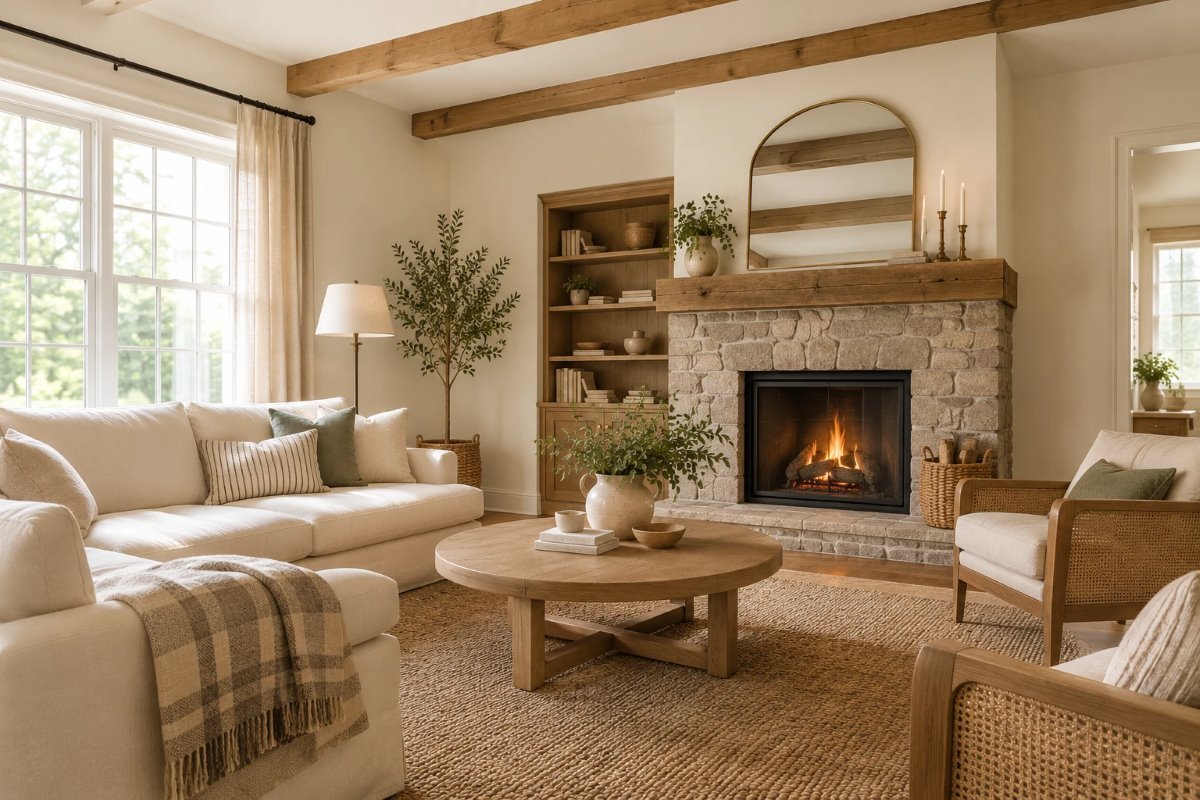
A farmhouse living room is meant to feel warm, lived-in and a little bit simple, and the wall color sets that mood before you place a single chair. The best farmhouse living room paint colors are soft and earthy: creamy whites, warm greiges, gentle sages and wheat tones that sit well beside wood, linen and stone.
This guide gives five easy picks to test, how light changes them, which trim to use and how to avoid the common mistakes. I name no brand or LRV here, because the color guides I found were general; test large swatches in your own room to choose the exact shade.
Quick Answer: Farmhouse Living Room Paint Colors
- Base colors: creamy white, beige, taupe and warm greige.
- Soft accents: sage green, wheat and muted blue-green.
- Deep option: a deep green or charcoal on a fireplace wall or built-ins.
- Undertone rule: choose warm over cool grays, and creamy over stark whites.
- Test: paint large swatches and check them morning and night.
What Makes a Farmhouse Color
A farmhouse look comes from natural materials: wood beams, stone, linen, iron and woven baskets. Farmhouse living room paint colors support that look by staying soft and earthy, so the materials stand out. Guides agree that creamy whites, beige, taupe and greige form the base, with sage green as a favorite accent beside natural wood. Cooler, cleaner whites have become popular too, so choose by the feel you want.
The 5 Picks at a Glance
| Pick | Feel (my impression) | Pairs well with |
|---|---|---|
| Warm creamy white | Bright, welcoming | Oak beams, linen, black iron |
| Soft cream-beige | Cozy, lived-in | Leather, wool, brass |
| Warm greige and khaki | Calm, flexible | Walnut, stone, rattan |
| Soft sage | Fresh, natural | Pale wood, cream, wicker |
| Deep green or charcoal | Moody, dramatic | Brass, white trim, warm wood |
Pick 1: Warm Creamy White
A warm, creamy white is the classic farmhouse wall. It keeps the room bright, makes beams and stone stand out and feels welcoming. Choose one with a cream rather than a yellow or pink undertone, and avoid stark blue-whites, which can feel cold. It works in small rooms because it reflects light.
Pick 2: Soft Cream-Beige
A cream-beige is a little deeper than white, so it feels cozier and hides marks better. It suits living rooms with lower light or lots of dark wood. Pair it with a white trim for a crisp edge, or with the same color in satin for a soft, seamless look.
Pick 3: Warm Greige and Khaki
Greige, a mix of gray and beige, is popular because it works with almost any wood and fabric. Guides advise choosing a gray with warm rather than cool undertones, so it feels farmhouse and not modern-industrial. For another warm neutral, see our Universal Khaki in a small living room guide.
Pick 4: Soft Sage
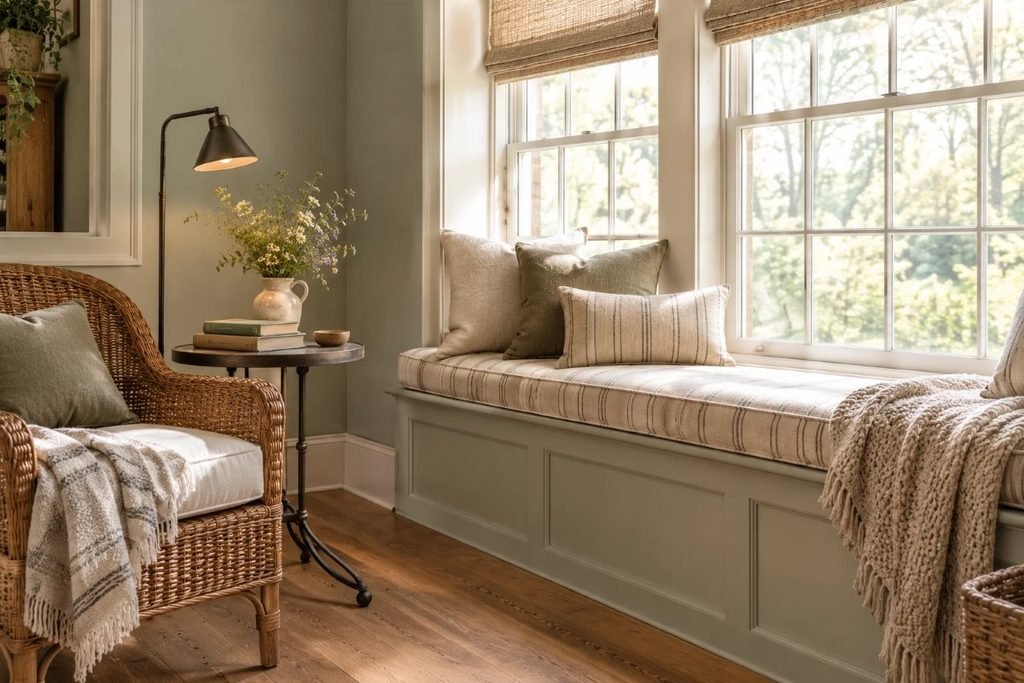
Sage adds a fresh, natural touch and looks best beside natural wood, cream fabrics and wicker. It is muted enough to pair with warm whites and greige without looking muddy. Some sages lean yellow and some lean blue, so check them next to your floor. For a dustier green, our Valspar Warm Eucalyptus living room guide shows another soft option.
Pick 5: Deep Green or Charcoal
A deep green or charcoal on a fireplace wall, built-ins or a single accent wall gives a farmhouse living room some drama. Keep the other walls light, use warm bulbs and add brass or black hardware. Deep colors need a sample and often an extra coat.
How Light Changes Farmhouse Colors
North-facing rooms make whites and greiges look cooler, so choose a warmer version. South-facing rooms add warmth, so a creamier white may look yellow; choose a softer one. Evening lamps at 2700K make warm colors glow, while cool bulbs can flatten them. Check each swatch at several times of day.
Trim, Beams and Ceilings
A white or cream trim keeps farmhouse walls crisp, and wood beams look best against a light ceiling. If your beams are dark, keep the walls light so the room does not feel heavy. For a seamless look, paint the trim the same color as the walls in a higher sheen.
Matching Your Kitchen
If your living room opens to the kitchen, choose colors in the same family so the home feels connected. Our modern farmhouse kitchen ideas show how cabinets and walls can work together, and the same warm whites and sages suit both rooms.
Texture and Furniture
Farmhouse rooms rely on texture: linen sofas, wool throws, jute rugs, iron lamps and reclaimed wood. Choose a wall color that lets those materials show, rather than competing. A plaid throw or woven basket adds warmth without extra pattern on the walls.
Doing This as a Renter
Many landlords allow soft neutrals, so farmhouse living room paint colors such as warm white often suit rentals. If you cannot paint, bring in the farmhouse look with linen curtains, wood furniture, woven baskets and framed prints, and use removable wallpaper or board and batten kits if allowed.
Budget and Timing
Paint is the cheapest way to change a living room. A room takes a weekend, and light colors often need two coats. For more ways to save, see our guide to farmhouse kitchen ideas on a budget, and buy samples before gallons.
Where to Start If This Is Your First Time
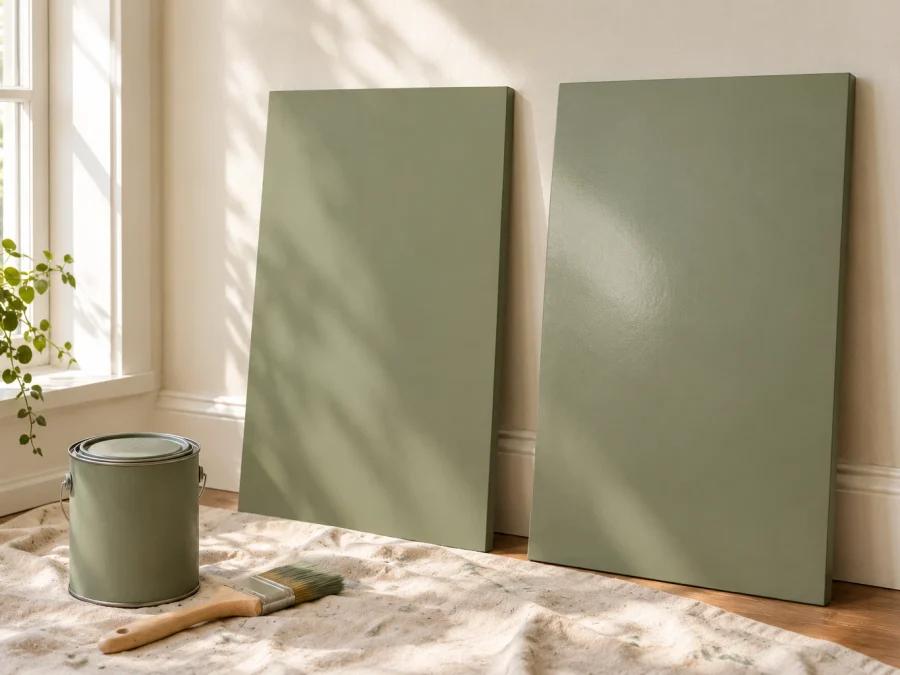
Pick two or three colors and paint large sample boards. Move them around the room for a few days and look at them in the morning and at night. Hold them next to your sofa, floor and fireplace. This is the easiest way to narrow your farmhouse living room paint colors to one.
Safety and Prep
Open windows while painting, follow the label directions on the can and use a stable ladder. Fill holes, sand patches and prime stained or dark areas so the color looks even.
Quick Recap
Start with warm creamy white, cream-beige or warm greige, add sage as a soft accent and keep a deep green for one wall. The best farmhouse living room paint colors are warm, soft and tested in your own light.
Putting a Palette Together
Pick one main wall color, one trim color and one accent. For example, a warm white on the walls, a slightly creamier white on the trim and a sage or wood tone on the furniture. Repeat the accent in a pillow, a rug or a frame so it feels planned. With farmhouse living room paint colors, a simple palette of three colors usually looks better than many.
Questions to Ask Before Choosing
How much daylight does the room get? What color are the floors and beams? Do you want a bright or a moody feel? Does the room open to the kitchen? Answering these narrows your farmhouse living room paint colors to two or three quickly, and the rest is testing swatches.
Common Mistakes to Avoid
- Choosing a cool gray. Warm undertones feel more farmhouse.
- Using a stark white that fights the wood.
- Skipping a sample. Warm colors shift in your light.
- Painting dark beams and walls both dark.
FAQs
What color is best for a farmhouse living room? Warm creamy white, warm greige or soft sage.
Can a farmhouse living room be dark? Yes, on an accent wall or built-ins.
Should the trim be white? Often, or the same color in satin.
Are cool grays farmhouse? Less so; warm grays suit it better.
What bulbs suit farmhouse colors? Warm bulbs around 2700K.
Do farmhouse colors suit small rooms? Yes, light warm colors work well.
Tools and Basics to Gather
Large sample boards, painter’s tape, drop cloths, an angled brush, a roller, a tray, a stepladder and a primer if the old color is dark. Keep windows open and follow the safety directions on the can.
The Bottom Line
The best farmhouse living room paint colors are warm, soft and earthy: creamy white, cream-beige, greige, sage and a deep accent. Test a few large swatches in your own light, choose warm undertones and let wood, linen and stone do the work. Done that way, the room will feel cozy and finished.
Related:
Modern Farmhouse Kitchen Ideas · Universal Khaki in a Small Living Room