Cabinet doors cover most of what you see in a kitchen, so the style you choose sets the whole look. The shaker vs slab cabinet doors question comes down to four things: how the door looks, what it costs, how easy it is to clean and which kitchen style it suits.
This guide compares the two on those four checks, explains what each style is, shows which rooms suit each and gives a few tips for choosing colors and hardware.
Quick Answer: Shaker vs Slab Cabinet Doors
- Shaker: a framed door with a recessed center panel; classic, warm and versatile.
- Slab: a flat door with no frame; sleek, modern and minimal.
- Cost: slab is usually the lower-cost option; shaker is typically mid-range.
- Cleaning: slab wipes clean more easily; shaker panels can trap dust and grease.
- Easy pick: shaker for a classic or transitional kitchen; slab for a modern or small, minimal one.
What Each Door Style Is
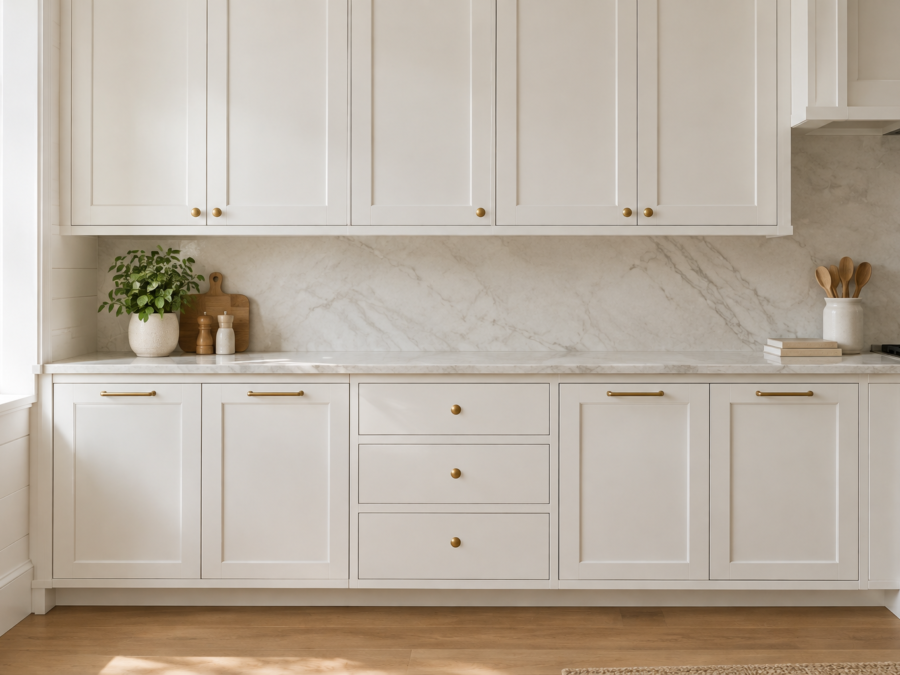
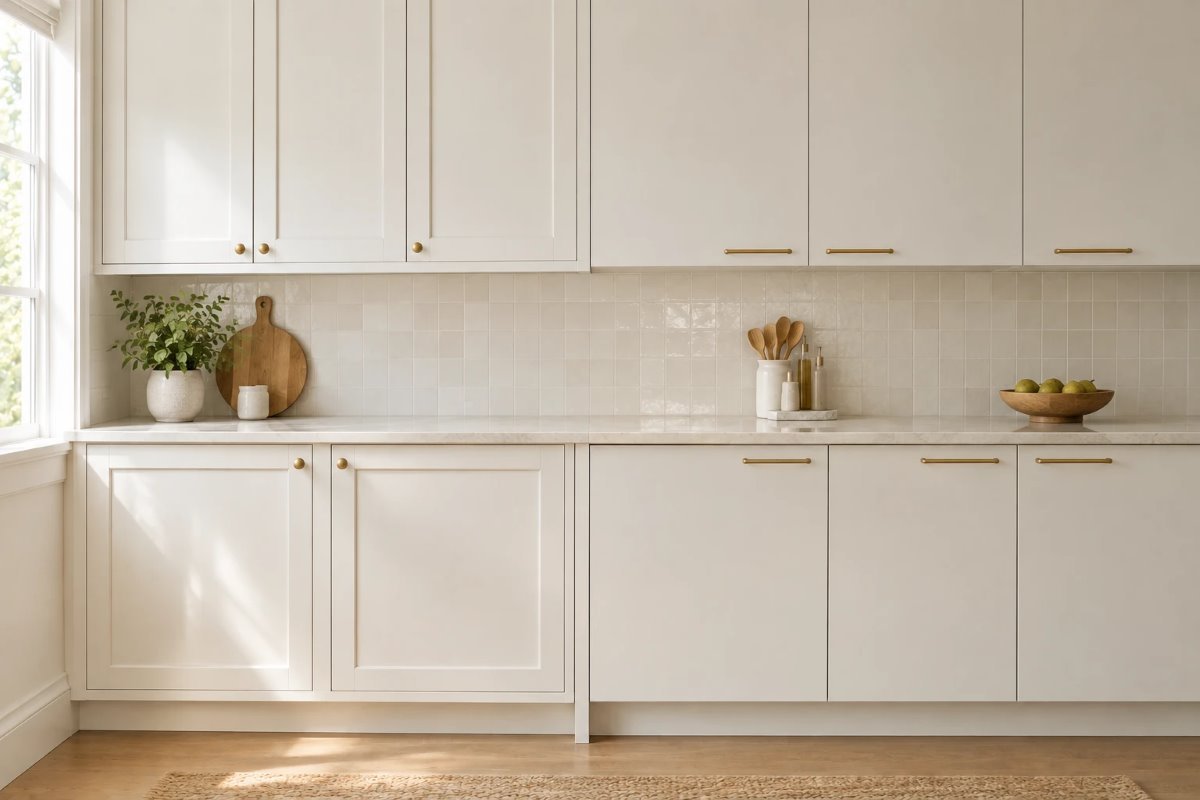
A Shaker cabinet door is named after the plain, practical furniture of the Shakers. It is made from five pieces: four frame pieces and a flat center panel set slightly back, which gives a clean, simple outline. A slab door is a single flat piece, with no frame or recessed panel. In the shaker vs slab cabinet doors debate, the difference is one of detail: shaker has a little shadow and depth, and slab has none.
The 4 Checks at a Glance
| Check | Shaker | Slab |
|---|---|---|
| Look | Classic, warm, versatile | Sleek, modern, minimal |
| Cost | Typically mid-range | Usually lower |
| Cleaning | Recess can trap dust and grease | Smooth and easy to wipe |
| Best for | Traditional, transitional, farmhouse | Modern, minimalist, small kitchens |
Check 1: Look and Feel
Shaker doors have a simple frame that works in almost any kitchen, from farmhouse to modern. Slab doors give a sleek, flat look that suits modern and Scandinavian kitchens, and look especially clean in wood grain or a solid color. When comparing shaker vs slab cabinet doors, look at your whole home: if the rest is traditional, shaker blends in, and if it is minimal, slab fits.
Check 2: Cost
Slab doors are simpler to make, so they are usually the lower-cost option, and shaker doors are typically mid-range. Prices vary by material, maker and finish, so I have not given exact numbers; get quotes for both in the same material. Painted shaker doors and wood-veneer slab doors can end up close in price.
Check 3: Cleaning and Upkeep
Slab doors have a smooth surface that is easy to wipe. Shaker doors have inside corners and a recessed panel that can collect dust and grease, especially near the stove, so they need a little more care. Use a soft cloth and mild cleaner for either style, and avoid soaking wood doors.
Check 4: Which Style Suits Your Kitchen?
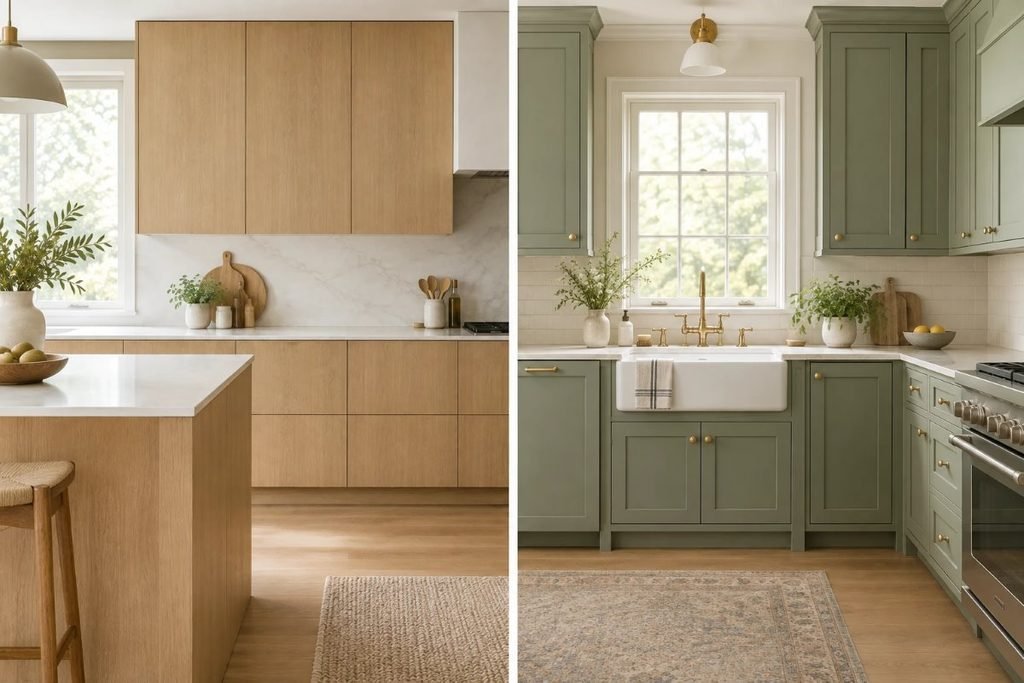
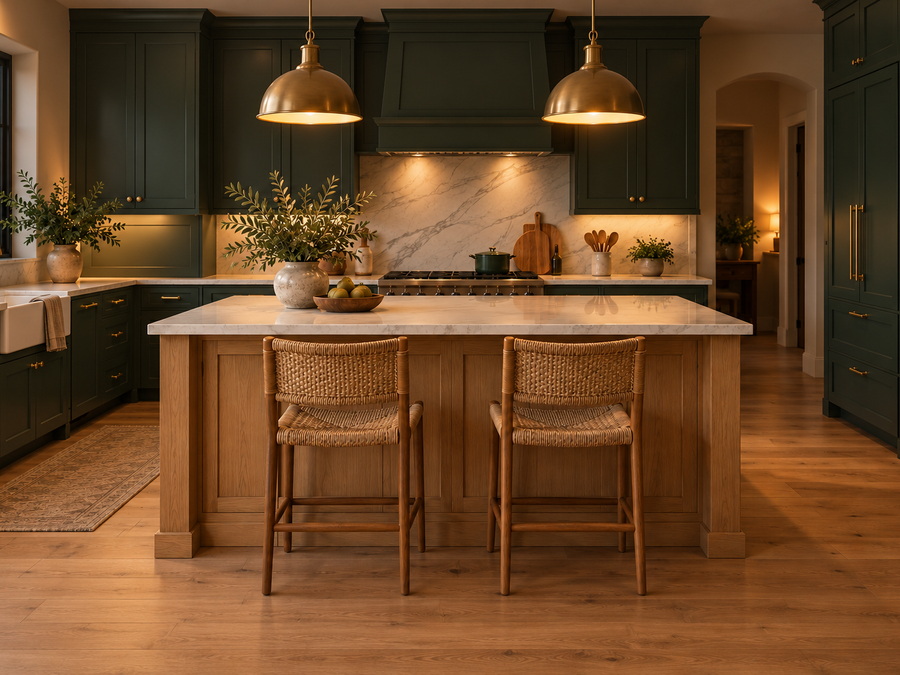
Shaker suits farmhouse, cottage, traditional and transitional kitchens, and it works in modern ones too. Slab suits modern, contemporary and minimalist kitchens, and small rooms where you want a calm, uncluttered look. For a warm, traditional feel, see our modern farmhouse kitchen ideas.
Colors and Finishes
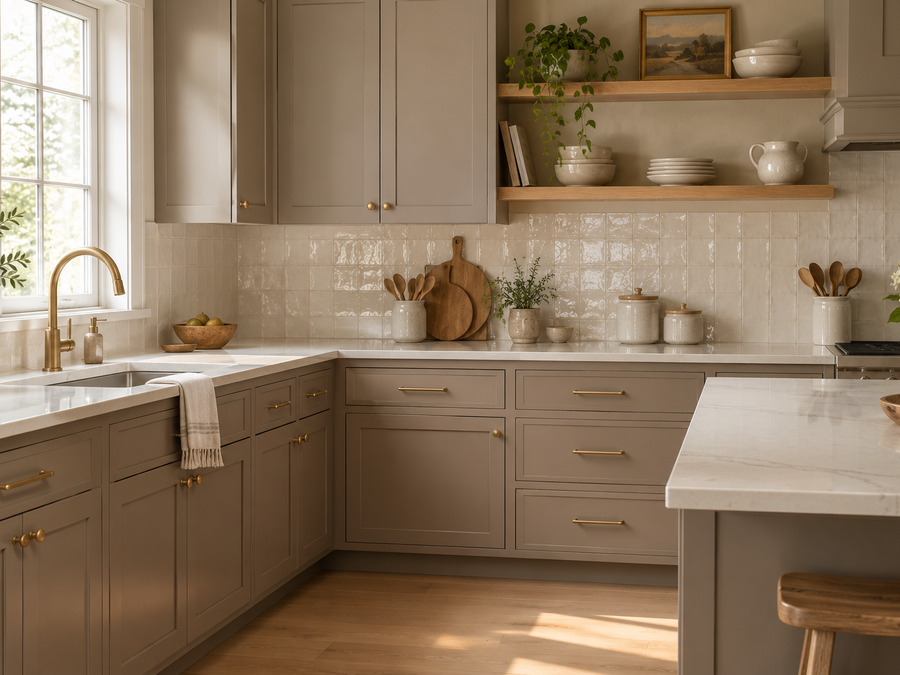
Shaker doors look best in painted colors such as white, sage, navy or charcoal, where the frame casts a soft shadow. Slab doors shine in wood grain, matte solid colors and high-gloss finishes. For color inspiration, see our guide to kitchen cabinet colour ideas. Whichever you choose, matte and satin finishes hide fingerprints better than high gloss.
Hardware
Shaker doors pair well with knobs and bar pulls in brass, black or nickel. Slab doors can use slim bar pulls, finger pulls or push-to-open systems for a handleless look. If you want the cleanest look from shaker vs slab cabinet doors, handleless slab is the most minimal.
Mixing the Two
Some kitchens mix shaker uppers with slab lowers, or slab doors on an island with shaker around the perimeter. This can work if the colors and hardware match and the mix looks deliberate. Keep the same finish and hardware throughout so it feels coordinated.
Doing This as a Renter
Renters cannot replace doors, but you can change the look: paint the existing doors if the landlord allows, swap the hardware and keep the old pieces, or use peel-and-stick panels or contact paper. Add trim strips to a slab door to make a shaker look.
Budget and Timing
If you have slab doors and want a shaker look, adding strips of wood trim to form a frame can cost much less than new doors. For more ways to save, see our guide to farmhouse kitchen ideas on a budget. New doors take several weeks to order, and painting takes a long weekend.
Where to Start If This Is Your First Time
Look at samples of both styles in a showroom or order a sample door in your color. Hold each next to your counter, floor and hardware, and look at them in the morning and evening. Ask for quotes in the same material. Sorting out shaker vs slab cabinet doors takes less time once you have a sample in your hand.
Safety and Prep
If you paint or sand doors yourself, wear a mask, work in a ventilated area and follow the can directions. Use a degreaser first, a bonding primer and thin coats of cabinet-grade enamel. Take doors off and label them so they go back in the right place.
Quick Recap
Shaker is classic and versatile; slab is sleek and easy to clean. Compare the look, cost, cleaning and fit for your home, then test a sample. The shaker vs slab cabinet doors decision is easier once you hold both next to your counter.
Resale and Long-Term Appeal
Shaker is often seen as a safe, lasting style because it fits so many kitchens, while slab suits a more specific modern look. If you plan to sell in a few years, shaker may appeal to more buyers, but a well-done slab kitchen can look just as good. In the shaker vs slab cabinet doors choice, think about how long you will stay.
Materials and Construction
Doors can be solid wood, MDF, veneer or thermofoil. MDF is smooth and takes paint well, and solid wood can show grain and may move with humidity. Ask your supplier how the doors are built, whether the frame is joined or glued, and what warranty they offer. This matters as much as shaker vs slab cabinet doors when it comes to how long the kitchen lasts.
Common Mistakes to Avoid
- Choosing by price alone. Check the look in your own kitchen.
- Forgetting cleaning. Shaker corners need regular wiping.
- Mixing too many door styles.
- Ordering all doors before seeing a sample.
FAQs
Which is cheaper, shaker or slab? Slab is usually cheaper.
Is shaker or slab easier to clean? Slab is easier.
Is shaker still in style? Yes, it remains popular and versatile.
Can I mix shaker and slab? Yes, if the finish and hardware match.
What suits a small kitchen? Slab can look calm and simple; shaker works too.
Which suits a farmhouse kitchen? Shaker.
Tools and Basics to Gather
A sample door, a tape measure, painter’s tape, a degreaser, sandpaper, a bonding primer, cabinet enamel, a small roller, an angled brush and a screwdriver.
The Bottom Line
The shaker vs slab cabinet doors choice is a simple trade-off: shaker gives a classic, versatile look and slab gives a sleek, easy-to-clean one. Check the look, cost, cleaning and fit for your home, test a sample, and you can choose with confidence.
Related:
Kitchen Cabinet Colour Ideas · Modern Farmhouse Kitchen Ideas