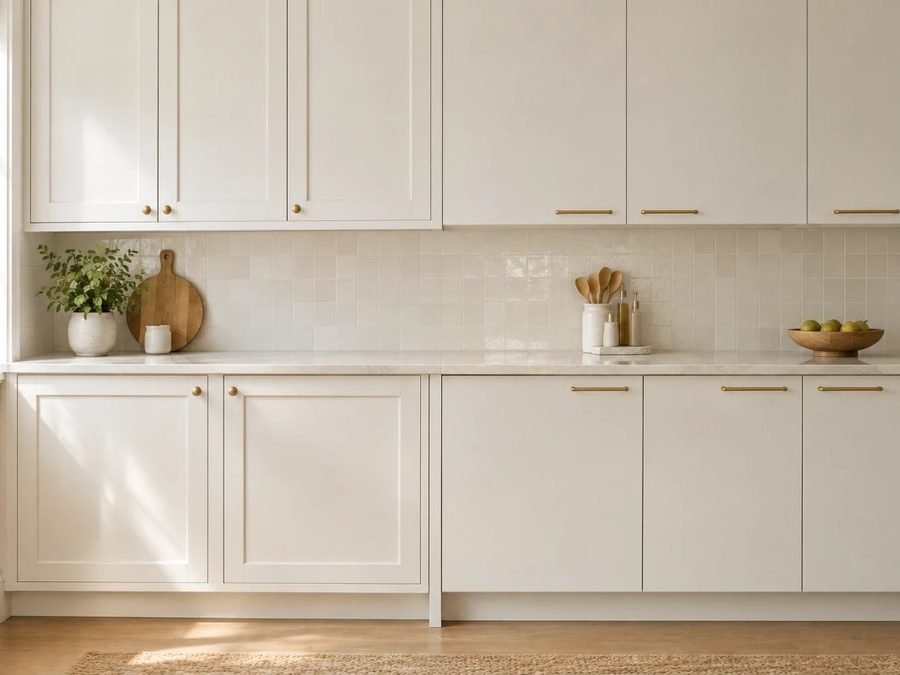
Hardware is a small detail that makes a big difference. Pulls placed too low on an upper door feel awkward, knobs too far from the edge are hard to grip, and uneven drawers look sloppy. Good kitchen cabinet hardware placement follows a simple pattern: about 2 to 2.5 inches in from the edge, in a consistent spot on every door.
This guide gives you the rule, a quick chart for doors and drawers, how to handle tall cabinets, and a simple template trick so every hole lands in the right place.
Quick Answer: Kitchen Cabinet Hardware Placement
- Upper doors: knob or pull near the bottom corner, about 2 to 2.5 inches from the edge.
- Lower doors: knob or pull near the top corner, about 2 to 2.5 inches from the edge.
- Drawers: center the pull horizontally; on tall drawers, put it in the upper third.
- Be consistent: use the same spot on every door of the same type.
- Use a template: it saves time and mistakes.
Why Placement Matters
Kitchen cabinets are opened dozens of times a day, so the hardware has to be easy to reach and comfortable to grip. Good kitchen cabinet hardware placement puts the handle where your hand naturally falls, away from the hinge edge, and keeps the lines tidy so the doors look intentional. It is also one of the cheapest upgrades in a kitchen.
The Basic Rule for Doors
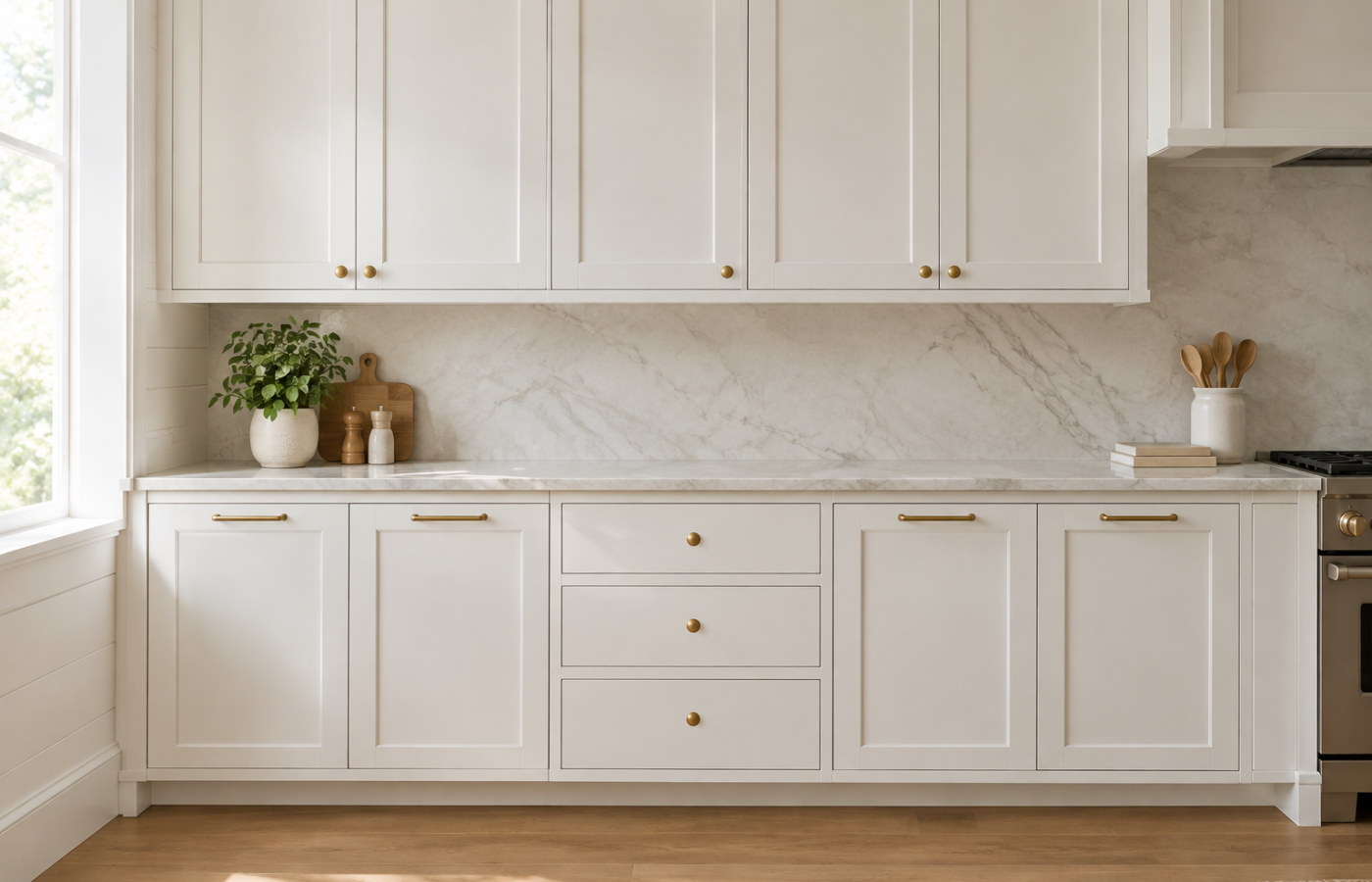
For most shaker and slab doors, mount knobs and pulls about 2 to 2.5 inches from the edge of the door. On upper cabinets, the hardware goes near the bottom corner on the side opposite the hinge. On lower cabinets, it goes near the top corner on the side opposite the hinge. That way your hand does not reach awkwardly, and the doors line up in a neat grid.
Placement Chart
Use this chart as a starting point. Values are rules of thumb.
| Cabinet part | Hardware | Where it goes |
|---|---|---|
| Upper door | Knob | About 2 to 2.5 in from the side and bottom edges |
| Upper door | Pull (vertical) | About 2 to 2.5 in from the side, ending 2 to 2.5 in above the bottom edge |
| Lower door | Knob | About 2 to 2.5 in from the side and top edges |
| Lower door | Pull (vertical) | About 2 to 2.5 in from the side, starting 2 to 2.5 in below the top edge |
| Short drawer | Pull or knob | Centered both ways |
| Tall drawer | Pull | Centered across, in the upper third (about 2 to 3 in from the top) |
Shaker Doors and Stiles
On shaker doors, the knob usually goes on the stile, the frame piece of the door, so it looks balanced. Mount it about 2 to 2.5 inches from the corner of the frame and centered in the stile if it fits. For slab doors, there is no frame to guide you, so measure from the edges.
Drawers
On a typical drawer 6 to 8 inches tall, center a pull or knob both ways. For a wide drawer, use two knobs or a long pull, spaced evenly. For a tall drawer, putting the handle in the center feels too low, so place it in the upper third, about 2 to 3 inches from the top. In a kitchen cabinet hardware placement plan, keep every drawer the same, even if the heights differ.
Tall Pantry and Appliance Doors
Tall doors need a different approach. Put a long vertical pull on a tall pantry door, centered at a comfortable height for the main user, often around 36 to 42 inches from the floor. Keep both handles of a pair at the same height, and mirror them on the two doors.
Choosing Pulls and Knobs
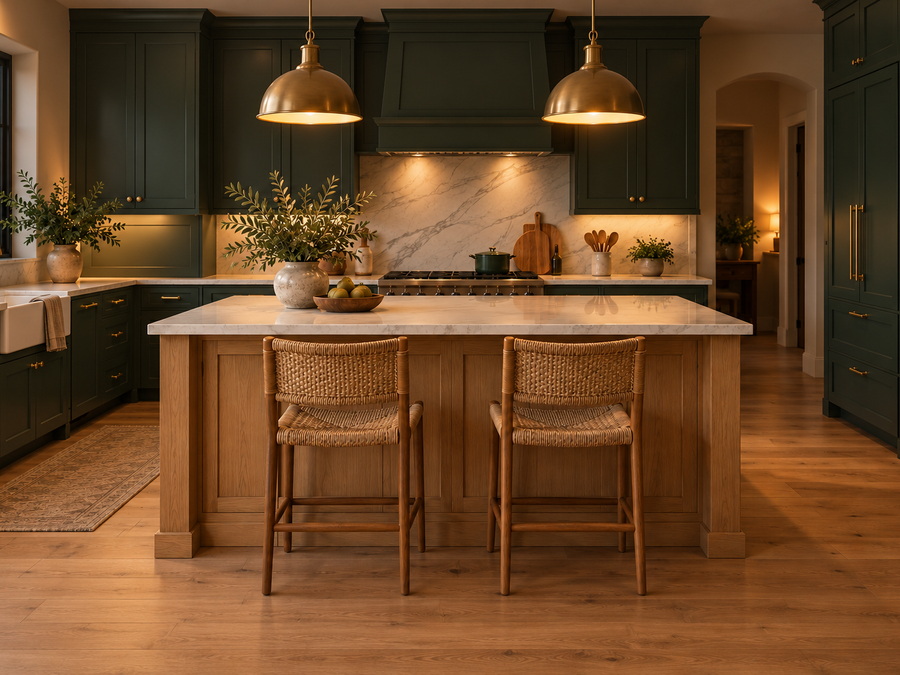
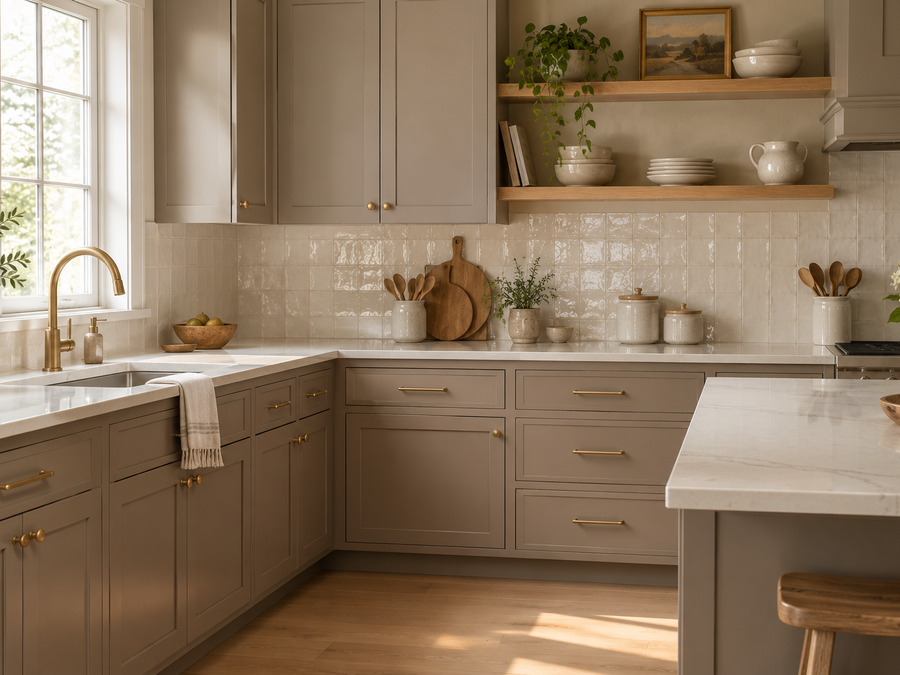
A pull gives a better grip for heavy drawers; a knob suits small doors and a traditional look. A mix works well: knobs on doors and pulls on drawers. Choose a finish that suits your cabinet color, such as brass on green or navy, black on white, and nickel on gray. Our guide to kitchen cabinet colour ideas shows colors that pair well, and our modern farmhouse kitchen ideas show how hardware finishes work in a farmhouse look.
Sizing the Hardware
A pull about one-third the width of a drawer usually looks balanced, and small knobs can look tiny on large doors. Check the hole spacing (center-to-center) on any pull so it matches existing holes if you are replacing old hardware. When you plan kitchen cabinet hardware placement, order a sample before you buy a full set.
Use a Template
A hardware jig or a simple cardboard template makes every hole identical. Mark the spots on the template, tape it to each door, drill through the marks and move on. This is faster and more accurate than measuring each door. Always test on a scrap piece or the inside of a door first.
Replacing Old Hardware
If you are swapping hardware, check the old hole spacing. A new pull with the same spacing fits the existing holes and saves patching. If the spacing is different, fill the holes with wood filler, sand and touch up the paint before drilling new ones. This is part of good kitchen cabinet hardware placement planning.
Safety and Drilling
Wear safety glasses, clamp the door, use a drill stop or a piece of tape on the bit so you do not drill through the front, and keep a scrap board behind the door to avoid splintering. Do not drill into cabinets that hold electrical or plumbing without checking what is inside.
Doing This as a Renter
Renters can often swap hardware if they keep the old pieces and put them back when they leave. Choose pulls that use the same hole spacing. Adhesive-backed knobs and pulls can work on slab doors if the landlord allows.
Budget and Timing
Hardware costs vary, from a couple of dollars per knob to much more for solid brass. A typical kitchen takes a few hours with a template. For ideas to save money across the kitchen, see our farmhouse kitchen ideas on a budget.
Where to Start If This Is Your First Time
Start with one upper door and one lower door. Place the hardware with tape, step back and check how it looks and feels. If you like it, make a template from that door and apply it to the rest.
Quick Recap
Keep kitchen cabinet hardware placement consistent: 2 to 2.5 inches from the edge, near the corner away from the hinge, with drawers centered or in the upper third. A template makes it easy.
Matching Finishes Across the Kitchen
Hardware looks best when it relates to other metals in the room, such as the faucet, light fixtures and appliance handles. You do not have to match exactly, but two finishes at most keeps things calm. Good kitchen cabinet hardware placement matters as much as the finish, since even beautiful pulls look off if they sit at different heights.
Common Mistakes to Avoid
- Mounting on the hinge side. It is awkward to open.
- Measuring each door separately. Use a template.
- Centering handles on tall drawers, which feels too low.
- Buying hardware without checking the hole spacing.
FAQs
How far from the edge should cabinet pulls be? About 2 to 2.5 inches.
Where do knobs go on upper cabinets? Near the bottom corner, opposite the hinge.
Where do knobs go on lower cabinets? Near the top corner, opposite the hinge.
Should drawer pulls be centered? Yes, horizontally; on tall drawers, in the upper third.
Can I mix knobs and pulls? Yes, knobs on doors and pulls on drawers is common.
Do I need a template? It is not required but it saves time and mistakes.
Tools and Basics to Gather
A tape measure, pencil, painter’s tape, a hardware jig or cardboard template, a drill with the right bit, a drill stop, a screwdriver, safety glasses and a scrap board.
The Bottom Line
Good kitchen cabinet hardware placement is a repeatable pattern: about 2 to 2.5 inches in from the edge, near the corner away from the hinge, with drawers centered or high. Test on one door, make a template and apply it everywhere. The result is a kitchen that looks sharp and feels easy to use.
Related:
Kitchen Cabinet Colour Ideas · Modern Farmhouse Kitchen Ideas