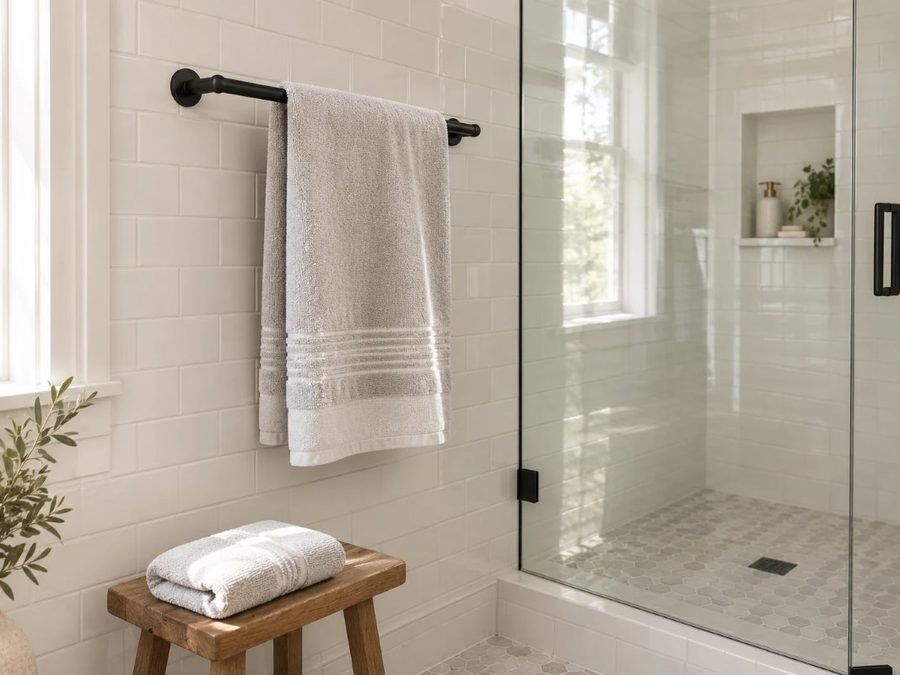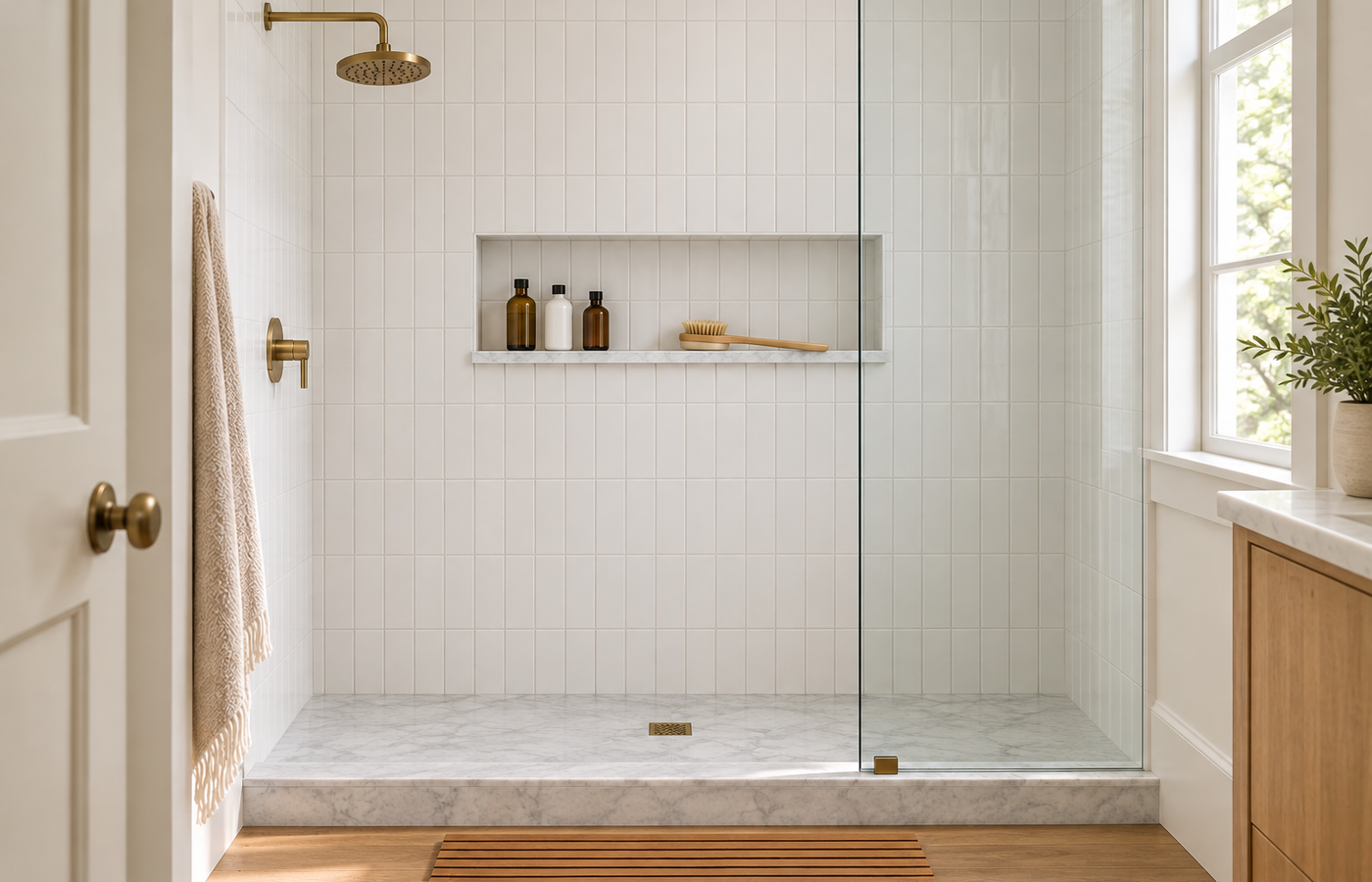
A shower niche is one of the most useful upgrades in a bathroom remodel. It clears bottles off the floor and the tub edge, and it looks built-in and tidy. But a niche placed too low, too high or right under the spray becomes annoying fast. Getting the shower niche size and height right before the tile goes up is far easier than fixing it later.
This guide covers the common width, depth and height numbers, where to place the niche in the shower, how to plan it around your tile, and the waterproofing and safety points that matter most.
Quick Answer: Shower Niche Size and Height
- Width: about 14.5 inches fits neatly between studs set 16 inches apart; wider niches need extra framing.
- Depth: about 3.5 inches, the depth of a standard 2×4 stud wall.
- Height: the bottom of the niche commonly sits about 42 to 48 inches above the shower floor.
- Sill: slope it slightly toward the shower so water drains out.
- Wall: use an interior wall, not an exterior one.
Why the Size and Height Matter
A niche lives in the wettest spot in the house and gets used every day. If it’s too shallow, bottles won’t fit; if it’s too low, you bend every time you reach for shampoo; if it’s in the spray, the contents are always wet and the grout mildews faster. A little planning on shower niche size and height makes the niche comfortable, easy to clean and long-lasting. For a general background on recessed wall features, see the niche entry on Wikipedia.
The Common Measurements
Here are the typical shower niche size and height numbers most tile and remodel guides start from. Treat them as rules of thumb and adjust to your own wall and tile:
| Detail | Common measurement |
|---|---|
| Stud spacing | Usually 16 in on center |
| Clear width between studs | About 14.5 in |
| Depth | About 3.5 in (2×4 wall) |
| Bottom of niche from shower floor | About 42-48 in |
| Eye-level placement | About 48-60 in |
| Sill slope | A slight slope, about 1-2 degrees, toward the shower |
The 48-Inch Height Rule
The simplest way to set shower niche size and height is to start with the bottom edge about 48 inches above the shower floor. At that height, most adults can reach bottles without bending or stretching, and the niche sits below the direct path of most shower heads. If your household includes both tall and short people, or children, go slightly lower, toward 42 inches. If you want the niche to act as a display at eye level, some guides place it between about 48 and 60 inches.
Width and Height of the Opening
For shower niche size and height, a niche that fits between two studs is the easiest to build, which is why about 14.5 inches wide is so common. For height, around 12 inches holds most shampoo bottles, while a taller niche, or one with a shelf in the middle, gives two tiers. If you want a long horizontal niche that runs across several studs, the wall needs extra framing, so plan it with your contractor before the walls are closed up.
Where to Put It in the Shower
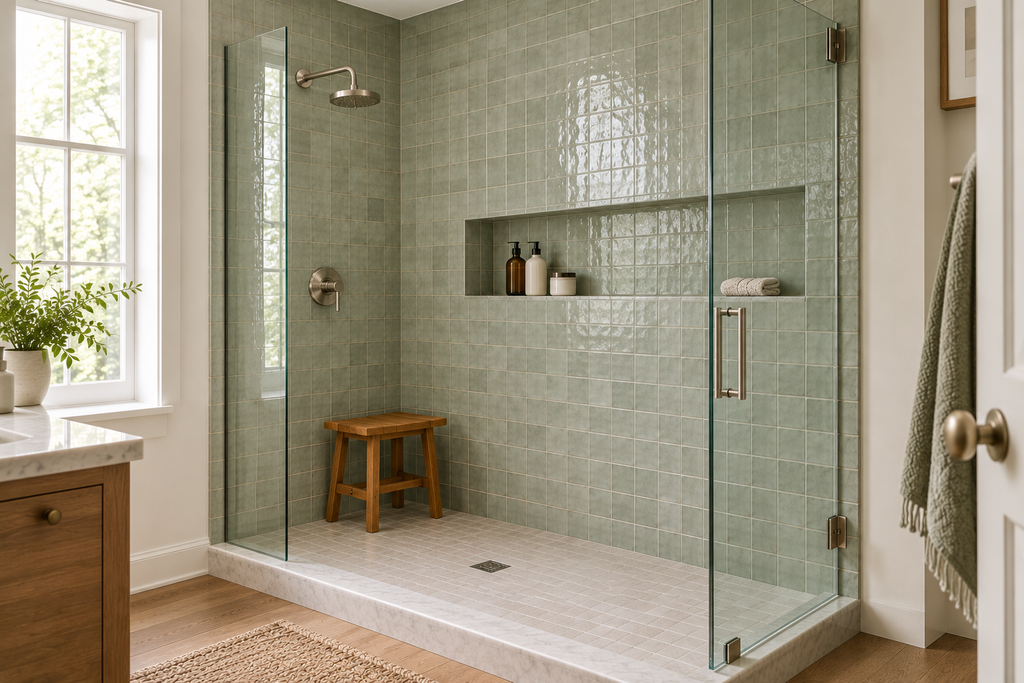
The best spot is usually a side wall, not directly under the shower head. That keeps the niche out of the main spray while still within easy reach. Avoid exterior walls: cutting into them removes insulation and can create cold spots and condensation behind the tile. Also avoid walls with plumbing or wiring inside. A good placement makes the shower niche size and height work in daily life, not just on the drawing.
Planning It Around Your Tile
Tile layout decides whether a niche looks custom or cramped, so plan it together with the shower niche size and height. Try to size and position the niche so its edges line up with full tiles or clean grout lines, so you are not left with thin slivers around the opening. Large-format tile needs extra care because small cuts show more. Decide how you’ll finish the edges, such as metal edge trim or mitered tile, before you build. A contrasting tile at the back of the niche can turn it into a small feature.
Waterproofing and Slope
A niche is a hole in a waterproof wall, so it needs the same waterproofing as the rest of the shower, including the corners, the sill and the back. Use a complete waterproofing system suited to showers and follow its instructions exactly. The sill should slope slightly toward the shower so water drains instead of pooling at the back, which is the main cause of mildew. Prefabricated waterproof niche inserts can make this easier for DIYers.
Doing This in a Small Bathroom
In a small bathroom, a niche is one of the best storage wins because it takes up no floor space at all. It can replace a corner caddy or a bulky shelf. Pair it with other space-saving ideas from our guide to small bathroom storage ideas, and if you are short on cabinets too, see our list of small bathroom storage ideas without cabinets.
Adding Style With Tile
The niche is a small area, so it’s a good place to try a bolder tile you might not use on a whole wall. A patterned or scalloped tile in the back of the niche adds personality; our scalloped edge decor ideas show how that curved look is being used around the home. Keep the tile easy to clean, and avoid very rough surfaces that trap soap.
Doing This as a Renter
A recessed niche means cutting into the wall, which is a landlord-level project. As a renter, use a rust-resistant adhesive or tension-pole caddy instead, and ask your landlord before drilling into tile. Keep your shower niche size and height notes for a future bathroom you own.
Budget and Timing
A prefabricated niche insert is the quickest option, while a custom-framed and tiled niche costs more in labor and tile. Building a niche during a full shower remodel adds little time, since the wall is already open. Adding one to a finished tiled wall is much more work and usually means replacing tile.
Where to Start If This Is Your First Time
Before the wall is closed up and the shower niche size and height are locked in, mark the stud positions and check for pipes and wiring. Tape the planned opening on the studs at your chosen height, stand in the shower and mime reaching for a bottle. If it feels natural, confirm the tile layout, then frame and waterproof the niche.
Common Mistakes to Avoid
- Putting the niche under the shower head. The contents stay wet and the grout mildews.
- Using an exterior wall. It weakens insulation and can cause condensation problems.
- Forgetting the slope. A flat sill holds water at the back.
- Ignoring the tile layout. Thin tile slivers around the opening look messy.
FAQs
What is the standard shower niche size and height? Commonly about 14.5 inches wide, 3.5 inches deep and 12 or more inches tall, with the bottom about 42 to 48 inches above the shower floor.
How deep should a shower niche be? About 3.5 inches in a standard 2×4 wall.
How high should a shower niche be from the floor? Many guides suggest about 48 inches to the bottom, or slightly lower for shorter users.
Can I put a niche on an exterior wall? It’s not recommended, because it reduces insulation and can cause moisture problems.
Should the niche slope? Yes, the sill should slope slightly toward the shower so water drains out.
Can I add a niche to an existing shower? Yes, but it usually means removing and replacing tile, so it’s easiest during a remodel.
Tools and Basics to Gather
A tape measure, a level, a stud finder, painter’s tape, framing lumber if you are widening the opening, a shower waterproofing system or a prefab niche insert, and tile and trim to finish it. Check for pipes and wiring before cutting, wear eye protection, and hire a licensed pro if you’re unsure about waterproofing.
The Bottom Line
The right shower niche size and height comes down to a few easy numbers: about 14.5 inches wide between studs, about 3.5 inches deep, and roughly 48 inches from the floor to the bottom edge. Put it on an interior side wall out of the spray, slope the sill, waterproof it properly and line it up with your tile. Get those basics right and your niche will be useful for years.
Related:
Small Bathroom Storage Ideas · Small Bathroom Storage Ideas Without Cabinets