A pendant that is too small looks lost above a long table, and one that is too big can block the view across the table or bump a tall guest’s head. Getting the pendant light size over a dining table right comes down to one simple formula for width, and one for height.
This guide gives you both numbers, shows how the formula changes for a single large pendant versus a row of three, and covers the common mistakes that make dining lighting feel off.
Why the Size Matters
A well-sized pendant light over a dining table pulls the eye down to the table and makes the whole room feel anchored. Too small, and the light looks like an afterthought floating above an empty table. Too big, and it can dominate the room or block conversation across the table. A little math up front avoids both problems.
The Width Formula
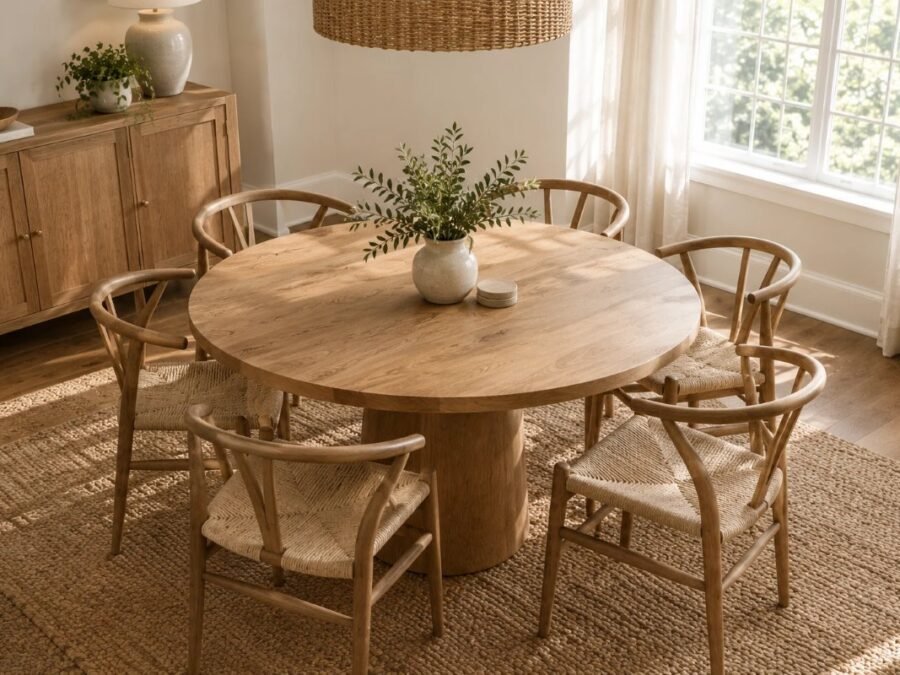
As a general rule, a single pendant should be roughly one-third to one-half the width of the table, or about 12 to 24 inches narrower than the table on a rectangular or oval shape. For a round table, aim for a pendant that is roughly half the table’s diameter. A 72-inch table, for example, usually suits a pendant somewhere between 24 and 36 inches wide. This width formula is the starting point for choosing the right pendant light size over a dining table, and it works whether you like a woven shade, a glass globe or a metal frame.
The Height Formula
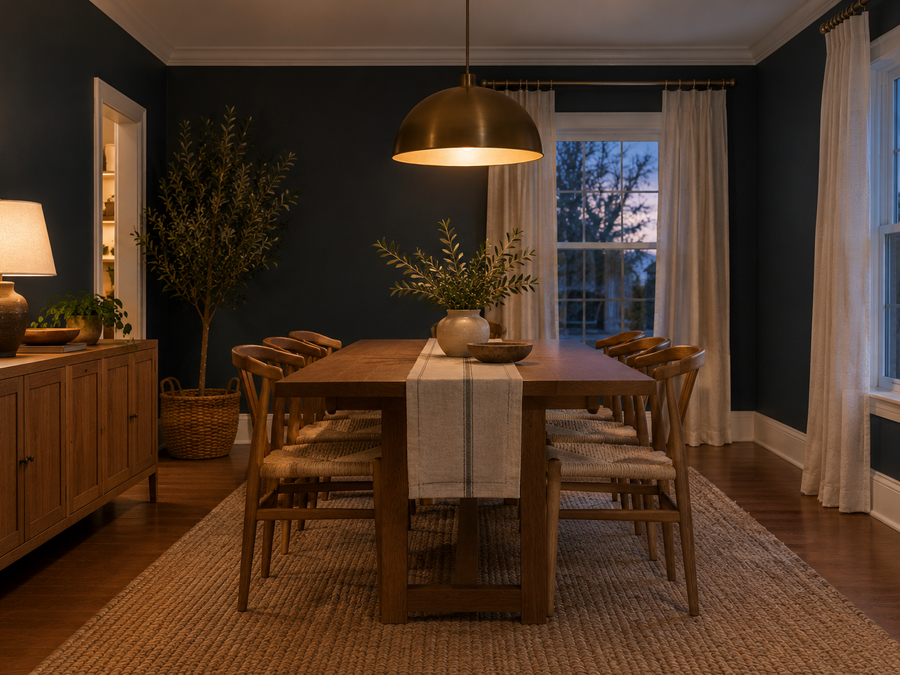
Hang the bottom of the fixture about 30 to 36 inches above the tabletop. That height lights the table well without blocking sightlines across it. In a room with a standard 8-foot ceiling, this usually puts the fixture around 60 to 66 inches from the floor. If your ceiling is taller, you can hang the pendant slightly higher within that 30 to 36 inch range and it will still look balanced.
Using a Single Large Pendant
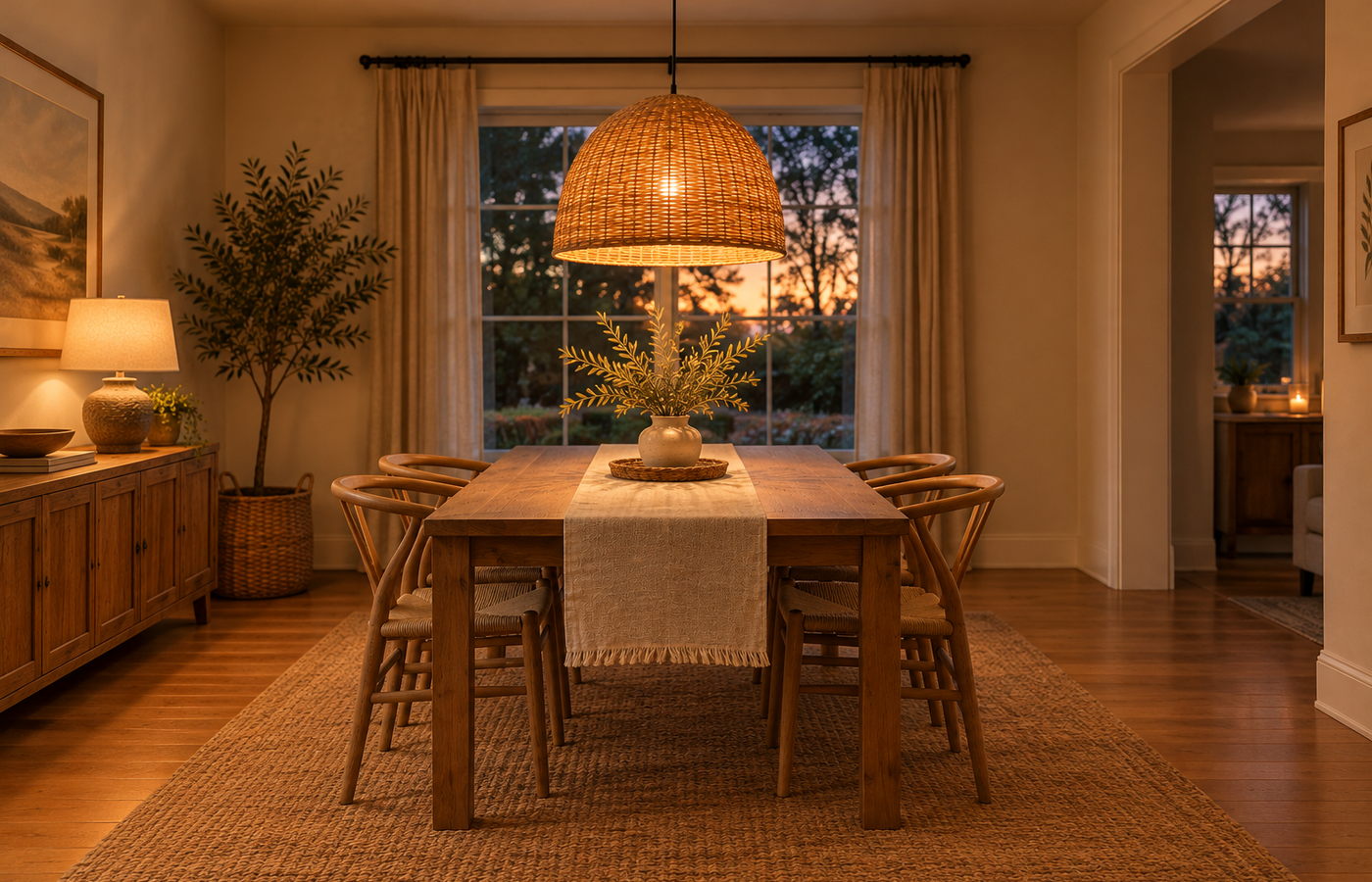
One statement pendant works well over a round or square table, or a shorter rectangular one. Center it over the middle of the table, and use the width formula to pick a size that fills the space without crowding it. A woven or fabric shade softens the light, while glass or metal reads more modern. If you like a natural material here, the same woven look works well with the approach in our guide to a dining room library, where warm materials carry through the room.
Using a Row of Three Pendants
For a long rectangular table, three smaller pendants in a row often look better than one oversized fixture. Space them evenly, with each pendant roughly covering a third of the table’s length, and keep the same 30 to 36 inch height above the table. Three pendants also let you use a smaller, less expensive style multiplied for impact rather than one large custom piece.
Adjusting for a Busy Household
If your table doubles for homework or laptops, consider a fixture on a dimmer so you can switch between bright task light and a softer dinner glow. A slightly higher hang height, near the top of the 36-inch range, also keeps the light out of the way of laptops and stacks of books.
Adjusting the Formula for Unusual Tables
A very narrow table, an extendable table or a table with a leaf may need a small adjustment. For a narrow table under 36 inches wide, lean toward the smaller end of the pendant light size over a dining table range so the fixture does not overwhelm the tabletop. For an extendable table, size the pendant for its everyday length rather than its fully extended length, since the table spends most of its time in the shorter setting.
Choosing a Shade Style
A woven rattan or wicker shade adds texture and a warm glow, a glass globe lets more light spread into the room, and a linen drum shade softens the light and suits a traditional room. Choose a shade that lets enough light through for the table to feel bright at dinner, and pair the finish with other metals already in the room, such as door hardware or lamp bases.
Checking Sightlines
Sit at the table and look across at where someone else would sit. The pendant should sit above this line of sight, not directly in it. This is especially important with a low fixture or a large shade, since it can block eye contact across the table if hung too low or positioned off-center.
Doing This as a Renter
A plug-in pendant kit or a swag hook lets you hang a real pendant without rewiring, and many pendants can be lowered or raised on their cord to fit the 30 to 36 inch height rule. Check with your landlord before installing a hardwired fixture, and keep the original fixture to reinstall at move-out.
Budget and Timing
A single pendant can cost from under $50 for a simple shade to several hundred for a statement piece, and three matching pendants multiply that cost. Installation with existing wiring takes under an hour; adding new wiring needs an electrician. Measure and choose the size before you buy, since returning an oversized fixture is more work than measuring twice.
Where to Start If This Is Your First Time
Use painter’s tape on the ceiling to mark the width and position of the pendant you’re considering, then stand at the table and check the height with a tape measure or a string hung from that point. This quick test confirms the pendant light size over a dining table will look right before you order anything.
Common Mistakes to Avoid
- Getting the pendant light size over a dining table wrong in either direction. Too small looks lost, too large can crowd the room.
- Hanging it too high or too low. Stay within the 30 to 36 inch range above the table.
- Ignoring sightlines. Check the view across the table before you finalize the height.
- Centering it on the room instead of the table. Center the fixture over the table, even if that is off-center in the room.
FAQs
What is the right pendant light size over a dining table? Roughly one-third to one-half the table’s width, or 12 to 24 inches narrower than the table.
How high should it hang above the table? About 30 to 36 inches above the tabletop.
Should I use one pendant or three? One large pendant suits round, square or shorter tables; three smaller pendants suit a long rectangular table.
Does ceiling height change the formula? The height above the table stays the same; a taller ceiling just means the fixture sits higher off the floor.
Can I use a plug-in pendant? Yes, plug-in kits and swag hooks let you hang a pendant without rewiring.
What if my pendant is too low and blocks sightlines? Raise it within the 30 to 36 inch range, or choose a smaller shade.
Tools and Basics to Gather
A tape measure, painter’s tape, a stud finder if you are installing a ceiling box, and a helper to hold the fixture in place while you check the height are all useful before installation.
Pairing the Pendant With Your Table and Rug
Once the pendant light size over a dining table is settled, check it against the rest of the room. A pendant hung too far to one side can look odd next to a table sitting squarely on a rug, so line up the fixture with the center of both the table and the rug underneath it. Warm metal finishes on the pendant, such as brass or aged bronze, tend to pair well with a wood table and a natural fiber rug.
Styling the Table Underneath
Keep the table simple so the pendant stays the focal point: a linen runner, a low centerpiece and a few candles work well. Avoid tall centerpieces that compete with the light fixture for attention. Once the pendant light size over a dining table is right, the table underneath needs very little else to look finished.
The Bottom Line
The pendant light size over a dining table comes down to two numbers: width around one-third to one-half the table, and height 30 to 36 inches above the tabletop. Use one large fixture for a round or shorter table, or three smaller ones spaced evenly over a long table, and check the sightlines before you commit. Get those two measurements right, and the lighting will look like it was planned from the start.
Related:
Dining Room Library: Easy Ways to Mix Books and Meals in 2026 · Jute Rug Dining Table Size: 5 Rules That Make It Easy