A gallery wall is one of the highest-impact, lowest-cost ways to fill a blank wall, and also one of the easiest projects to get visibly wrong. The gap between a gallery wall that looks curated and one that looks random almost always comes down to planning, not the art itself.
These gallery wall ideas cover the layout decisions and hanging technique that make the difference, whether it’s a tight cluster of five frames over a sofa in a small living room or a sprawling salon-style arrangement of twenty.
Why Gallery Walls Often Look Off
The most common reason a gallery wall doesn’t work is skipping straight to hanging without a plan. Frames go up one at a time, spacing drifts, and the result reads as accidental rather than intentional. Good gallery wall ideas all start with a plan made before a single nail goes in the wall.
1. Choose a Layout Style Before Hanging Anything
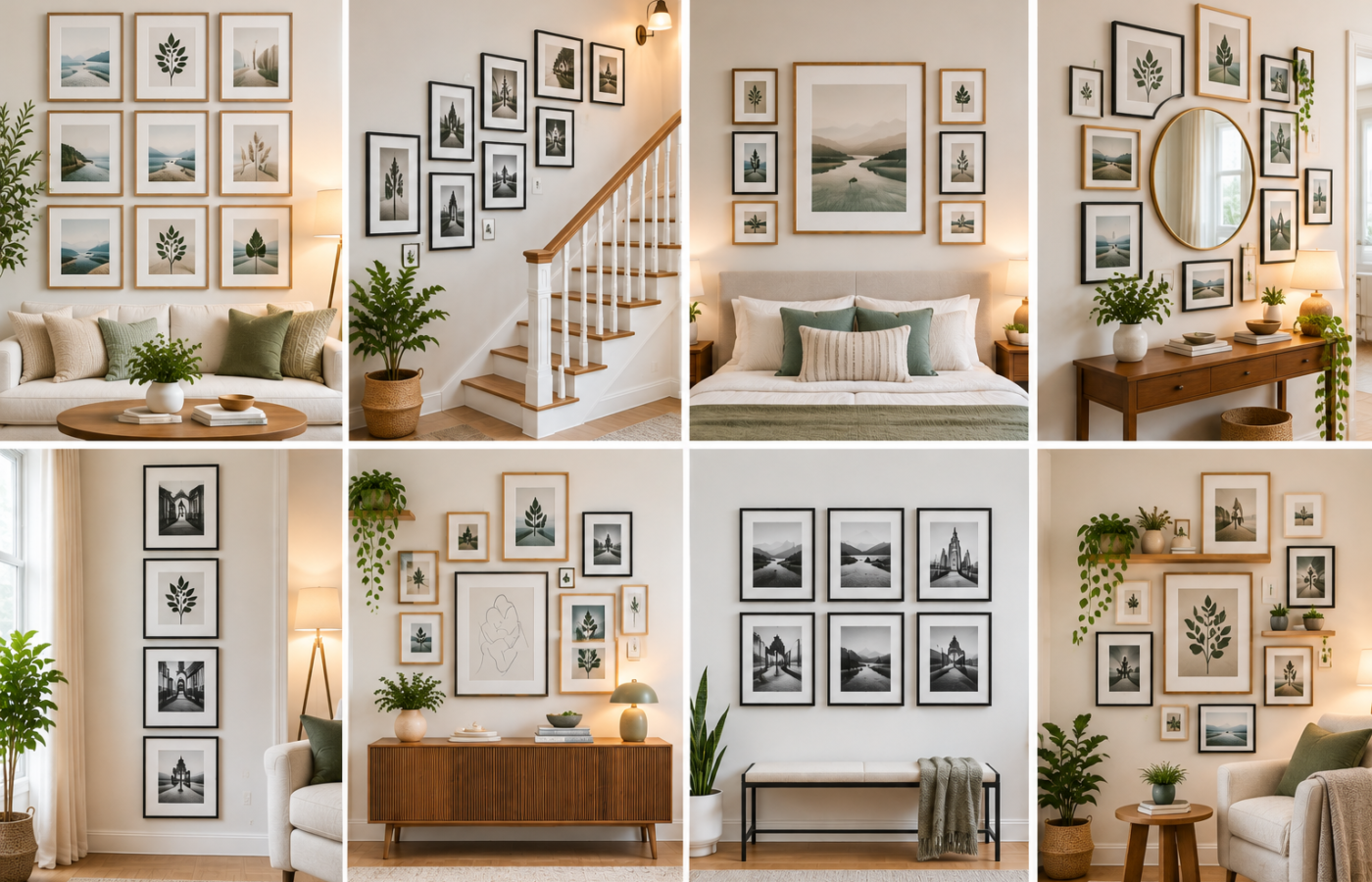
Decide upfront between a structured grid (even spacing, matching or similar frame sizes) and a salon-style cluster (mixed sizes, closer together, more organic). Mixing the two approaches without committing to one is one of the fastest ways for gallery wall ideas to fall apart visually.
2. Plan the Layout on the Floor First
Lay every frame out on the floor in the intended arrangement before hanging a single one. This single step prevents nearly every common gallery wall mistake, since it’s far easier to adjust spacing and balance on the floor than to keep patching nail holes on the wall.
3. Use Consistent Spacing Between Frames
Two to three inches between frames is a reliable default for most gallery wall ideas — tight enough to read as one connected arrangement, loose enough that each piece still has room to breathe. Cut a cardboard spacer to this width and use it consistently across the whole layout.
4. Mix Frame Sizes But Keep a Cohesive Palette
Varying frame sizes adds visual interest, but keeping the frame colors and finishes consistent (all black, all natural wood, or a deliberate two-tone mix) keeps the wall feeling planned rather than mismatched. This balance between variety and consistency is at the center of most successful gallery wall ideas.
5. Start From the Center and Work Outward
Hang the largest or most important piece first, roughly at eye level, then build the rest of the arrangement out from it in both directions. This anchoring approach — related to the same balance principles behind the rule of thirds in visual composition — keeps the whole wall feeling centered even with an irregular layout.
6. Use a Paper Template Method for Renters
Trace each frame onto craft paper, tape the paper templates to the wall in the planned layout, and hang nails through the paper before removing it. This is one of the most practical gallery wall ideas for anyone who can’t afford trial-and-error nail holes in a rented wall.
7. Include Non-Frame Elements
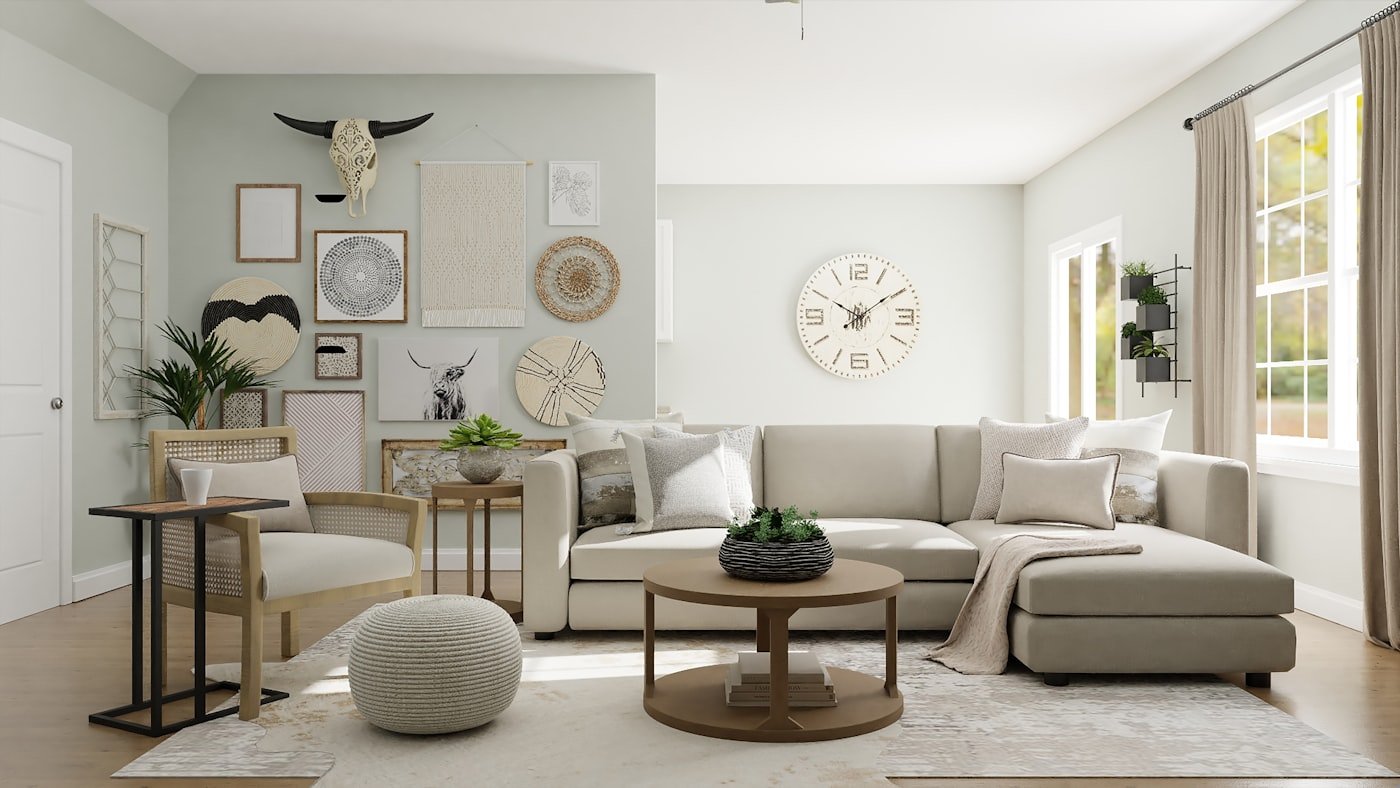
Mirrors, small shelves, or a woven wall hanging mixed in among the frames add texture and break up a wall that might otherwise feel like a strict grid of rectangles. Not every gallery wall needs to be frames only — some of the most interesting gallery wall ideas mix in at least one different shape or material.
8. Light the Wall Properly
A picture light or well-placed lamp nearby keeps a gallery wall from disappearing after dark, especially in a room that doesn’t get much overhead light. This is often the last detail added, but it’s what makes an otherwise well-planned wall feel finished around the clock.
Doing This Without Damaging a Rental Wall
Most gallery wall ideas here work fine in a rental with the right hardware — adhesive strips rated for the frame’s weight, or the paper template method paired with small finish nails that leave barely visible holes. Always check the lease’s specific policy, but a gallery wall is rarely the reason a rental wall needs major repair at move-out.
Budget Priorities If You Can Only Do a Few
If budget is tight, prioritize planning (the floor layout) over buying new frames — a well-planned arrangement of mismatched, already-owned frames looks more intentional than a hastily hung set of matching new ones. Among all the gallery wall ideas here, the planning step is free and delivers the most visible improvement.
Choosing What to Include Beyond Photos
A gallery wall doesn’t need to be entirely photographs. Mixing in prints, postcards, small textiles, or a pressed botanical adds variety that photos alone can’t provide, and it’s one of the gallery wall ideas that makes the arrangement feel personally collected rather than store-bought. Aim for at least one or two non-photo pieces if the wall includes more than six or seven frames total.
Common Gallery Wall Mistakes to Avoid
- Hanging without planning first. Skipping the floor layout is the single biggest reason spacing and balance go wrong.
- Mixing frame styles with no consistent thread. Too many different finishes and colors reads as chaotic rather than curated.
- Hanging too high. The center of the overall arrangement should sit roughly at eye level, not near the ceiling.
- Inconsistent spacing. Uneven gaps between frames are one of the most visible signs of an unplanned wall.
FAQs
How much space should be between frames in a gallery wall? Two to three inches is a reliable default — close enough to read as one arrangement, wide enough that each piece has room to breathe.
Should gallery wall frames match? Not necessarily — mixing frame sizes and even finishes can work well, as long as there’s a consistent thread (like color) tying the whole arrangement together.
How do I plan a gallery wall without hanging test nails? Lay the frames out on the floor first, then use the paper template method — tracing each frame and taping the templates to the wall — to finalize placement before any nails go in.
What height should a gallery wall start at? The center of the overall arrangement should sit at roughly eye level, typically 57-60 inches from the floor for most rooms.
How many frames do I need for a gallery wall? There’s no fixed number — a cluster of three to five can work over a small piece of furniture, while a full salon-style wall might use fifteen or more. Planning the layout matters more than the count.
Can I include things other than framed photos in a gallery wall? Yes — mirrors, small shelves, textiles and prints all work well mixed in with frames, and often make the wall feel more personal than photos alone.
Tools Worth Having Before You Start
A level, a tape measure, a pencil, and the craft-paper template supplies from the renter method above cover almost everything needed for a clean install. A stud finder is worth having too if any of the frames are heavier pieces, even though most gallery wall ideas rely on lightweight frames that don’t need to hit a stud at all.
The Bottom Line
The best gallery wall ideas all come down to planning before hanging: choose a layout style, lay it out on the floor, keep spacing consistent, and anchor the arrangement around one central piece. Get that sequence right, and even a mismatched collection of frames reads as an intentional, curated wall.
Related:
16 Boho Living Room Ideas (Without the Clutter) · 22 Living Room Ideas That Make a Small Space Feel Bigger