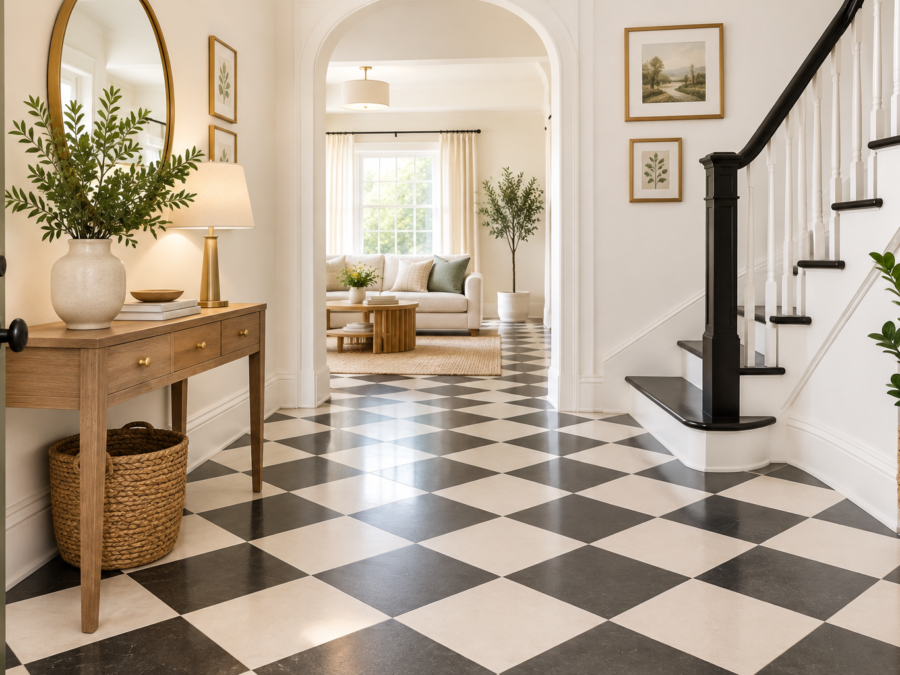
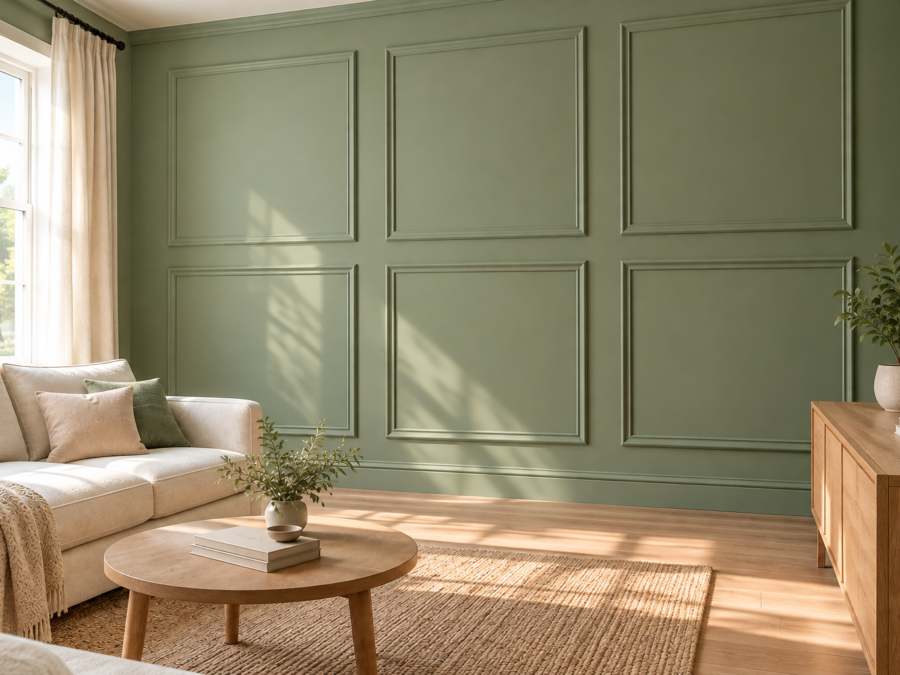
Painting a room is the highest-impact DIY there is, and the difference between an amateur and a professional finish is almost entirely preparation and order. This is the exact method, with timings, for a standard 4 by 4 metre bedroom or living room. Budget one full day for prep and the first coat, and a half day for the second coat and cleanup.
What you need
| Item | Notes | Approx. cost |
|---|---|---|
| Wall paint, matte or eggshell | 5 litres covers a 4×4 room with two coats | $50 to $90 |
| Primer | Only if walls are new, patched or a dark colour is being covered | $25 |
| Roller frame, 23 cm, plus two medium-pile sleeves | Medium pile for standard walls | $15 |
| Angled sash brush, 5 cm | The single most important tool for clean edges | $12 to $20 |
| Roller tray and liners | Liners save cleanup time | $8 |
| Painters tape, filler, sanding sponge, sugar soap, dust sheets | $30 |
Step 1: Clear and cover (45 minutes)
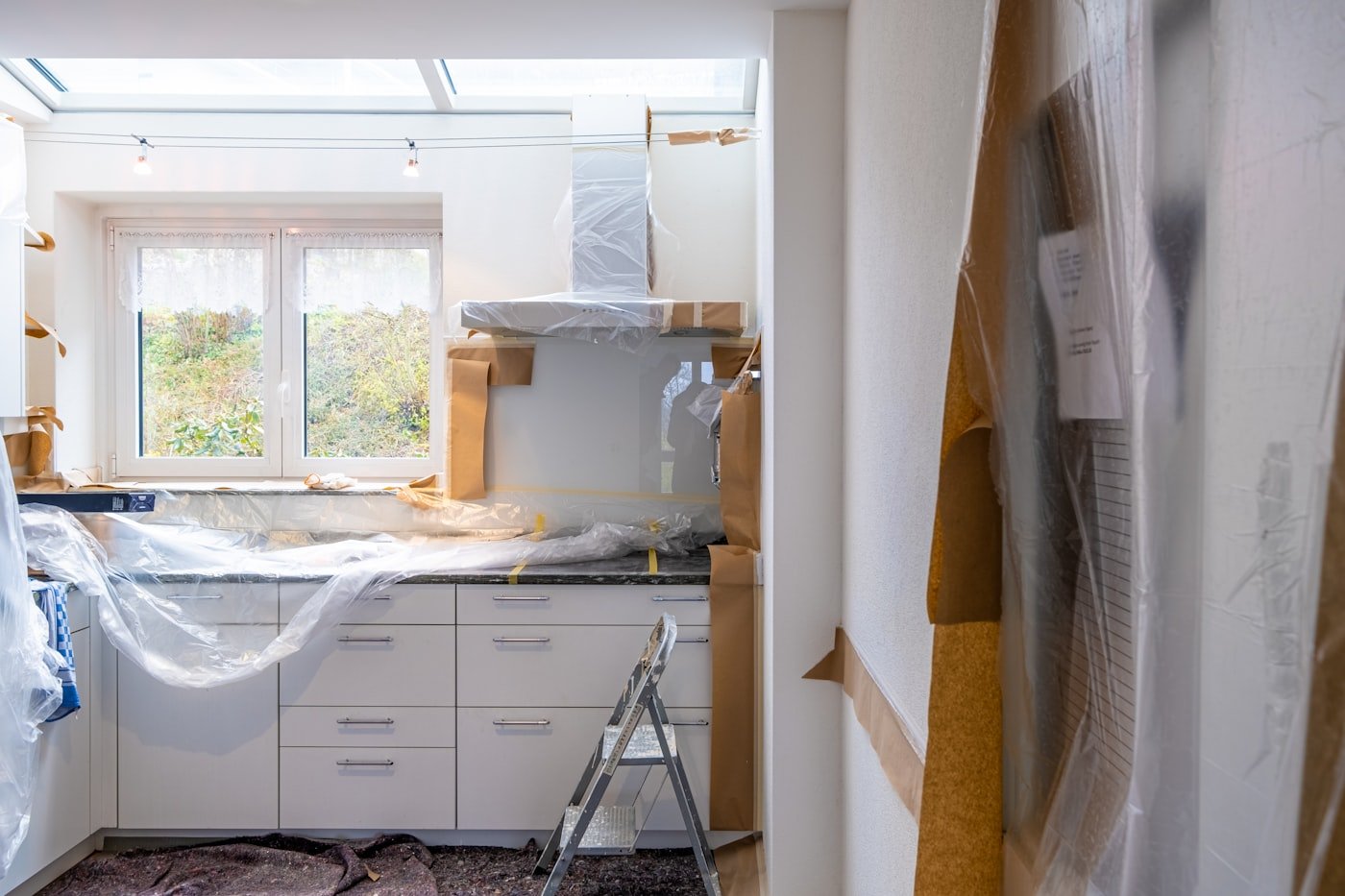
Move furniture to the centre of the room and cover it. Take down curtains, blinds, switch plates and socket covers (turn off the power at the breaker first). Tape dust sheets to the top of the skirting boards so paint cannot get under them.
Step 2: Wash, fill and sand (1 hour plus drying)
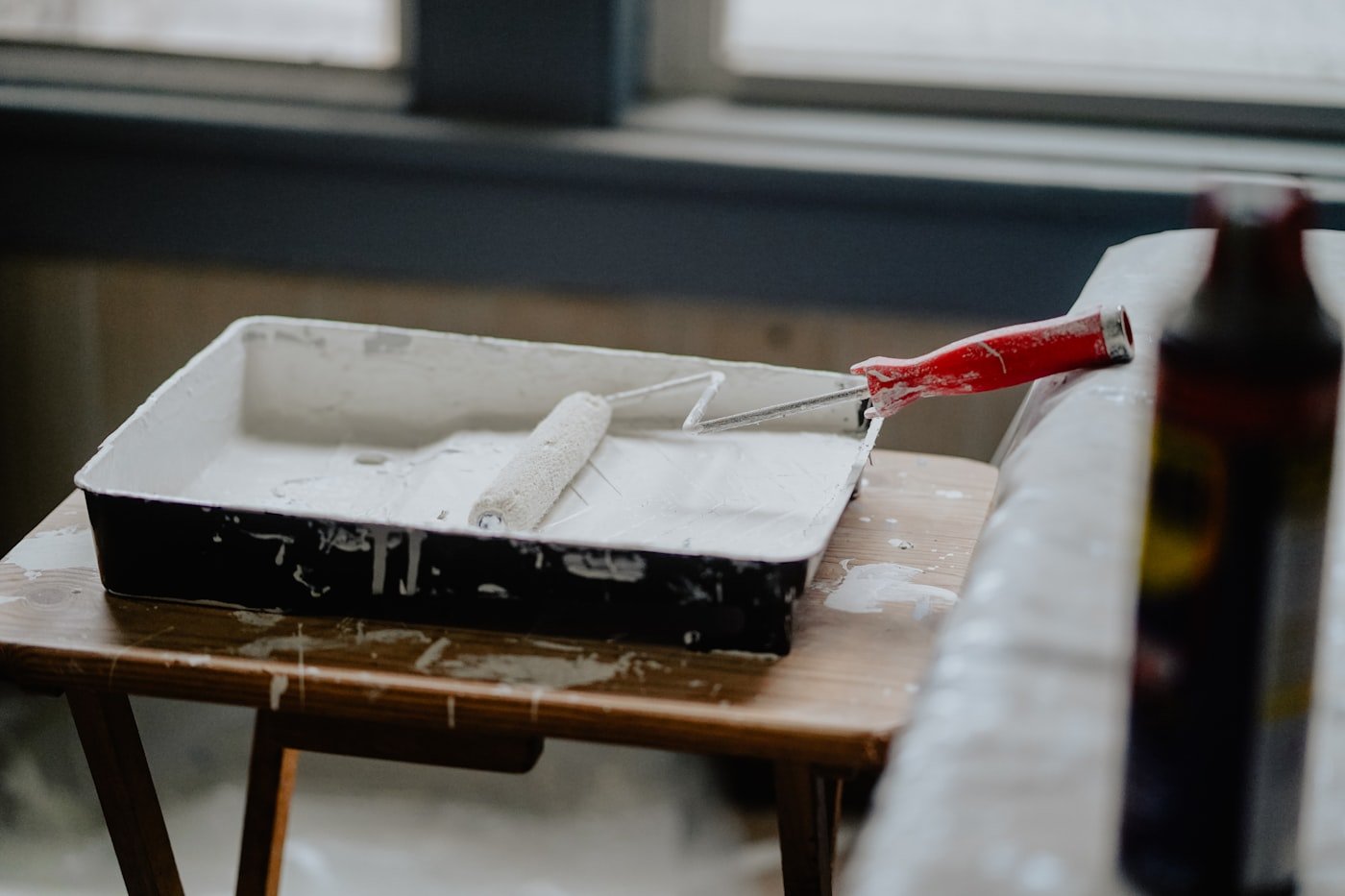
Wash the walls with sugar soap, especially around light switches and above radiators, where grease and dust collect. Fill every nail hole and crack with a lightweight filler, let it dry, and sand flush with a fine sanding sponge. Wipe the dust off with a damp cloth. Skipping this step is the most common reason a paint job looks amateur.
Step 3: Tape only where you need to
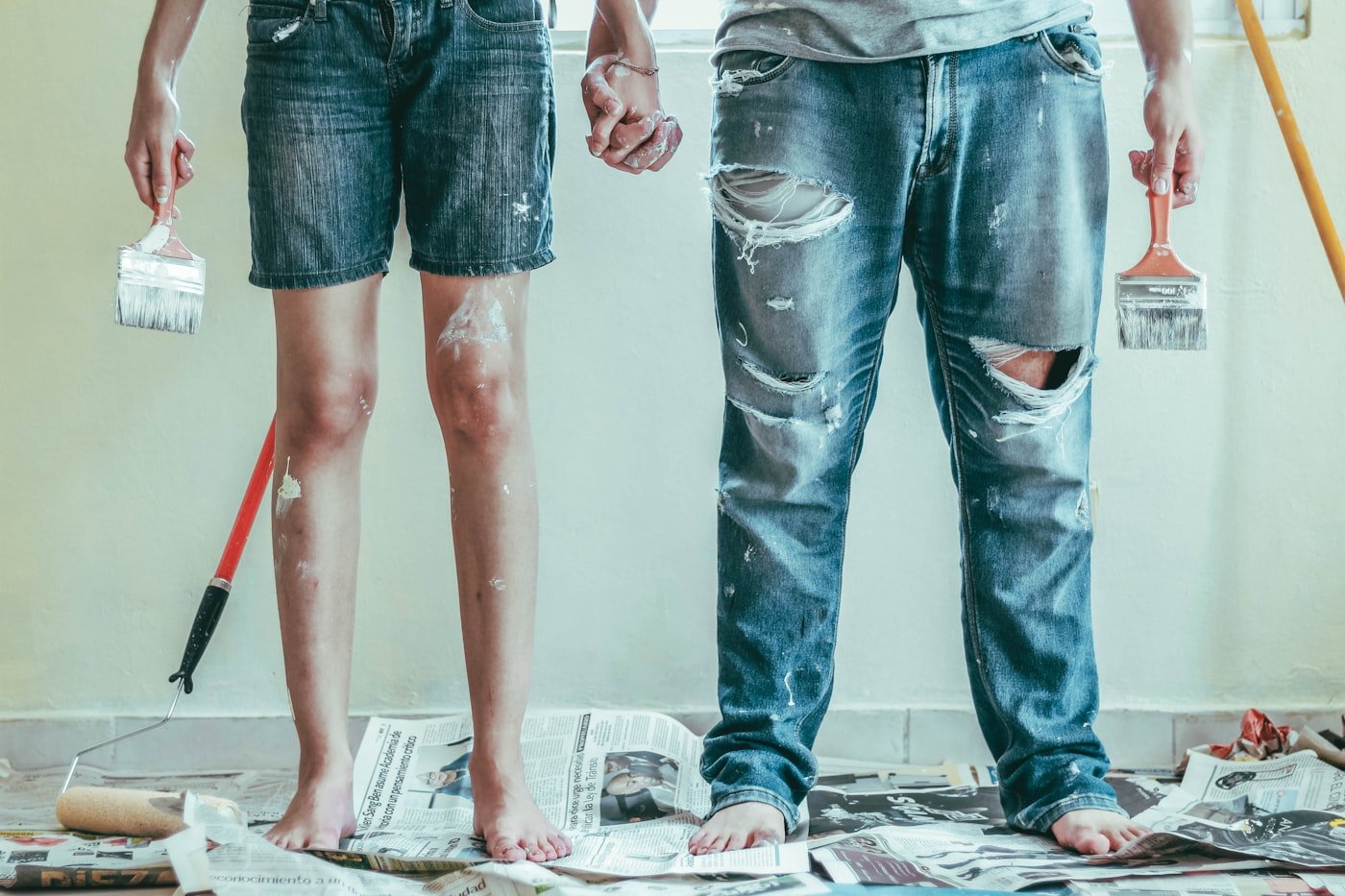
Tape window frames, door frames and the top edge of the skirting. Press the tape edge down firmly with a putty knife so paint cannot bleed under. Do not tape the ceiling line; a taped ceiling line almost always bleeds, and cutting in by hand is faster once you have done a metre of it.
Step 4: Prime if needed (1 hour plus drying)
Prime new plaster, patched areas, and walls going from dark to light. Fresh plaster needs a mist coat (paint diluted 20 percent with water). If the walls are already painted a similar colour in good condition, skip the primer and go straight to the first coat.
Step 5: Cut in the edges (1 hour)
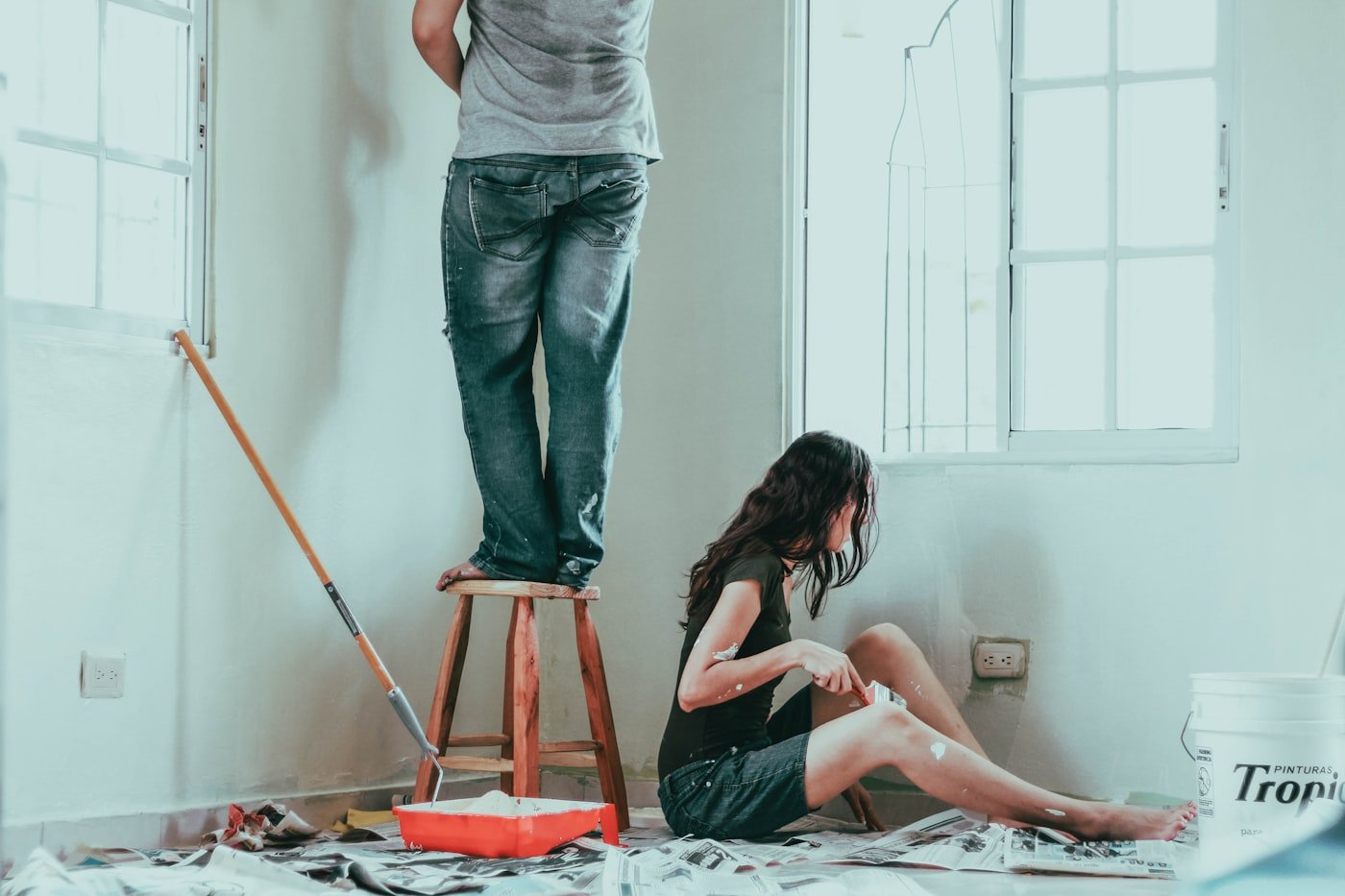
With the 5-centimetre angled brush, paint a 5 to 7 centimetre band along the ceiling line, the corners, and around every frame and socket. Dip a third of the bristle length, tap off the excess, and draw the brush along the edge in one smooth stroke, letting the bristles form a fine line. Do one wall at a time, then roll that wall immediately so the cut-in edge and the rolled paint blend while wet.
Step 6: Roll the walls (1 hour per coat)
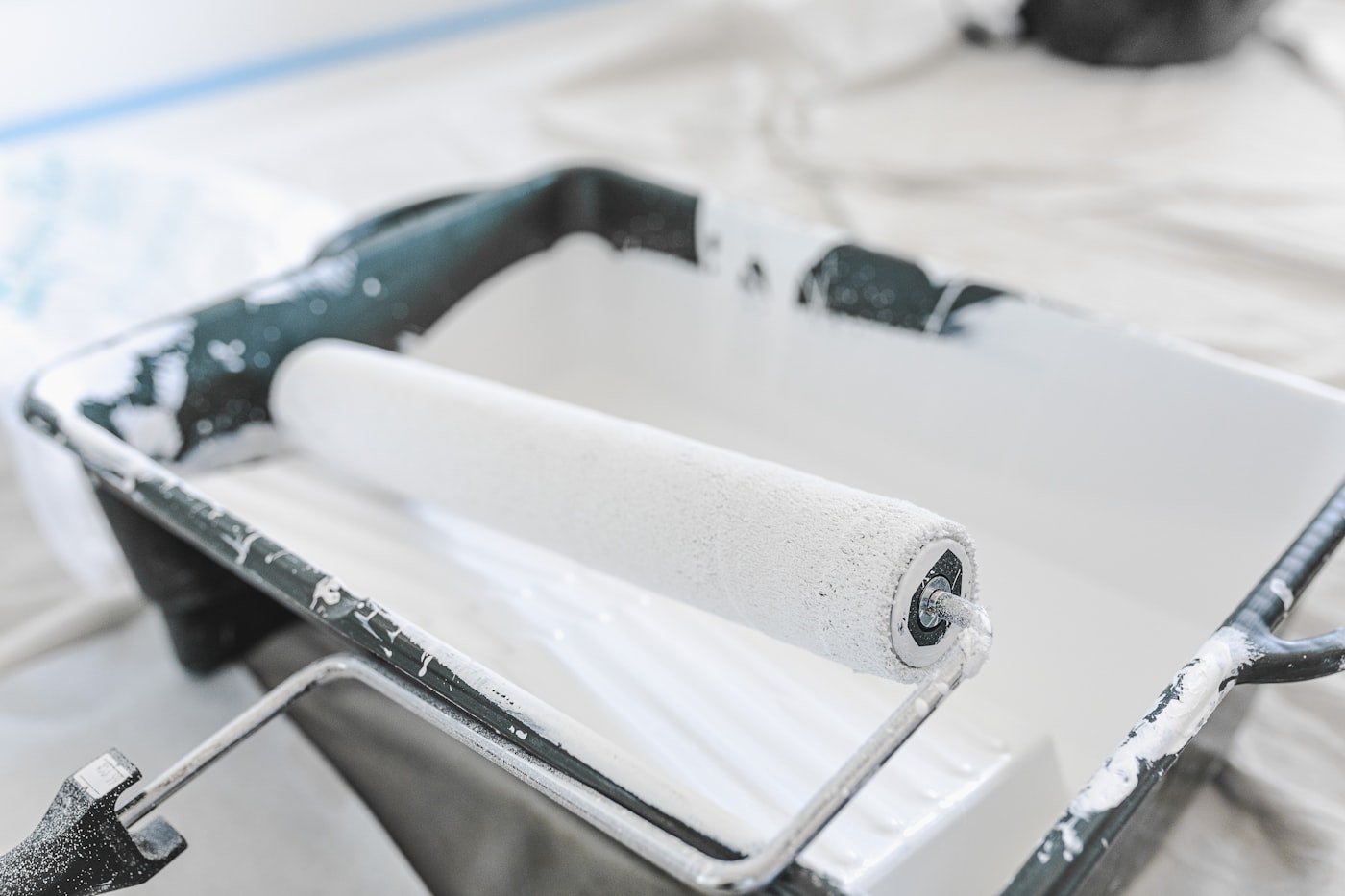
Load the roller evenly in the tray, then paint a W shape about 60 centimetres wide on the wall and fill it in with vertical strokes without lifting the roller. Work from the top corner down and across, always rolling back into the wet edge so there are no lap marks. Light, even pressure; pressing hard leaves ridges. Finish each section with a light vertical pass from top to bottom.
Step 7: Second coat and finish
Wait the recoat time on the tin (usually 2 to 4 hours), then repeat the cut-in and roll. Two coats are not optional; one coat always looks patchy under daylight. Remove the tape while the paint is still slightly tacky, pulling back on itself at a 45 degree angle for a crisp line. Replace socket covers after 24 hours.
Mistakes that ruin the finish
- Skipping the wash and fill. Grease repels paint and holes show through.
- Cutting in the whole room first, then rolling. The edges dry and show as a band.
- Overloading the roller. Drips and runs at the top of each stroke.
- Painting in direct sunlight or above 25 degrees. The paint dries before it levels.
- One coat. Always looks patchy.
- Taping the ceiling. It bleeds.
Choosing the colour and finish
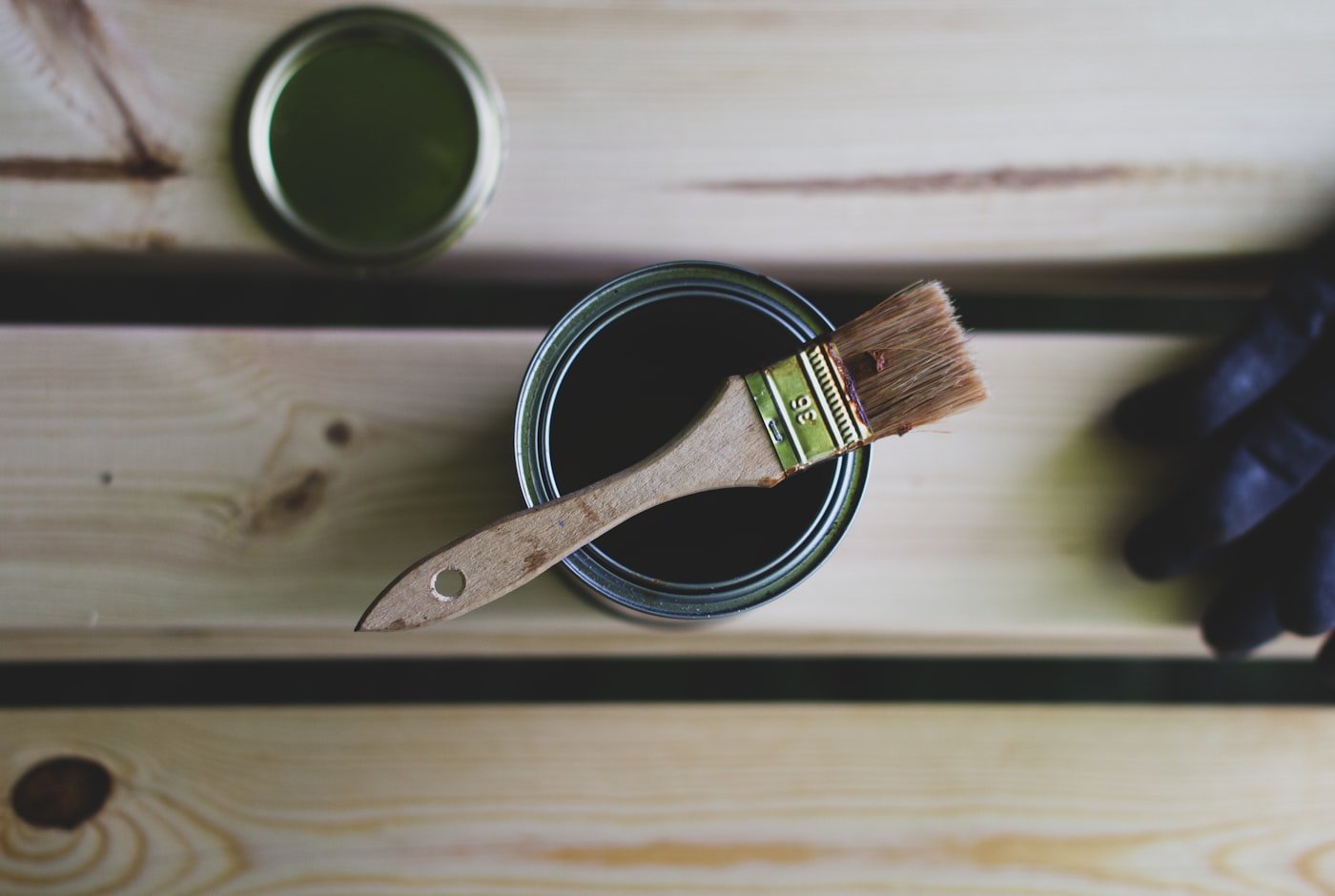
Paint two A4 patches of each candidate colour on different walls and look at them morning and night for two days. Matte hides wall imperfections and suits bedrooms and living rooms; eggshell wipes clean and suits hallways and kitchens. Ceilings in flat white unless the room has very high ceilings, where the wall colour on the ceiling makes the room feel cosier.
Frequently asked questions about painting a room
How long does it take to paint a room?
About a day and a half for a standard bedroom: half a day of prep, half a day for the first coat, and a half day for the second coat and cleanup. Rushing the prep costs more time later.
Do I need primer?
Only on new plaster, filled patches, stains, or when covering a dark colour with a light one. Over sound existing paint in a similar colour, two coats of the new paint is enough.
Roller or brush for walls?
Roller for the walls, brush for the edges. A medium-pile 23 centimetre roller gives the most even finish on standard walls.
How much paint do I need?
Measure wall length times height, subtract windows and doors, and divide by the coverage on the tin (usually 10 to 12 square metres per litre per coat). Buy 10 percent extra for touch-ups.