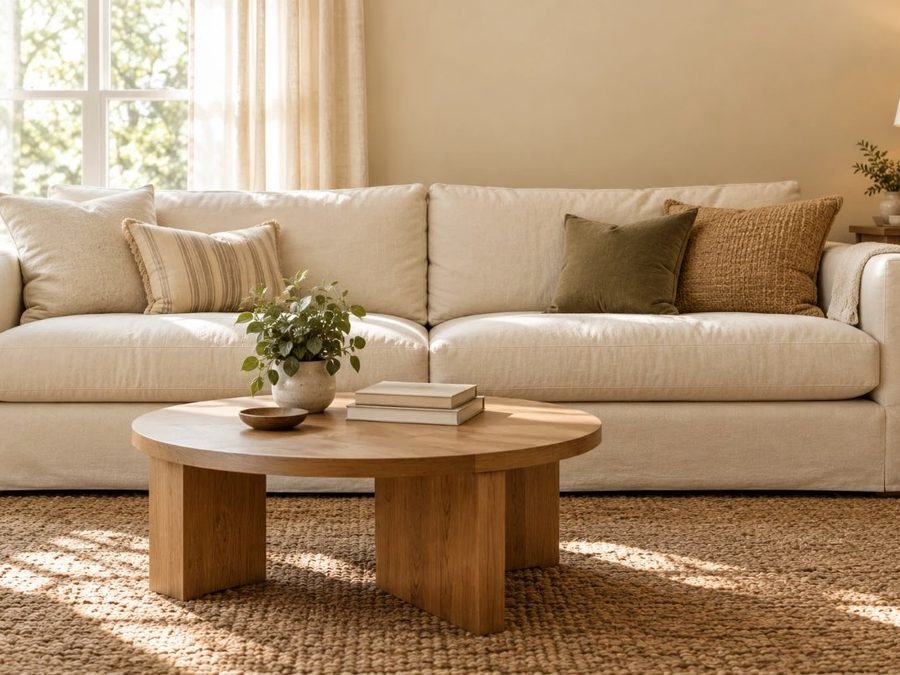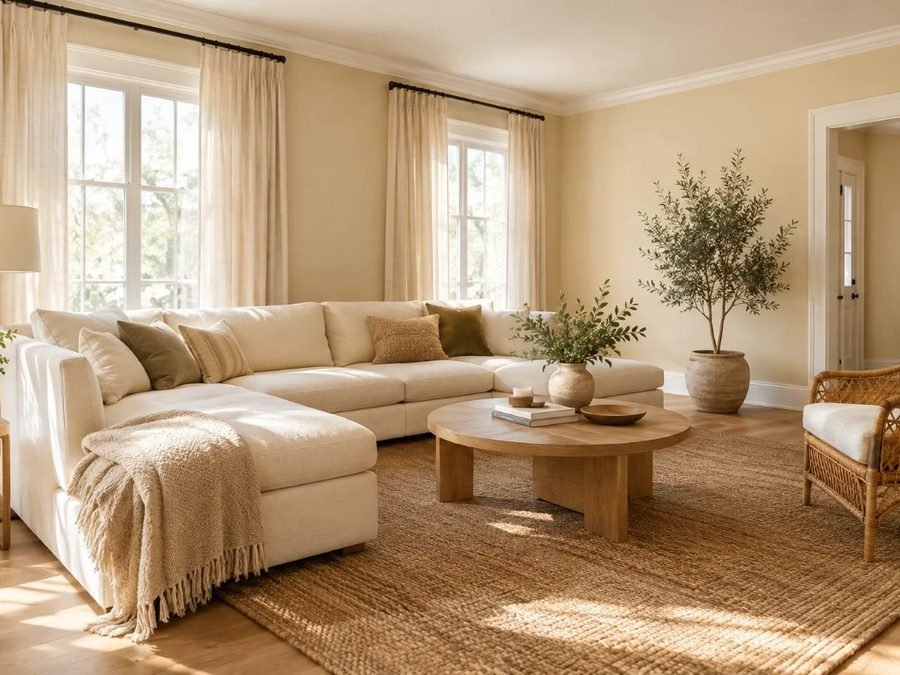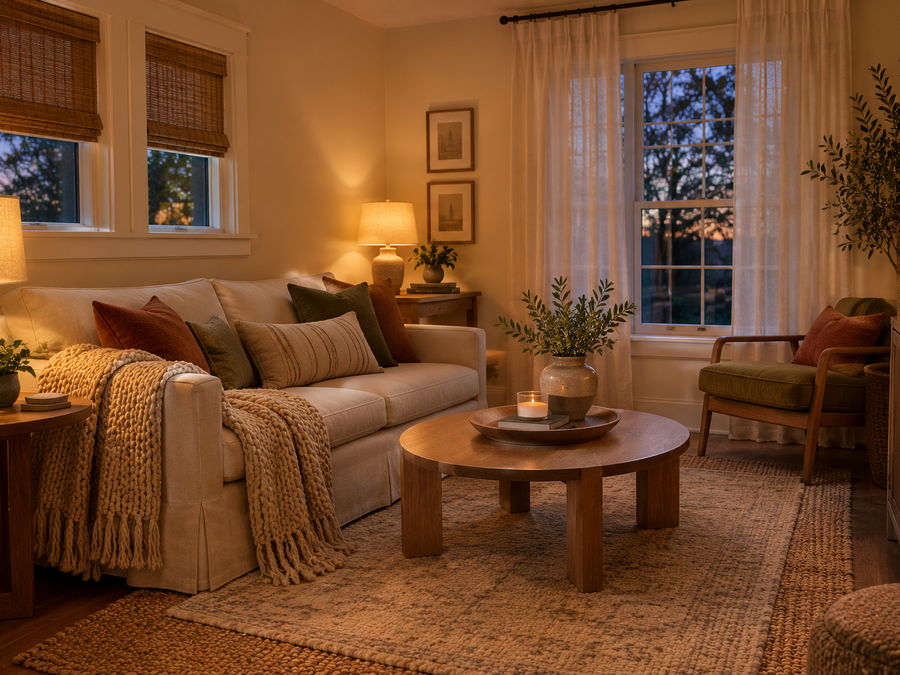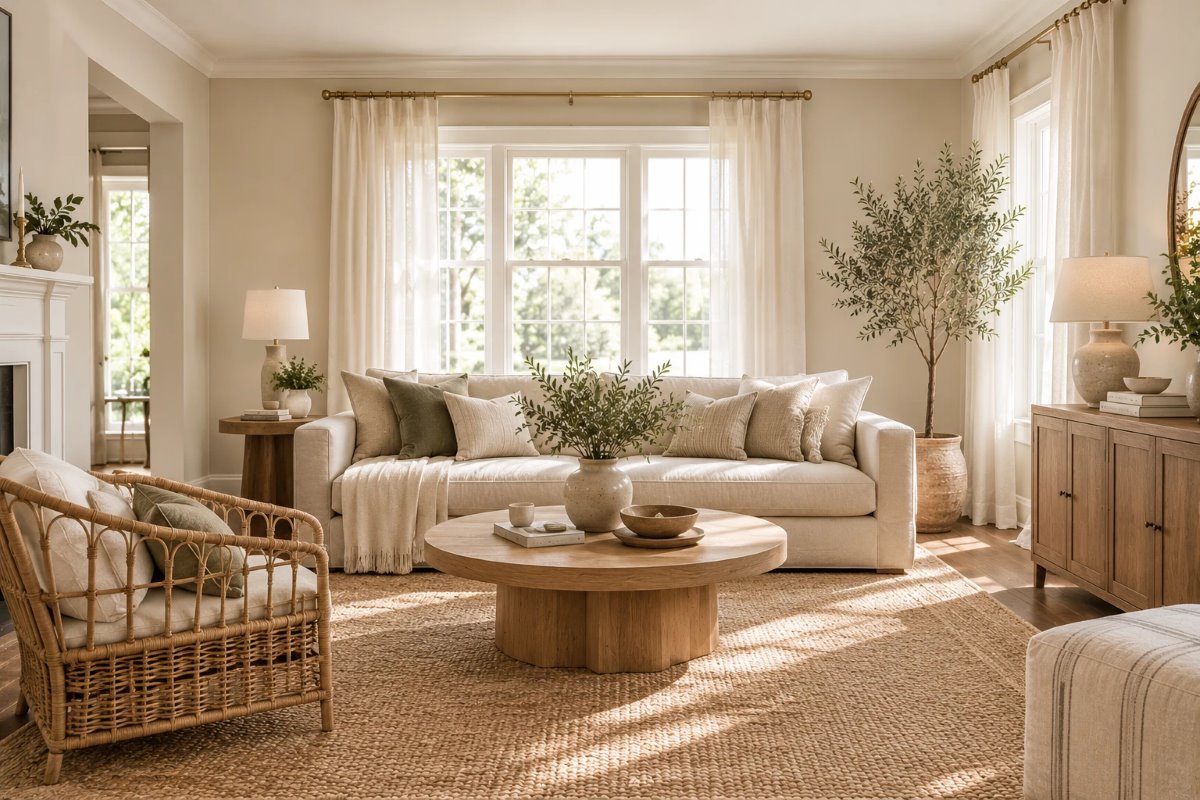
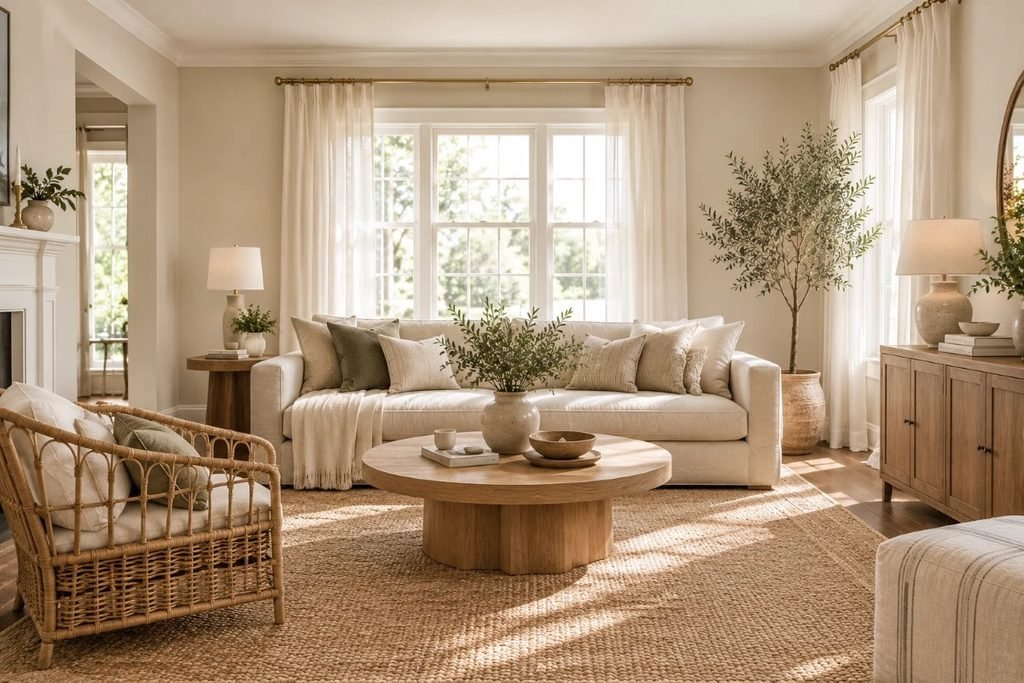
Picking a white is harder than picking a color. Too bright and it feels cold; too creamy and it looks yellow. Shoji White Sherwin Williams sits in the sweet spot: a muted, warm white with a touch of greige that feels soft, calm and a little more grown-up than a plain white.
This review covers what Shoji White really looks like, its undertones and light reflectance value (LRV), how it changes through the day, how it compares with Alabaster and Accessible Beige, and where it works best, plus the mistakes that make a warm white look dull.
Quick Answer: Shoji White at a Glance
- Code: SW 7042.
- Color: a muted, creamy white with a hint of greige.
- LRV: about 74 (published), a light but not stark color.
- Undertone: warm, with a gray lean; it can look slightly beige.
- Best for: living rooms, bedrooms, kitchens, hallways and whole-house color.
What Shoji White Is
Sherwin-Williams describes Shoji White SW 7042 as a muted white that makes a space feel warm, sophisticated and peaceful, and it was the August 2022 Color of the Month. That description fits what you see on a wall. Shoji White Sherwin Williams is not a bright, reflective white. It is softened with gray and cream, so it feels restful and a little textured, which is why it works so well in homes with a lot of wood and natural fabric.
The Undertones
Shoji White Sherwin Williams leans warm, with a creamy base and a gray lean that keeps it from looking yellow. In most rooms it reads as a soft off-white; in shade it can look beige or greige. Some people notice a faint pink or green hint next to certain fabrics, so check it against your floor, sofa and counters before you commit.
How Light or Dark Is It? (LRV)
LRV runs from 0 (black) to 100 (white). Shoji White is published at about 74, so it is clearly lighter than a greige like Accessible Beige, but softer than a bright white. It will brighten a room without bouncing harsh light around. These numbers come from color databases rather than the Sherwin-Williams page I read, so confirm the figure on the chip.
How It Looks in Different Light
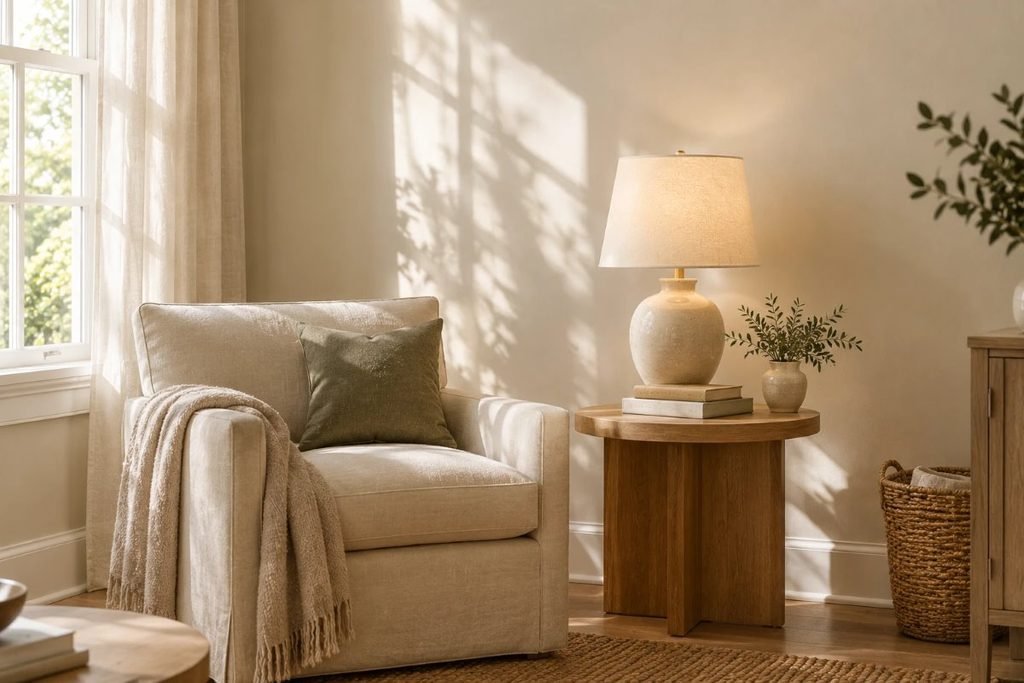
Whites change more with light than any other color, so judge this one at several times of day.
| Room light | How Shoji White reads | What to do |
|---|---|---|
| North-facing | Grayer, cooler, slightly beige | Use warm 2700K bulbs and warm textiles |
| South-facing | Warm, creamy and bright | Enjoy it; avoid yellow trim |
| East-facing | Clean and soft in the morning | Check it again in the evening |
| West-facing | Golden and warm late in the day | Add cooler accents to balance |
| Evening lamps | Creamy and cozy | Layer lamps at different heights |
Shoji White vs Other Warm Whites
Soft whites look close on a chip, so compare them side by side. Using commonly published LRVs, Shoji White is about 74, Alabaster about 82 and Accessible Beige about 58, so Shoji White sits between a true white and a greige. For a cooler, cleaner soft white, see our guide to Pantone Cloud Dancer, and for a creamier, more yellow-leaning option, our Dutch Boy Melodious Ivory guide covers a warmer alternative.
Best Trim and Coordinating Colors
The Sherwin-Williams page text I could read did not list coordinating colors, so choose by eye. Shoji White Sherwin Williams looks calm with trim in the same color in a satin or semi-gloss finish, and soft against a slightly brighter warm white. Avoid stark blue-whites, which make it look dingy. For contrast, try olive, deep green, charcoal or terracotta.
Best Rooms and Materials
Shoji White Sherwin Williams suits living rooms, bedrooms and hallways where you want light without glare. It loves natural materials: oak, walnut, linen, jute, rattan and ceramics. For another warm neutral that pairs well, see our Universal Khaki in a small living room guide.
Shoji White in a Small Space
In a small room, a muted white keeps the walls from closing in while feeling softer than a stark white. Paint walls and ceiling in the same color or a slightly lighter one, add a mirror opposite the window and use warm lamps. Keep furniture light, with visible legs.
Shoji White in Kitchens and Cabinets
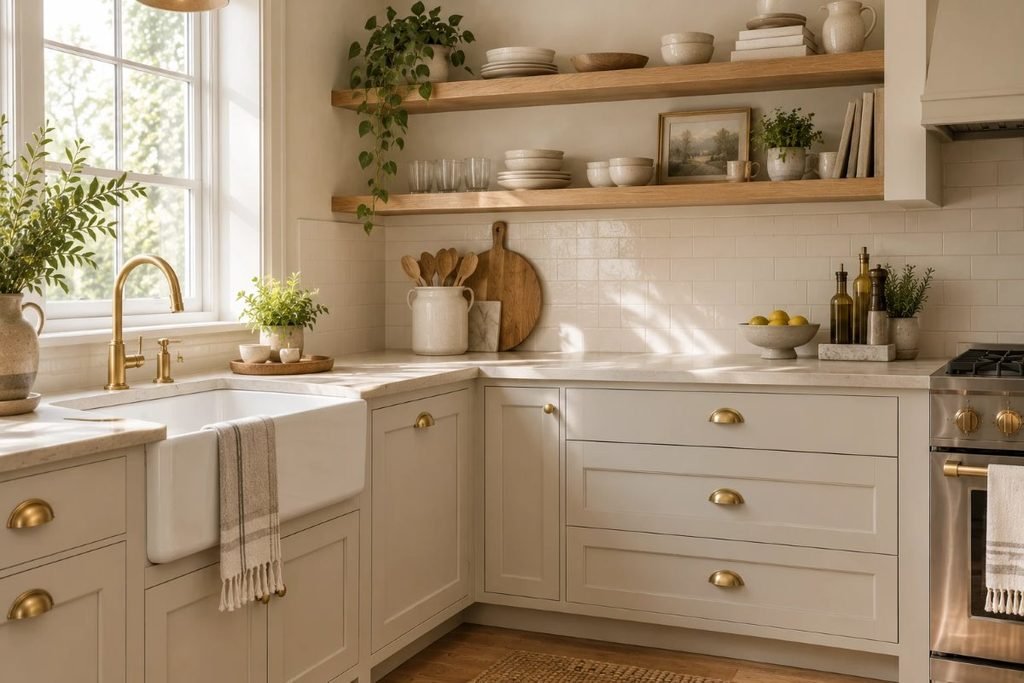
This shade is popular on kitchen cabinets and walls. On cabinets, it looks soft next to brass or black hardware and a pale stone counter. Test it against your countertop, since a bright white quartz can make a creamy white look yellow. Use a durable cabinet-grade enamel and a bonding primer.
Furniture and Flooring Pairings
Shoji White Sherwin Williams looks best with warm floors: honey oak, walnut, tile in sand tones or natural stone. Cool gray floors can make it look flat. Furniture in oatmeal, caramel leather, rattan and aged brass feels natural, while black metal gives a modern contrast. If your sofa is bright white, the wall may look beige beside it.
Doing This as a Renter
Many landlords like a warm white, and it is easy to cover later. If painting is not allowed, bring in the look with warm white curtains, bedding and lamps, and a woven rug.
Budget and Timing
Sherwin-Williams prices vary by product line and store, so check current costs. Whites often need two coats, and an average room takes a weekend. A sample costs far less than repainting.
Where to Start If This Is Your First Time
Get a free chip or a peel-and-stick sample and place it on two walls, one bright and one dark. Look at it morning, noon and night for a few days. If you still like it, follow our guide on how to paint a room and start with one room.
Styling Tips
Layer texture rather than pattern: linen curtains, a wool throw, a jute rug and ceramic lamps. Add deeper accents such as olive, navy, rust or charcoal so the white has something to play against. Keep art simple in wood or black frames, and add plants for life. Shoji White Sherwin Williams is a quiet backdrop, so it is the objects in the room that give it personality.
Quick Recap
Shoji White Sherwin Williams is a muted, warm white with an LRV of about 74. Pair it with warm woods and natural fabrics, test it in your own light and keep your bulbs warm.
Common Mistakes to Avoid
- Judging it on a tiny chip. Always test a large sample.
- Pairing it with a cold blue-white trim. It can look dingy.
- Using very cool bulbs. They make a warm white feel flat.
- Ignoring fixed finishes. Check it against floors and counters.
FAQs
Is Shoji White warm or cool? Warm, with a gray lean.
What is the LRV of Shoji White? About 74 (published); confirm it on the chip.
Is Shoji White a beige? It can look beige in shade, but it is a muted white.
What trim goes with Shoji White? The same color in a higher sheen, or a slightly brighter warm white.
Is Shoji White good for a small room? Yes, it keeps a room light and soft.
Is Shoji White good for cabinets? Yes, if tested against your counter.
Tools and Basics to Gather
A chip or peel-and-stick sample, painter’s tape, drop cloths, an angled brush, a roller, a tray and a stepladder. Keep windows open and follow the safety directions on the can.
The Bottom Line
Shoji White Sherwin Williams is a soft, muted white that feels warm without turning yellow. Test it in your own light, pair it with warm woods and natural fabrics, and keep your bulbs warm. Done that way, it is a white that feels calm, bright and just right.
Related:
Pantone Cloud Dancer in a Living Room · Dutch Boy Melodious Ivory Living Room