Two of the most popular warm whites from Sherwin-Williams look almost the same on a chip, which is why so many people get stuck choosing between them. The Alabaster vs Greek Villa question comes down to a few small differences in brightness, warmth and mood.
This guide compares them side by side: their undertones, LRV, how they look in different light, where each works best and how to test them so you pick the right one.
Quick Answer: Alabaster vs Greek Villa
- Alabaster (SW 7008): a soft, muted warm white, LRV about 82.
- Greek Villa (SW 7551): a slightly brighter, creamier, sunnier white, LRV about 84.
- Easy pick: Alabaster for a quieter, more subdued white; Greek Villa for a little more glow.
- Both: warm, neutral and work on walls, trim and cabinets.
What Each White Is
Sherwin-Williams describes Alabaster SW 7008 as a soft, warm but balanced white that gives brightness without sacrificing coziness. It describes Greek Villa SW 7551 as a sunny white that comes to life in natural light and works well on trim. In the Alabaster vs Greek Villa comparison, both are warm whites, but Alabaster feels calmer and Greek Villa feels a touch brighter.
The Comparison Table
| Alabaster | Greek Villa | |
|---|---|---|
| Code | SW 7008 | SW 7551 |
| Published LRV | About 82 | About 84 |
| Feel | Soft, muted, peaceful | Sunny, creamy, bright |
| Undertone | Warm cream | Warm, slightly yellow |
| Best for | Calm, subdued rooms | Bright, glowing rooms |
How Each White Looks in Different Light

In north-facing rooms, both soften, but Alabaster tends to look a little quieter and grayer while Greek Villa keeps more warmth. In south-facing rooms, Greek Villa glows creamy and sunny, and Alabaster stays more even. At night under warm bulbs, both look cozy; Greek Villa shows more of its creamy side.
Undertones in Detail
Both whites lean warm. Alabaster’s warmth is muted and balanced, so it rarely looks yellow. Greek Villa is a touch creamier and can look slightly yellow next to stark white fixtures or under very warm bulbs. Check each against your flooring, counters and bedding before deciding between Alabaster vs Greek Villa.
Which White Should You Choose?
Choose Alabaster if you want a gentle, quiet white that works in almost every room and doesn’t draw attention. Choose Greek Villa if you want a brighter, sunnier white that makes a room feel open. If neither feels right, look at other soft whites such as Pantone Cloud Dancer or the creamier Dutch Boy Melodious Ivory.
Coordinating Colors
Sherwin-Williams lists Townhall Tan and Dakota Wheat with Alabaster, and Illusive Green and In the Navy with Greek Villa. Both whites pair well with warm neutrals; see our Universal Khaki in a small living room guide for another warm Sherwin-Williams shade.
Kitchens and Cabinets
Both are popular cabinet whites. Alabaster looks softer and slightly more traditional, and Greek Villa looks brighter and more modern. Test each against your countertop, since a creamy white can look yellow beside bright white quartz. For more cabinet options, see our kitchen cabinet colour ideas.
Trim, Walls and Exteriors
Used together, one on walls and one on trim can look cohesive if the sheens differ. On exteriors, strong daylight makes both look lighter and cleaner than the chip.
How to Test Them
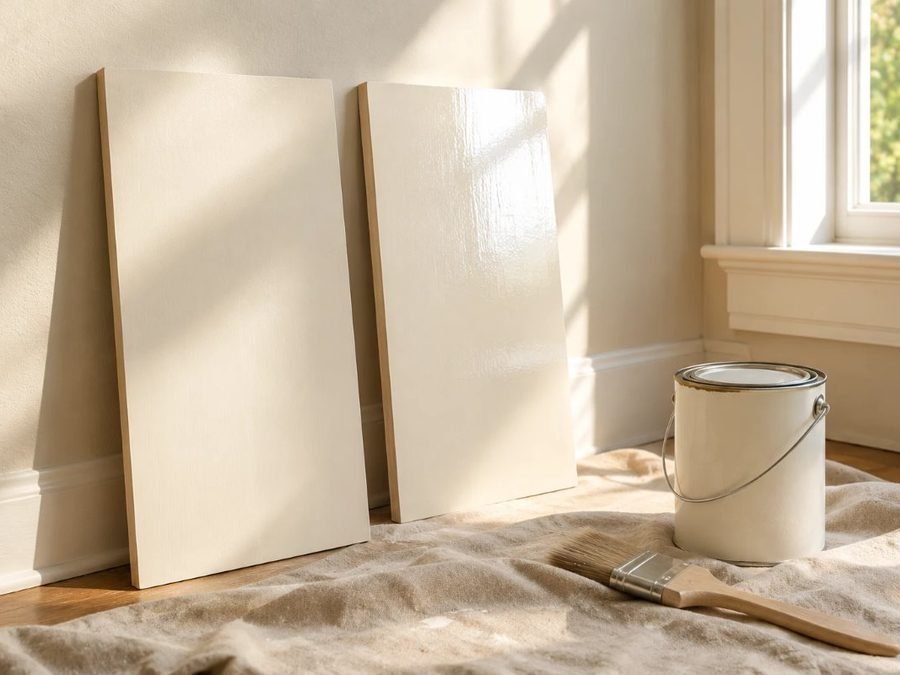
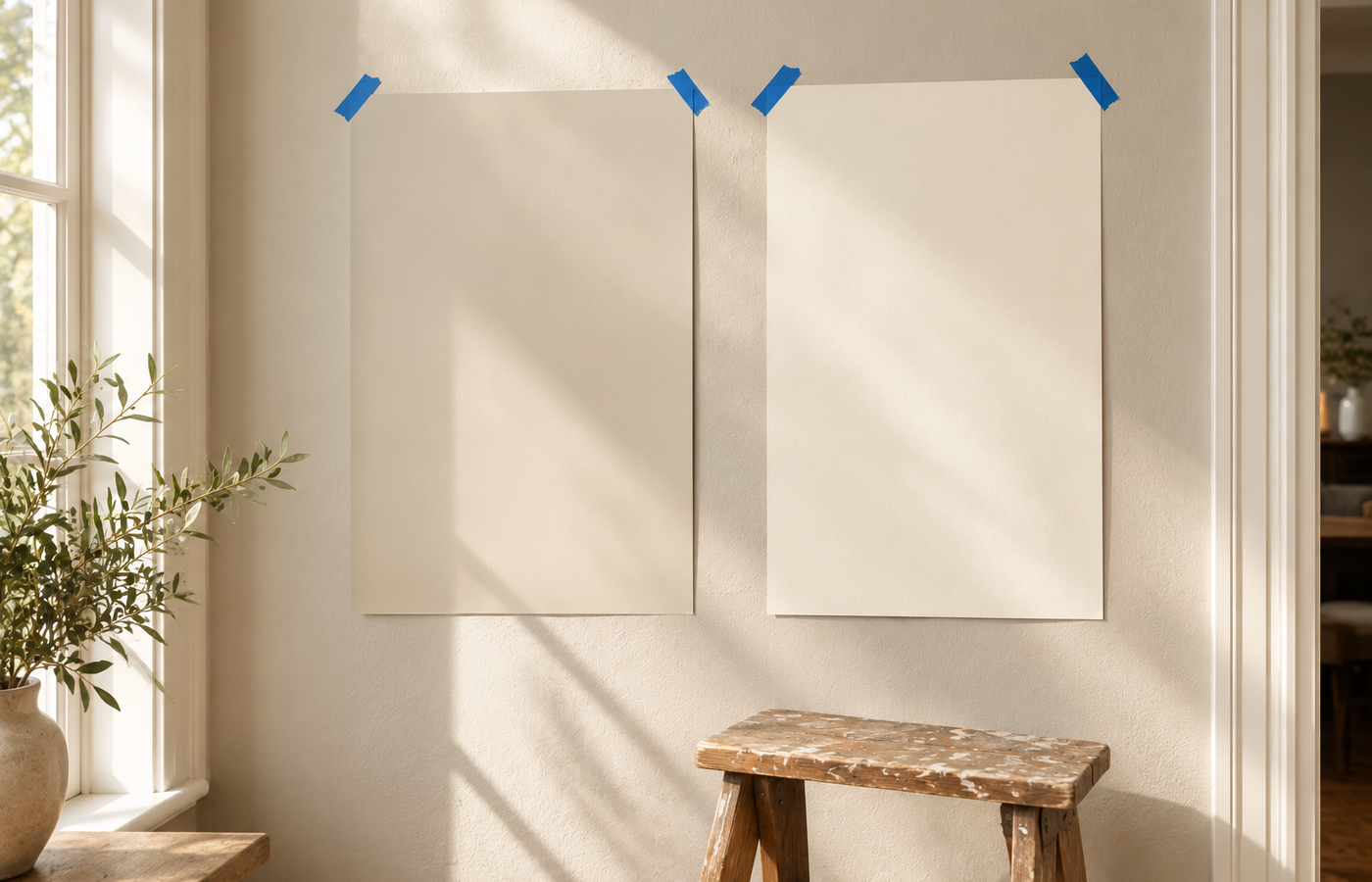
Paint two large boards, at least two feet square, one of each color. Place them side by side on your brightest and darkest walls and check at morning, noon and night. Hold them next to your trim, floors and counters.
Doing This as a Renter
Many rentals use a white; check with your landlord. If painting isn’t allowed, use warm white curtains, bedding and lamps to get a similar mood.
Budget and Timing
Both colors cost the same in the same product line. A room takes a weekend, and white usually needs two coats.
Fixed Elements to Check
Your flooring, countertops, tile and large furniture change how a white looks. In the Alabaster vs Greek Villa decision, hold each sample next to the biggest fixed items in the room. Cool gray tile can make Greek Villa look more yellow, while warm oak floors can make Alabaster look especially cozy. If your fixtures are bright white, the creamier white will stand out more.
Choosing the Sheen
Matte or eggshell is best for walls, because it hides flaws and looks soft. Satin or semi-gloss is better for trim and cabinets because it wipes clean. The same color looks slightly different in each sheen, so test the sheen you plan to use when comparing Alabaster vs Greek Villa.
Bulb and Lighting Tips
Warm bulbs around 2700K make both whites feel creamy. Neutral bulbs around 3500K to 4000K keep them crisper. If you cook or work in the room, think about which look you want in the evening, since that is when the differences show most.
Real-Room Examples
In a bedroom, Alabaster gives a restful, quiet mood. In a living room with lots of light, Greek Villa glows. In a hallway or entry with little daylight, the brighter Greek Villa can lift the space, while Alabaster keeps a hallway calm. For an open plan, many people use one white throughout so rooms flow, and the Alabaster vs Greek Villa choice sets the tone for the whole home.
Where to Start If This Is Your First Time
Order free chips or peel-and-stick samples of both colors and put them side by side on your brightest and darkest walls. Look at them at three times of day for a few days. If you are still stuck between Alabaster vs Greek Villa, choose the one that looks better in the evening, since that is when you use most rooms. Then paint a larger test patch before you buy gallons.
Living With Your Choice
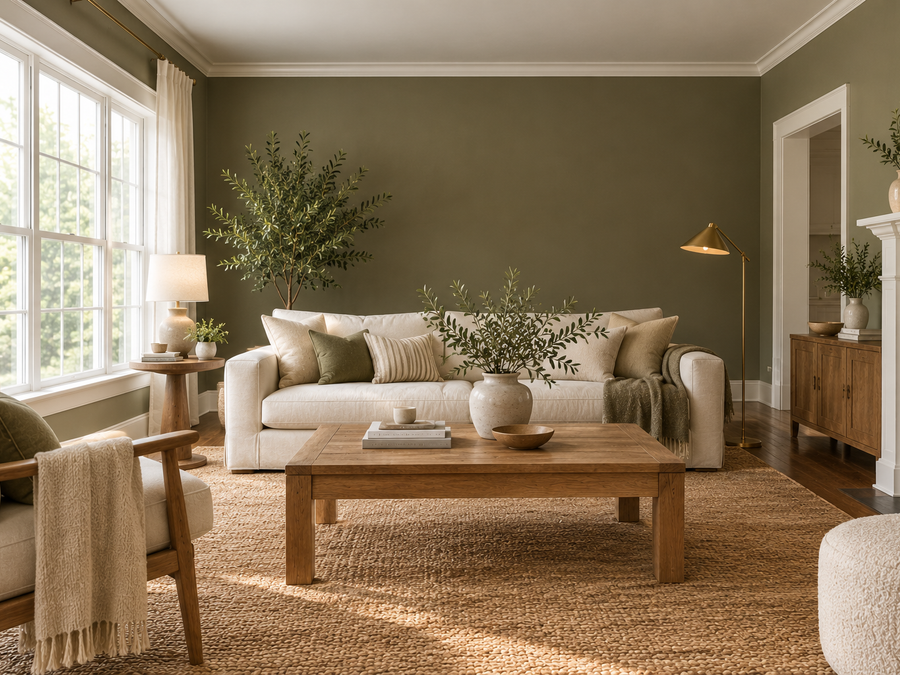
Whichever white you choose, keep your other whites in the same warm family: towels, bedding, curtains and trim. Mixing very cool whites with a warm paint makes the walls look yellow by comparison. A small amount of natural wood and greenery helps both Alabaster and Greek Villa feel fresh. If you ever change your mind, both are easy to repaint over, and a coat of primer helps when going from a warm white to a cooler one.
Quick Decision Guide
Pick Alabaster if you want calm and soft. Pick Greek Villa if you want bright and sunny. Choose by the light in your room and the fixed finishes you already own, and in the Alabaster vs Greek Villa choice there is no wrong answer, only a different mood.
Common Mistakes to Avoid
- Choosing from a tiny chip. Whites differ more on a full wall.
- Mixing with cool, blue-based whites. It makes warm whites look yellow.
- Ignoring lighting. Check under your own bulbs.
- Painting without a side-by-side test.
FAQs
What is the difference between Alabaster and Greek Villa? Greek Villa is slightly brighter and creamier; Alabaster is softer and more muted.
Which is whiter? Greek Villa, at a published LRV of about 84 versus about 82.
Is Alabaster too yellow? Rarely; its warmth is muted and balanced.
Can I use them together? Yes, one on walls and one on trim, if the difference is deliberate.
Which is better for cabinets? Both work; test each against your countertop.
Which suits a small room? Either; Greek Villa adds a little more glow.
Tools and Basics to Gather
Two free chips or peel-and-stick samples, large sample boards, painter’s tape, an angled brush, a roller and a tray.
The Bottom Line
Alabaster vs Greek Villa is a small difference with a big effect on mood. Pick Alabaster for a quiet, balanced white and Greek Villa for a brighter, sunnier one. Test both side by side in your own light, and you’ll know which suits your home.
Related:
Pantone Cloud Dancer in a Living Room: Easy Tips (2026) · Dutch Boy Melodious Ivory Living Room: Easy Palettes for 2026