A range hood is only as good as its position. Too low, and you bang your head and have no room to cook; too high, and smoke and grease escape past it. The right range hood height depends on your cooktop and the hood’s own manual, and sources give a common starting range of about 18 to 24 inches above electric and about 24 to 30 inches above gas.
This guide gives you those numbers, a chart from several sources, how to measure and what to do with high-output ranges, and a few safety notes. Sources disagree, so your own hood and range manuals, and local code, are the final authority.
Quick Answer: Range Hood Height
- Electric cooktop: about 18 to 24 inches above the cooking surface, depending on the maker.
- Gas cooktop: about 24 to 30 inches, and some makers allow up to 36 inches.
- Maximum: many guides suggest about 30 inches, because a higher hood captures less.
- High-output burners: about 12,000 BTU or more may need extra clearance.
- Always: check the hood and range manuals and local code before you drill.
Why Height Matters
A range hood pulls steam, smoke and grease away from the cooktop, and it only works well when it sits within a certain distance of the burners. The right range hood height keeps the hood close enough to catch fumes and far enough away that you can see, reach and cook safely.
Height Chart
Use this chart as a starting point. These figures come from several manufacturers and guides, and they differ.
| Source | Electric | Gas |
|---|---|---|
| Whirlpool spec sheet | 18 in minimum | 24 in minimum; about 30 in suggested maximum |
| KitchenAid | About 20 to 24 in | About 24 to 30 in |
| Rangemaster (UK) | At least 650 mm (about 26 in) | About 650 mm (about 26 in) |
| Coolblue (Belgium) | 55 cm minimum (about 22 in) | 65 cm minimum (about 26 in); 80 cm maximum |
| Robam | About 24 to 30 in | About 24 to 36 in |
Millimeter and centimeter figures are converted approximately. Your manual overrides all of these.
How to Measure
Measure from the top of the cooking surface, not the countertop, up to the bottom edge of the hood. Check your cabinet height if the hood sits between cabinets, and your own height, so the hood does not hit your head. Mark the position with painter’s tape, then step to the stove and imagine cooking with a tall pot. The right range hood height also has to feel comfortable.
Gas vs Electric
Gas burners produce open flame and more heat, so they usually need more clearance, about 24 inches or more. Electric and induction cooktops produce less heat, so the hood can sit a little lower, from about 18 to 24 inches, if the manual allows it. Some sources allow higher for gas, but I would not go above the hood maker’s maximum.
High-Output Ranges
Professional-style ranges and very high-output burners, around 12,000 BTU and above, may need more clearance and a more powerful hood. Check both manuals and ask the maker about the minimum height and airflow. A hood that is too small or too low for a powerful range can be a fire risk.
Hood Width and Depth
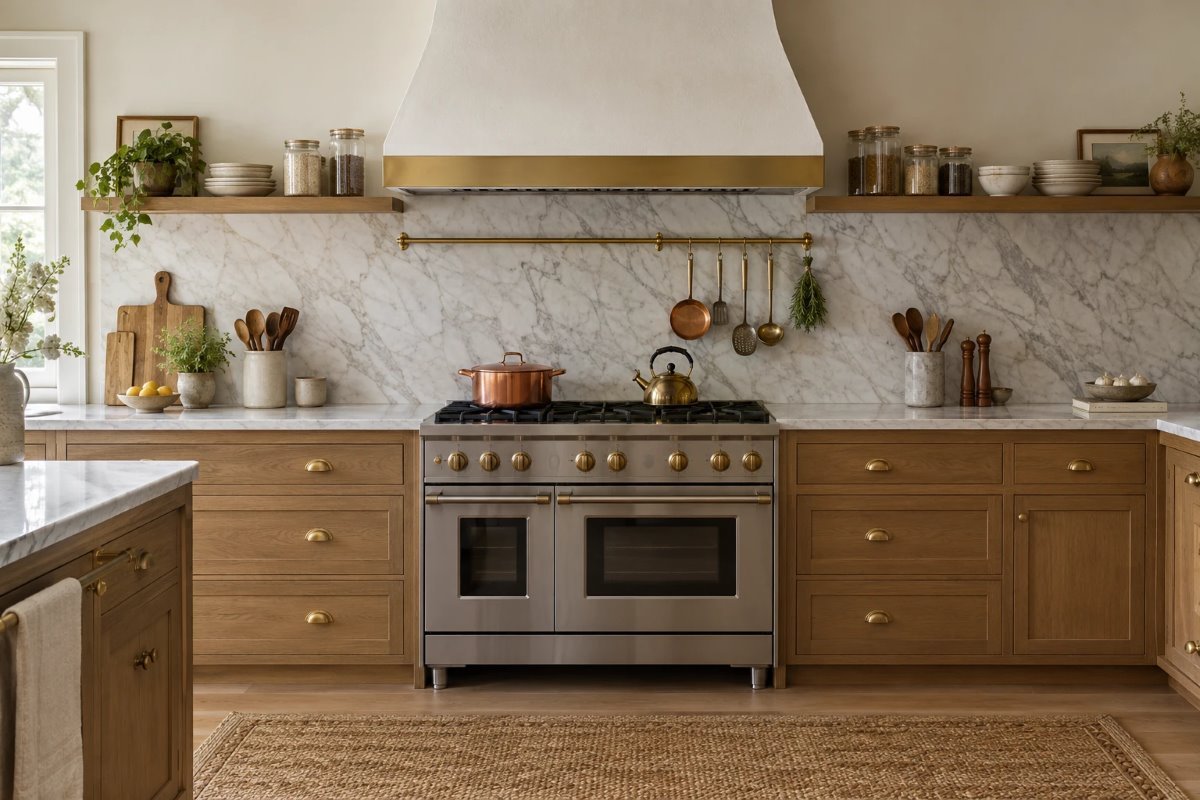
The hood should be at least as wide as the cooktop, and many guides suggest a little wider, about 3 inches on each side, to catch fumes. A deeper hood captures more steam. A flat or slim hood needs to sit lower, while a canopy hood can sit a little higher because it covers more area.
Wall-Mount, Island and Under-Cabinet Hoods
A wall-mount hood goes against the wall above the range, and an island hood hangs from the ceiling over an island cooktop and often sits a little higher. An under-cabinet hood attaches under a cabinet, so its height is set by the cabinet. Always check the maker’s range hood height for your type.
Backsplash and Hood Together
Plan the tile or slab behind the range with the hood in mind. Many guides suggest tile from the counter to the bottom of the hood, or all the way to the ceiling for a unified look. Behind a cooktop, a non-combustible surface is often expected, so check the manual and local code.
Matching the Hood to Your Cabinets
A hood can match the cabinet color, be painted in a contrasting color or be metal, wood or plaster. For color and finish ideas, see our guide to kitchen cabinet colour ideas, and our modern farmhouse kitchen ideas show how a plaster or wood hood suits a warm, natural kitchen. Choose the hood’s style after you have settled the range hood height, since a statement hood still has to sit at a safe range hood height.
Ducting and Ventilation
A hood that vents outdoors works better than one that recirculates through a filter. Use the duct size and length the maker recommends, with as few bends as possible, and clean or replace the filters regularly. Poor ducting can make a hood much less effective, whatever its height.
Lighting and Controls
Check that the hood’s lights are bright enough for your cooktop, and that you can reach the controls without leaning over the burners. Many hoods have dimmable LED lights; choose warm bulbs around 3000K if they are replaceable.
Doing This as a Renter
Renters usually cannot change a hood. If yours is too low or loud, you can clean the filters, use a larger pan lid, and open a window while you cook. Ask the landlord about repairs to the hood or the duct.
Budget and Timing
Hoods range from a few hundred dollars for a basic one to several thousand for a custom one, so check current costs. Installation takes a few hours for a standard hood and longer if ducting or electrical work is needed. For ways to save in the kitchen, see our guide to farmhouse kitchen ideas on a budget.
Where to Start If This Is Your First Time
Read the range manual and the hood manual first and write down the minimum and maximum heights. Then measure your kitchen and mark the height with tape. This is the easiest way to settle range hood height before anyone drills a hole.
Safety
A hood is heavy and wired to the house, so use a helper and a stable ladder, turn off power at the breaker and hire a licensed electrician for wiring. Do not install a hood closer than the maker allows, and keep the filters and duct clean to reduce grease fire risk. Gas and ducting work should be done by a licensed professional.
Common Mistakes to Avoid
- Ignoring the manual. Always follow the maker’s heights.
- Mounting too high. The hood captures less.
- Choosing a hood narrower than the cooktop.
- Forgetting the duct. A poor duct hurts performance.
FAQs
How high above a stove should a range hood be? About 18 to 24 inches over electric and 24 to 30 inches over gas, per your manual.
Is 36 inches too high? Some makers allow it over gas, but many guides suggest about 30 inches as a maximum.
Does a hood need to be wider than the cooktop? At least as wide, and a little wider is better.
Do high-output ranges need more space? Often yes; check the manuals.
Should I vent outdoors? Yes, if you can; it works better than recirculating.
Who should install it? A licensed electrician and, for gas or ducting, a licensed professional.
Tools and Basics to Gather
A tape measure, level, pencil, painter’s tape, stud finder, drill and anchors, a helper, the hood and range manuals, and a stable ladder. Turn off power before wiring work.
The Bottom Line
The right range hood height is usually about 18 to 24 inches over electric and 24 to 30 inches over gas, but the manuals for your own hood and range decide. Measure from the cooking surface, plan the backsplash and duct with the hood and hire licensed pros for wiring, gas and ducting. Done that way, the hood will clear the air and stay safe.
Related:
Kitchen Cabinet Colour Ideas · Modern Farmhouse Kitchen Ideas