The countertop is the hardest-working surface in the kitchen, and the choice between quartz and marble is one of the most debated. The quartz vs marble countertops question comes down to five checks: the look, how it handles stains and etching, how it handles heat, how much care it needs and what it costs.
This guide compares them on those five checks and gives tips for choosing, living with each and avoiding common mistakes. Most of the guides I found come from sellers and cost sites, and they disagree on some numbers, so I flag the disputed points and treat prices as rough examples.
Quick Answer: Quartz vs Marble Countertops
- Look: marble has unique natural veining; quartz is more uniform.
- Stains and etching: quartz resists both; marble etches from acids and can stain.
- Heat: marble handles hot pans better; use trivets with both.
- Care: quartz needs little; marble needs careful cleaning and resealing.
- Easy pick: quartz for a busy, low-maintenance kitchen; marble if you love the look and accept the care.
What Each Material Is
Quartz countertops are engineered stone, made from ground quartz and resin, so the color and pattern are controlled. Marble is a natural stone that forms the veining and color that make every slab unique. In the quartz vs marble countertops debate, that difference drives most of the others: quartz is predictable and marble is natural.
The 5 Checks at a Glance
| Check | Quartz | Marble |
|---|---|---|
| Look | Even, controlled pattern | Natural veining, unique slabs |
| Stains and etching | Resists acids and stains well | Etches from acids; can stain |
| Heat | Use trivets; limits are disputed | Handles hot pans better; still use trivets |
| Care | Little; no sealing | Careful cleaning; resealing needed |
| Cost | Often similar or lower in guides | Often similar or higher in guides |
Check 1: Looks and Style
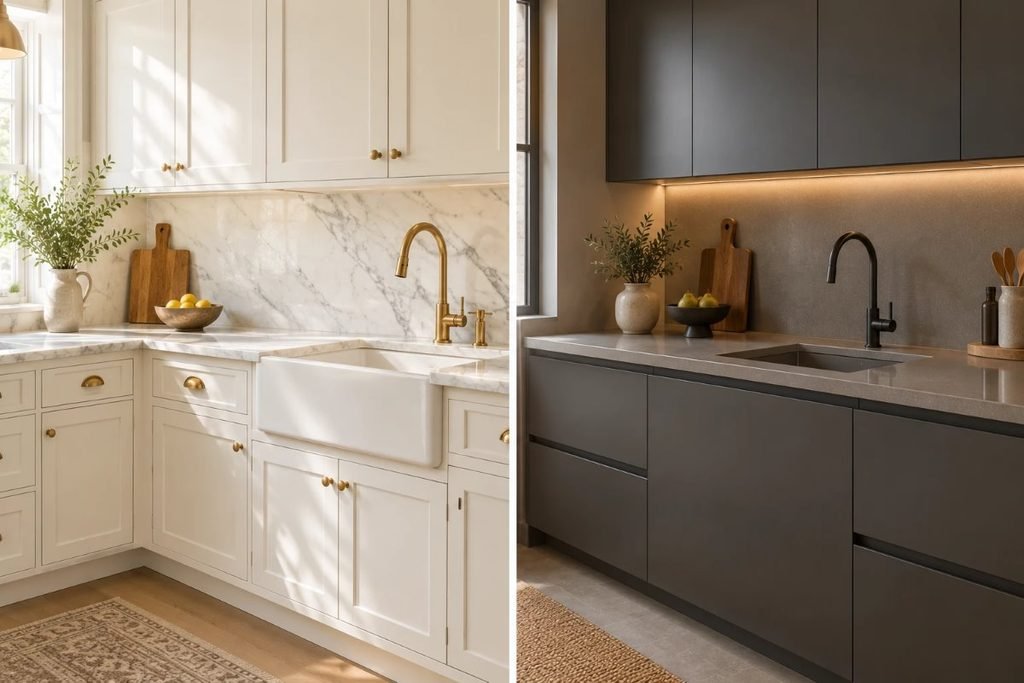
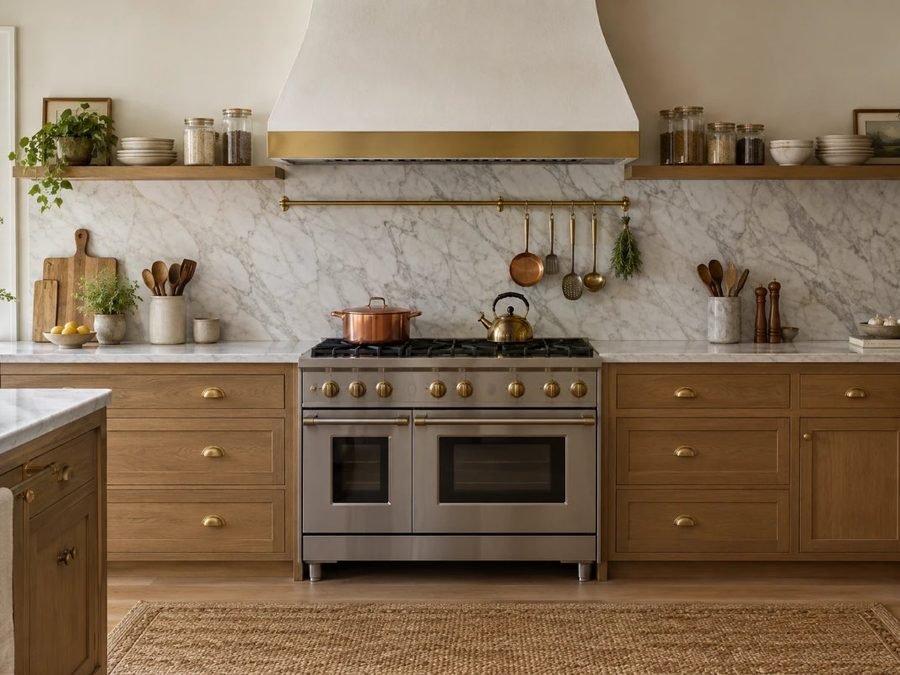
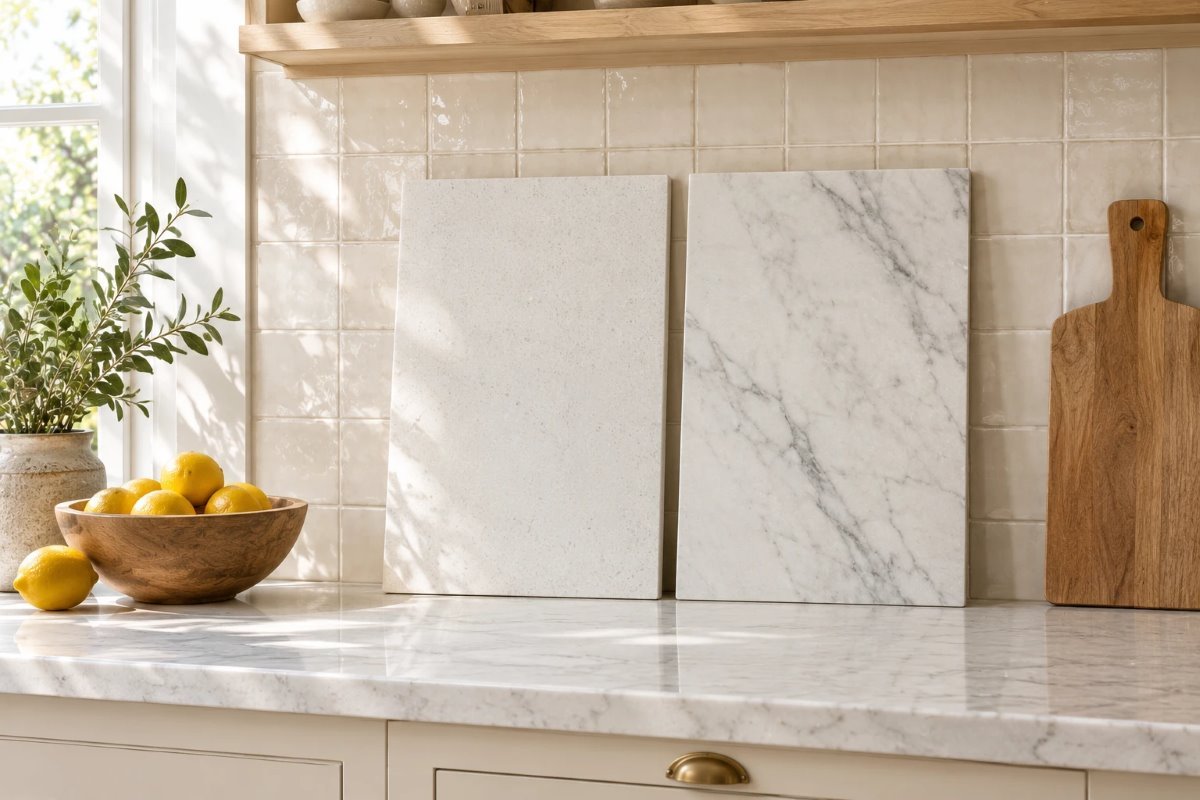
Marble offers deep, natural veining that no two slabs share, and many people love how it ages. Quartz gives a consistent color and pattern, including marble-look designs, and suits modern and busy kitchens. Marble tends to darken slightly and develop character over time, while quartz stays as installed. Think about whether you want a living surface or a controlled one when you compare quartz vs marble countertops.
Check 2: Stains and Etching
Marble is calcium carbonate, so acids such as lemon juice, vinegar and wine can etch it, leaving a dull mark that is a chemical change, not a stain you can wipe away. It can also stain if liquids sit. Quartz shrugs off household acids and is more stain- and scratch-resistant. Both are easier to live with if you wipe spills quickly.
Check 3: Heat
Sources conflict here. One says quartz generally resists temperatures up to about 400 degrees Fahrenheit, another says it can scorch around 150 degrees, so treat quartz as heat-sensitive. Marble handles hot pans better, but you should still use trivets with both. Never place a pan straight from the stove on either surface.
Check 4: Care and Sealing
Quartz needs only soap and water and does not need sealing. Marble needs pH-neutral cleaners and resealing, but guides disagree on how often, from about every 6 months to every 1 to 3 years, so follow the installer’s advice. Wipe marble spills quickly, use cutting boards and coasters, and avoid abrasive or acidic cleaners.
Check 5: Cost
Prices vary by region, slab and installer, so get quotes. One comparison lists marble at about $3,800 to $5,000 and quartz at about $3,500 to $3,760 for 30 square feet installed, while another gives quartz at about $50 to $150 per square foot installed. Guides often say quartz is at least as affordable as marble, up front and over time. Treat these as rough examples from sellers.
Pairing With Cabinets
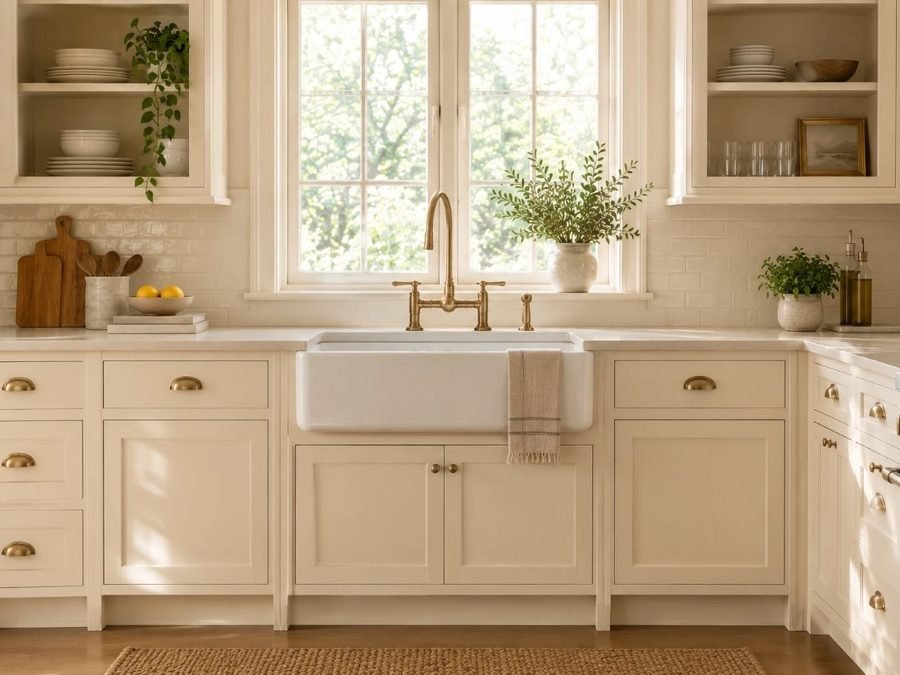
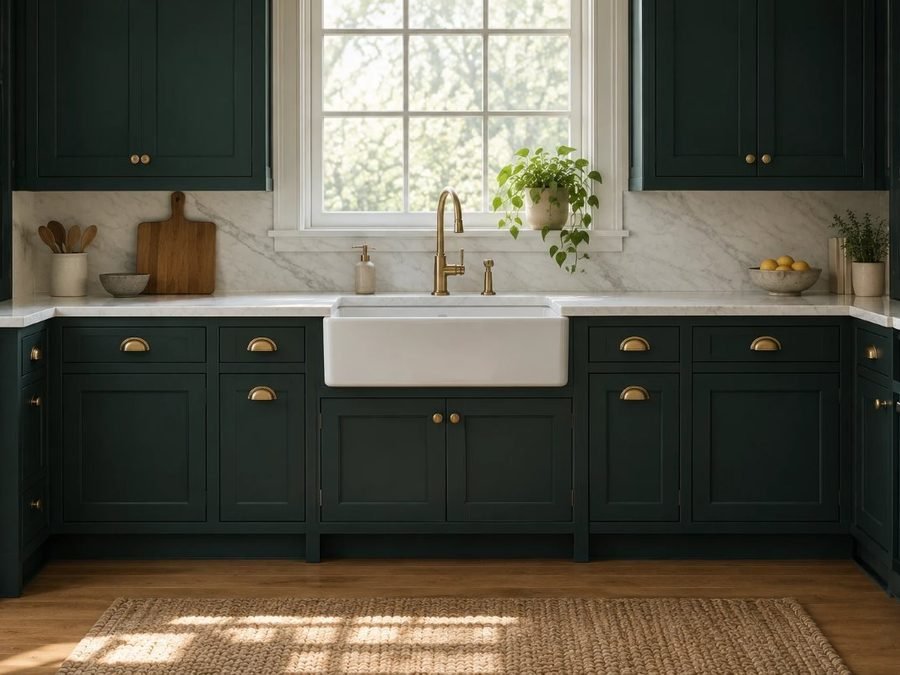
Both materials pair well with painted cabinets, wood and brass hardware. White marble looks classic with white or navy cabinets, and quartz suits darker cabinets and modern styles. For color ideas, see our guide to kitchen cabinet colour ideas, and for a warm, natural look, our modern farmhouse kitchen ideas show how stone and wood work together.
Backsplash and Edges
A matching slab backsplash looks seamless, while tile adds texture. Choose a simple edge, such as a square or eased edge, for a modern look, or a rounded one for a softer look. Check that your backsplash stops at a sensible height and finish; thick or ornate edges collect crumbs.
Sunlight, Sinks and Seams
Quartz can yellow in direct sunlight, so it is a poor choice for outdoor kitchens or a sun-drenched window run. Check how the sink sits, since undermount sinks look clean, and ask about seams, which are easier to hide in a uniform quartz than a heavily veined marble.
Living With Each One
With marble, accept that the surface will show some marks, and think of it as a lived-in finish. With quartz, accept that it will look the same for years but may feel less unique. Hold a sample next to your floor and cabinets and look at it in the morning and evening before you decide on quartz vs marble countertops.
Doing This as a Renter
Renters cannot replace counters, but can use a thin slab-look cover or a large cutting board and trivets to protect existing counters. Ask the landlord before using adhesive covers.
Budget and Timing
Both materials are a big investment, and installation takes days after templating. For ways to save in the rest of the kitchen, see our guide to farmhouse kitchen ideas on a budget. A remnant or a smaller island slab can be a cheaper way to get the look.
Where to Start If This Is Your First Time
Get a free sample of each, put them on your current counter and look at them next to your cabinets in different light. Spill a little lemon juice on the marble sample and see how it reacts. That one test often settles the quartz vs marble countertops choice.
Safety
Countertop slabs are heavy, so use professional installers. Wear a dust mask when cutting any stone, since stone dust is harmful to breathe, and follow sealant directions and ventilate the room.
Quick Recap
Quartz is low-maintenance, stain-resistant and consistent; marble is natural and classic but needs care. Get samples, test them and use trivets with both. The quartz vs marble countertops choice depends on how you cook and how you feel about marks.
Which Kitchens Suit Which Material
Busy family kitchens and rentals-turned-homes often do better with quartz, while a kitchen used for baking, where marble stays cool, or a kitchen where wear is welcome may suit marble. When you compare quartz vs marble countertops, think about the people who use the room most.
Common Mistakes to Avoid
- Choosing marble and then being upset by etching.
- Placing hot pans on either surface.
- Buying from a small sample only. Look at a full slab.
- Skipping the sink and seam plan.
FAQs
Is quartz or marble better for kitchens? Quartz is easier to maintain; marble has a more natural look.
Does marble stain? It can, and acids etch it.
Does quartz need sealing? No.
Can I put hot pans on quartz? No; use trivets, since sources disagree on its heat limit.
Which costs more? Guides often put marble at similar or higher cost.
Can quartz look like marble? Yes, many designs imitate marble.
Tools and Basics to Gather
Samples of each material, a notebook, a tape measure, a lemon or a little vinegar for a test spot, trivets, cutting boards and a pH-neutral cleaner. Hire professionals for templating and installation.
The Bottom Line
The quartz vs marble countertops choice is simple: quartz is the low-maintenance, stain-resistant and consistent choice, and marble is the natural, unique and classic one that needs more care. Get samples, test them in your kitchen and be honest about how you cook. Either way, you will have a surface that suits your home.
Related:
Kitchen Cabinet Colour Ideas · Modern Farmhouse Kitchen Ideas