The cabinet finish sets the whole feel of a kitchen, and two choices dominate: paint or stain. The paint vs stain kitchen cabinets question comes down to five checks: the look you want, the material you have, the cost, how it wears and how easily you can repair it.
This guide compares the two on those five checks and gives tips for choosing colors, prepping cabinets and avoiding common mistakes. Most of the guides I found come from cabinet sellers, so the price figures are rough examples, not market data.
Quick Answer: Paint vs Stain Kitchen Cabinets
- Look: paint gives a smooth, solid color; stain shows the natural wood grain.
- Material: stain needs real wood; paint also works on MDF.
- Cost: painted cabinets are often reported to cost more, roughly 10 to 15 percent in some guides.
- Wear: stain is generally more forgiving of scratches; paint can chip or crack at joints.
- Easy pick: stain to show good wood, paint for color or smooth looks on budget material.
What Each Finish Is
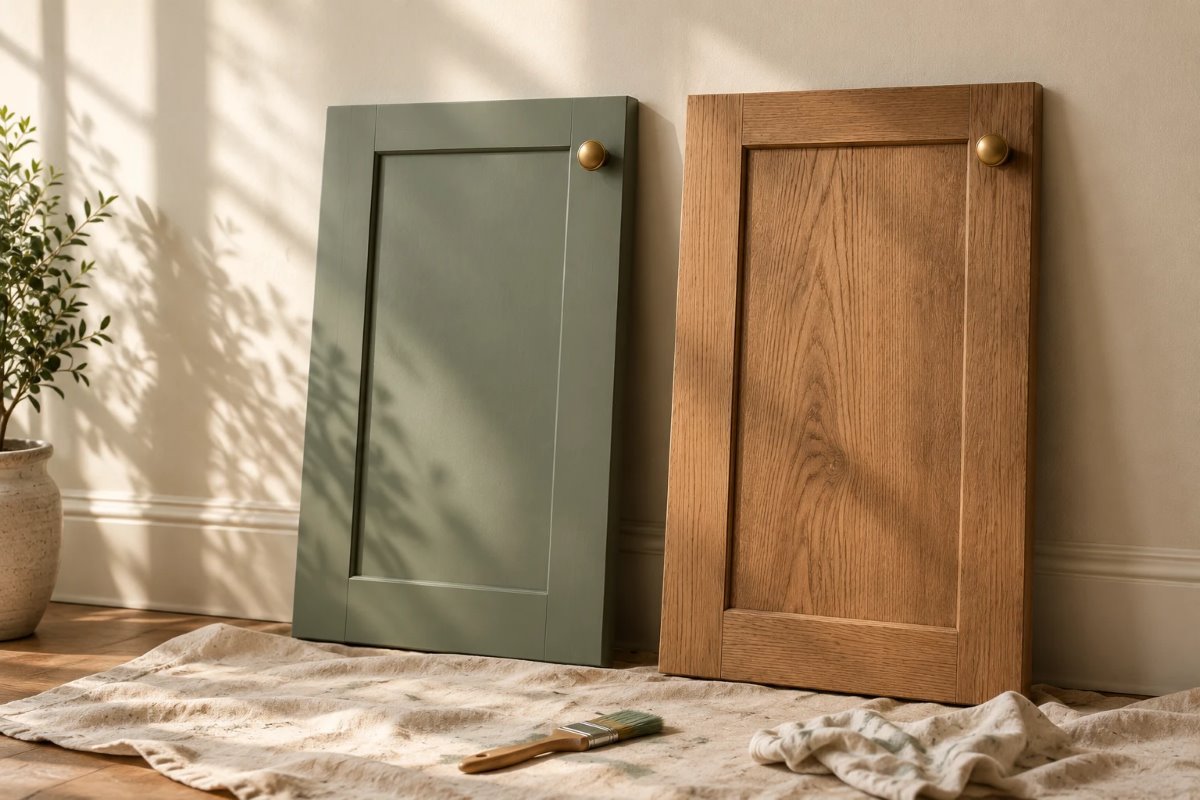
Stain soaks into the wood and colors it while leaving the grain visible, usually with a clear protective coat on top. Paint sits on the surface as a solid layer of color and covers the grain. In the paint vs stain kitchen cabinets decision, that single difference drives most of the others: look, material, repair and cost.
The 5 Checks at a Glance
| Check | Paint | Stain |
|---|---|---|
| Look | Smooth, solid color, many options | Natural grain, warm, limited to wood tones |
| Material | Real wood or MDF | Real wood only |
| Cost | Often higher in guides | Often lower in guides |
| Wear | Can chip or crack at joints | More forgiving of small scratches |
| Repair | Touch-ups harder to blend | Easier to match and blend |
Check 1: Look and Feel
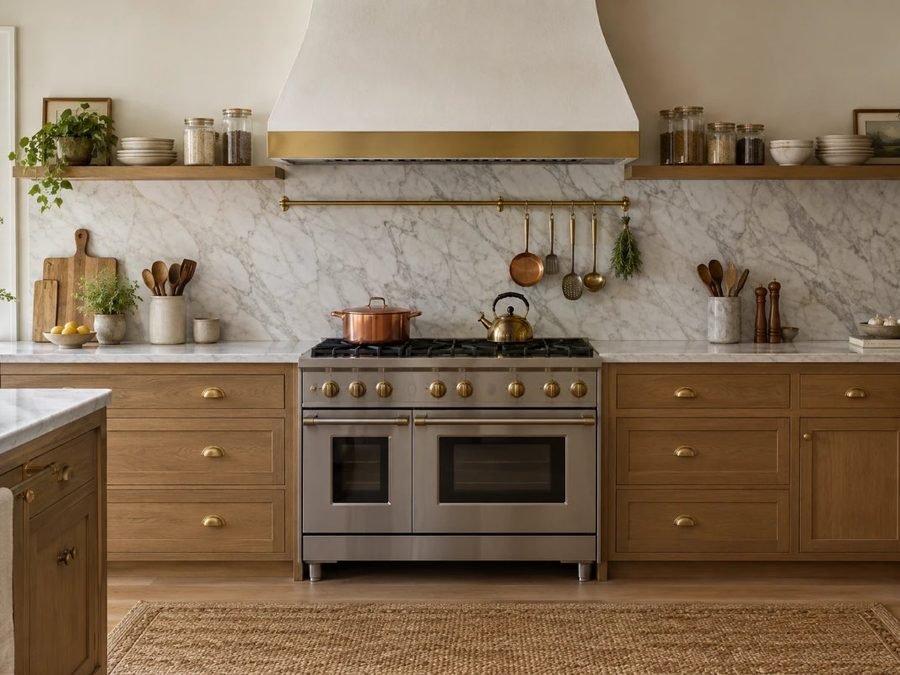
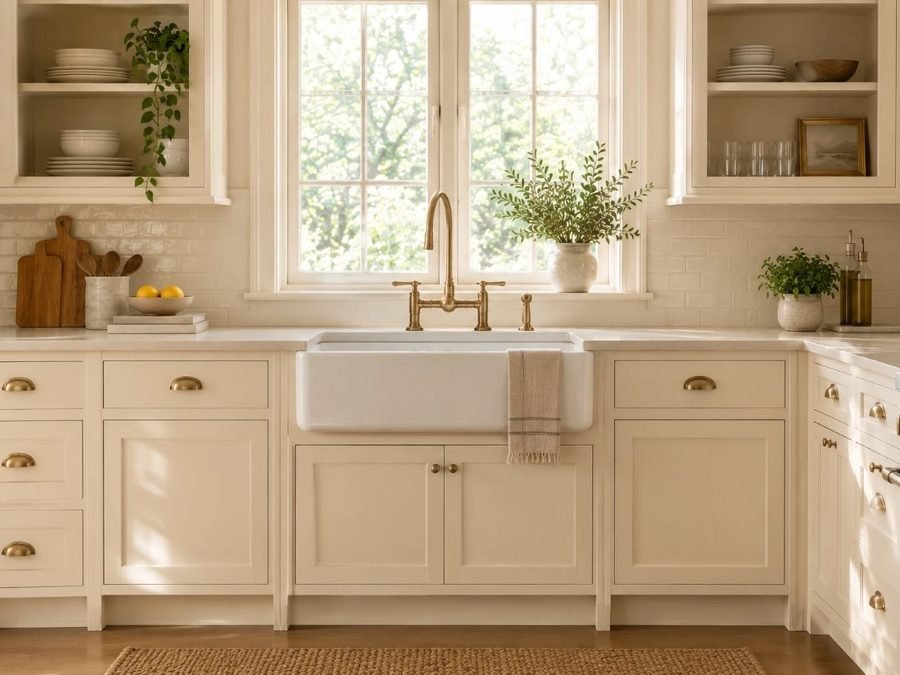
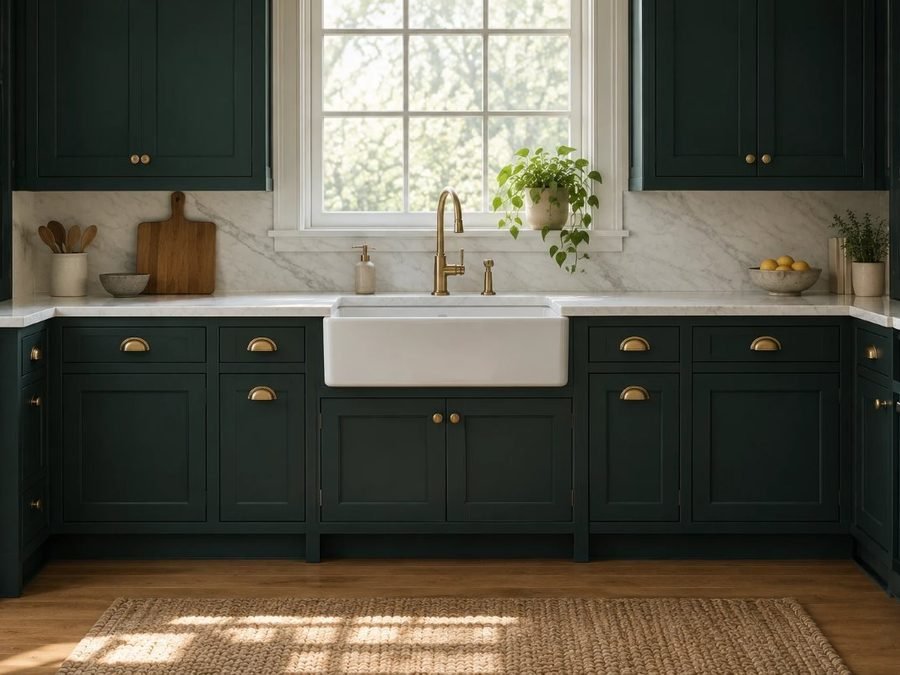
Paint gives you a smooth, uniform surface in almost any color, from white to deep green, and hides busy grain. Stain highlights the wood’s pattern and warmth, which suits traditional, rustic and warm modern kitchens, though a very busy grain can feel too much in a minimalist room. Think about your countertops, floors and the rest of the home when you compare paint vs stain kitchen cabinets.
Check 2: Material
Stain needs real wood, because MDF does not absorb stain well and has no grain. If your cabinets are MDF or a mix, paint is the practical choice. If you have solid oak, maple or walnut in good condition, stain can show it off. Paint also lets you use a cheaper wood and disguise it, which is why paint-grade cabinets are common.
Check 3: Cost
Guides often report painted cabinets costing more, about 10 to 15 percent in some, because paint needs more prep and coats. One example priced a 10 by 10 kitchen at about $5,950 stained on maple versus about $7,000 with a white paint finish. These are examples from sellers, so get quotes for both in your area.
Check 4: Wear and Cleaning
Stained finishes are generally more forgiving of minor scratches and dings, since the color is in the wood, and are less prone to chipping. Paint can chip, especially at corners and joints, and painted cabinets should not be washed with water unless the paint is rated washable. Both are easy to care for with a soft cloth and a mild cleaner.
Check 5: Repair and Touch-Ups
Stain is easier to touch up, since stains blend with the existing finish. Paint touch-ups can show, because the sheen and color can differ from the aged paint, so keep leftover paint in a labeled can. This matters more in a busy family kitchen than in a rarely used one.
Colors and Looks
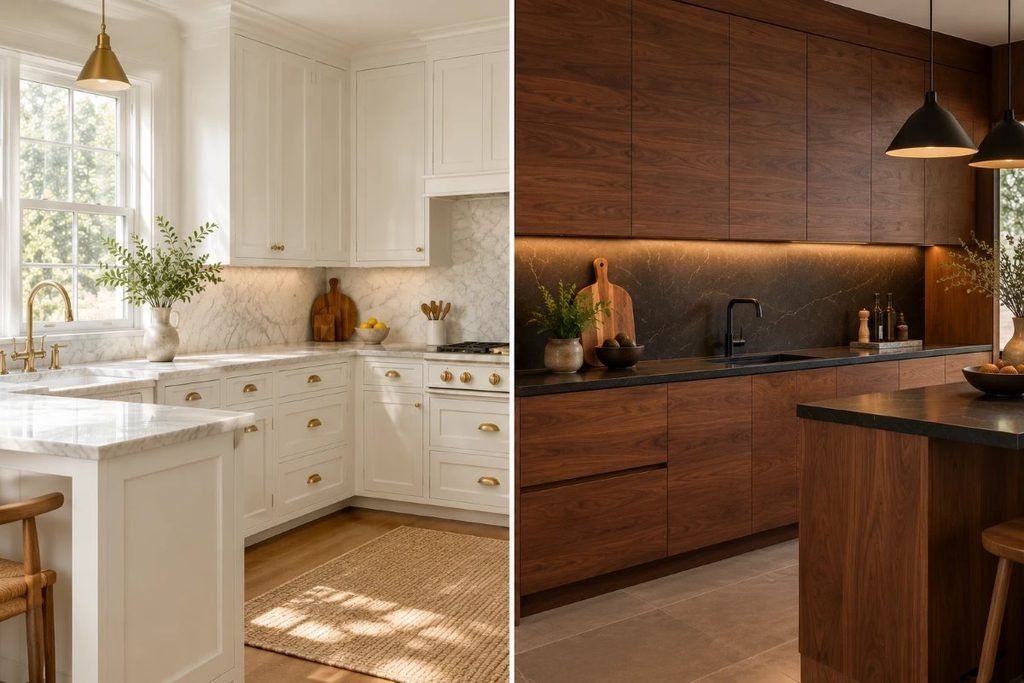
Paint opens many color options, from soft white to sage, navy and charcoal; our kitchen cabinet colour ideas show palettes that work. Stain works best in warm tones, from honey to walnut, and suits natural looks like our modern farmhouse kitchen ideas. Some kitchens mix both: painted lowers and stained uppers, or a stained island with painted perimeter cabinets.
Prep and Process
Both finishes need careful prep. Clean off grease with a degreaser, sand lightly and fill dents. For paint, use a bonding primer and thin coats of cabinet-grade enamel. For stain, remove old finish if needed, apply stain evenly with a rag and seal with a clear topcoat. Label doors and hardware so everything goes back in the right place.
Painting or Staining Over What You Have
You can paint over most cabinets with the right primer, but you cannot stain over paint or a thick varnish without stripping it. If your cabinets are already painted and you want a stained look, you may need to strip or replace the doors. Check what you have before you decide on paint vs stain kitchen cabinets.
Doing This as a Renter
Renters usually cannot refinish cabinets. If the landlord allows it, painting is easier than stripping and staining. Otherwise, use contact paper, new hardware or peel-and-stick panels, and keep the originals.
Budget and Timing
DIY painting costs materials and time, and a kitchen can take a week or more with drying. Staining takes similar time and can need stripping. Professional work costs more. For ways to save, see our guide to farmhouse kitchen ideas on a budget. Replacing only the doors can be a middle path.
Where to Start If This Is Your First Time
Take one door off, test paint on one side and stain on another if you can, and let them dry. Look at them in your kitchen light. When you decide, follow the same careful prep as our guide on how to paint a room, with more care for degreasing and sanding. Testing makes the paint vs stain kitchen cabinets choice easy.
Safety and Ventilation
Open windows, run a fan and wear a mask and gloves. Stains and rags can be a fire hazard, so spread used rags flat outdoors to dry before you throw them away. Follow the product directions for drying and disposal.
Quick Recap
Stain shows the grain and is easy to repair; paint gives color and works on MDF. Check your material, test one door and prep carefully. The paint vs stain kitchen cabinets decision becomes simple once you know what your cabinets are made of.
What Professionals Often Ask
A good cabinet refinisher will ask what the doors are made of, what finish is on them now and how you use the kitchen. Those three answers usually settle paint vs stain kitchen cabinets before you look at colors, so check them yourself before you call anyone.
Common Mistakes to Avoid
- Skipping degreasing. Paint will peel over grease.
- Trying to stain MDF. It will look blotchy.
- Not testing on one door first.
- Using wall paint instead of cabinet-grade enamel.
FAQs
Is paint or stain better for kitchen cabinets? Stain for good wood, paint for color or MDF.
Which costs more? Guides often report paint costing more.
Which lasts longer? Stain is more forgiving of scratches; paint can chip.
Can I stain over paint? Not without stripping it first.
Which is easier to touch up? Stain.
Can I mix paint and stain? Yes, for example a stained island and painted cabinets.
Tools and Basics to Gather
Degreaser, sandpaper, wood filler, bonding primer, cabinet-grade enamel or wood stain and clear topcoat, brushes or rags, a small roller, painter’s tape, labels for doors and hardware, a mask and gloves.
The Bottom Line
The paint vs stain kitchen cabinets choice is simple: choose stain to show off real wood and make repairs easy, and choose paint for color, a smooth look or MDF. Check your material, test on one door and prep carefully. Either way, a good finish makes a kitchen feel new.
Related:
Kitchen Cabinet Colour Ideas · Modern Farmhouse Kitchen Ideas