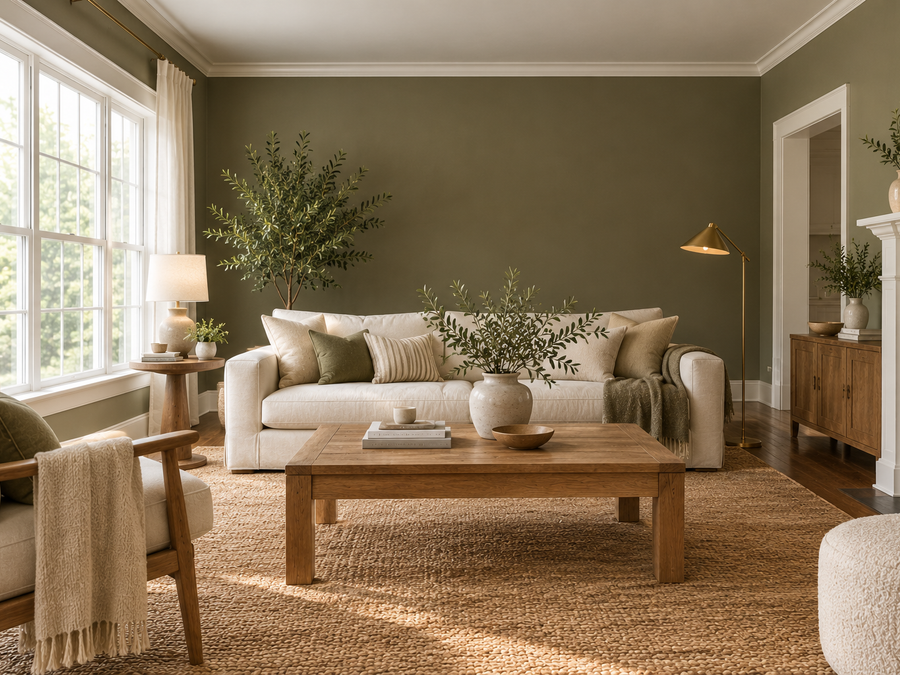
The color is only half the choice. The sheen decides how the paint looks in the light, how well it hides flaws and how easy it is to wipe clean. The satin vs semi-gloss paint question is one of the most common at the paint counter, and the answer is simple: satin for most walls, semi-gloss for trim, doors and wet rooms.
This guide explains the difference, gives a sheen chart for six rooms, and shows where each finish works best, plus how to avoid the common mistakes.
Quick Answer: Satin vs Semi-Gloss Paint
- Satin: soft, velvety sheen; hides small flaws; good for living rooms, bedrooms and hallways.
- Semi-gloss: shinier and tougher; resists moisture and scuffs; good for trim, doors, kitchens and bathrooms.
- Cleaning: semi-gloss wipes clean most easily; satin is also washable.
- Flaws: the shinier the paint, the more it shows bumps and patches.
- Easy rule: satin on walls, semi-gloss on trim.
What Sheen Means
Sheen is how much light a paint reflects once it has dried. It runs from flat or matte, with almost no shine, through eggshell and satin, to semi-gloss and high-gloss. A higher sheen has more resin in it, which makes the surface harder and more reflective. In the satin vs semi-gloss paint choice, semi-gloss is the shinier of the two and a tougher surface, and satin is softer and more forgiving.
Satin vs Semi-Gloss at a Glance
| Feature | Satin | Semi-gloss |
|---|---|---|
| Sheen | Soft, velvety | Shiny, reflective |
| Hides flaws | Better | Worse |
| Moisture and scuff resistance | Good | Very good |
| Wipes clean | Yes | Easiest |
| Best on | Walls, hallways, bedrooms | Trim, doors, cabinets, wet rooms |
Sheen Chart for 6 Rooms
Use this as a starting point. Names and sheen levels vary by brand, so check the can.
| Room | Walls | Trim and doors |
|---|---|---|
| Living room | Satin or eggshell | Semi-gloss |
| Bedroom | Satin or eggshell | Semi-gloss |
| Hallway | Satin | Semi-gloss |
| Kitchen | Satin or semi-gloss | Semi-gloss |
| Bathroom | Satin or semi-gloss | Semi-gloss |
| Kids’ room | Satin or semi-gloss | Semi-gloss |
Satin on Walls
Satin gives walls a soft glow without looking shiny, hides small flaws better than semi-gloss, and is easy to wipe in moderate-traffic areas. It is a good choice for living rooms, bedrooms, hallways and kids’ rooms. It does show some roller marks if you stop mid-wall, so keep a wet edge and finish each wall in one go; our accent wall painting tips cover how to do that.
Semi-Gloss on Trim, Doors and Cabinets
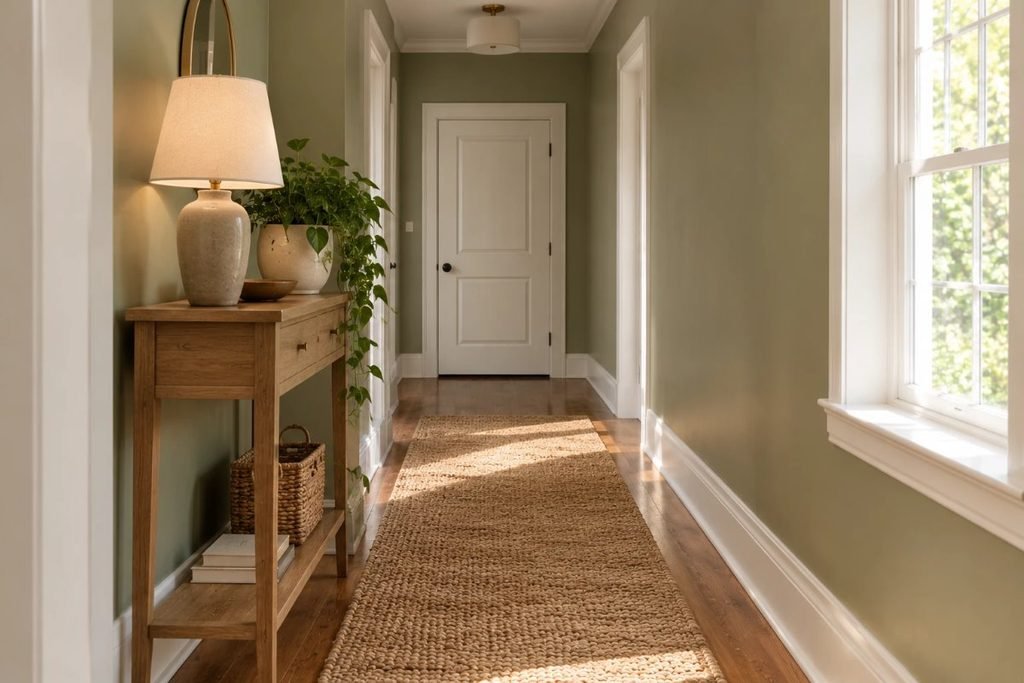
Semi-gloss is the usual choice for baseboards, door frames, doors and window trim, because it takes knocks and wipes clean. It also looks crisp next to a satin wall, which gives the trim definition. On cabinets, semi-gloss is hard-wearing and easy to wipe, although many people prefer satin for a softer look. For color ideas, see our guide to kitchen cabinet colour ideas.
Bathrooms and Kitchens
Moisture, steam and splashes mean these rooms need a tougher finish. Semi-gloss resists moisture and is easy to clean, and satin works well on walls in a bathroom with good ventilation. Use a mildew-resistant paint and run the fan. For more bathroom ideas, see our guide to small bathroom ideas with storage.
Walls With Flaws
Shiny paint is unforgiving. If your walls have patches, bumps or old roller marks, satin vs semi-gloss paint is an easy call: choose satin or even eggshell, and prepare the surface well. Fill holes, sand smooth and prime patches so the sheen looks even.
Does Color Change With Sheen?
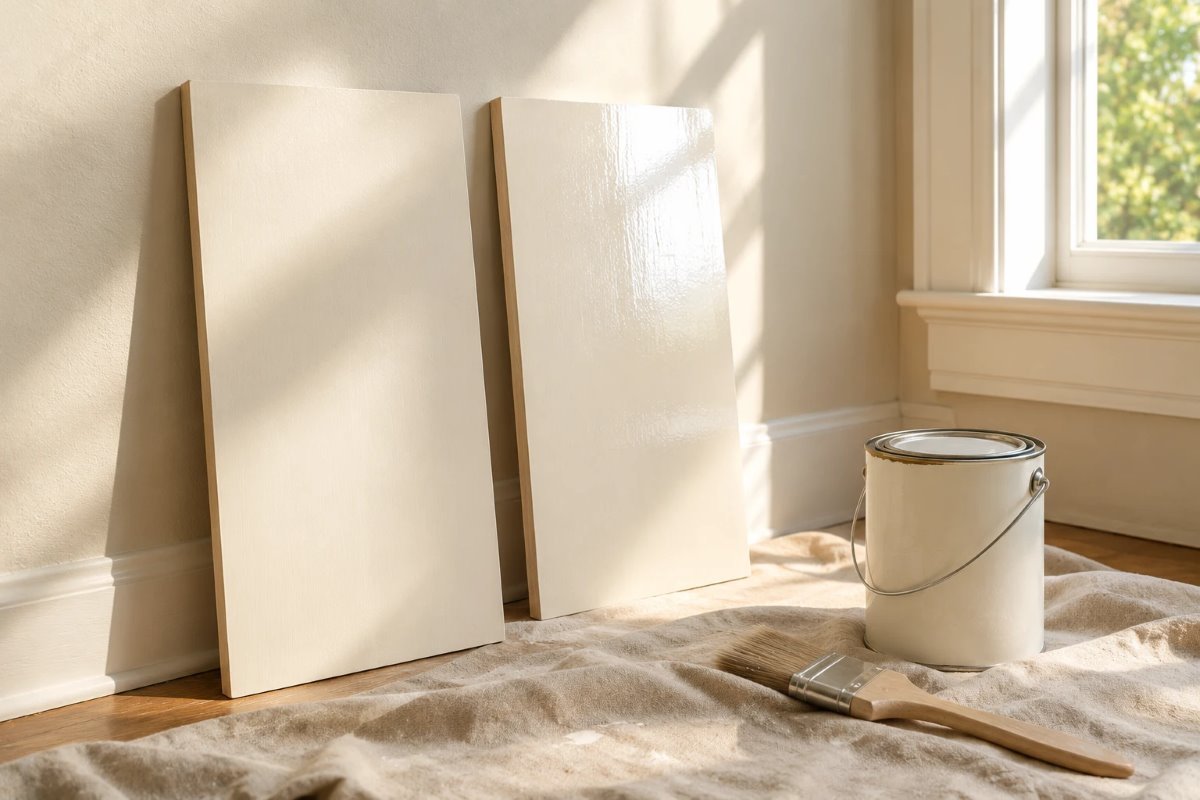
Yes. The same color looks slightly deeper in a lower sheen and slightly lighter and brighter in a higher one, because gloss reflects more light. Test the sheen you plan to use, not just the color. Peel-and-stick samples may not match the sheen, so use a painted board when sheen matters.
Durability and Cleaning
Semi-gloss stands up to scrubbing best, so it is the pick for sticky fingers, handprints and splashes. Satin is washable too, but repeated scrubbing can wear a lower-sheen paint faster. Use a soft cloth and mild soap, wait until the paint has fully cured before cleaning, and avoid abrasive pads.
Doing This as a Renter
Many landlords specify the finish, so ask first. If you may paint, satin on walls and semi-gloss on trim is the safest, most neutral choice. Keep the paint name, color and sheen so you can touch up later.
Budget and Timing
Satin and semi-gloss usually cost about the same within a brand, but prices vary by line and store, so check current costs. Trim takes longer than walls, so allow a full weekend for a room with trim and doors.
Where to Start If This Is Your First Time
Decide the sheen for walls and trim before you buy, and write it on the list. Then follow our guide on how to paint a room, starting with the trim or the ceiling, and finishing with the walls. Painting a test board in each sheen takes a few minutes and settles the satin vs semi-gloss paint question for your own light.
Safety and Prep
Open windows, use a fan and follow the label directions on the can. Wear a mask when sanding, and sand glossy trim lightly so new paint sticks. Keep rags that have oil-based products away from heat, since they can ignite, and dry them flat outdoors.
Quick Recap
Satin on walls, semi-gloss on trim, doors and wet rooms. Check the can for your brand’s sheen names and test a board. The satin vs semi-gloss paint choice gets easy once you think about wear and flaws.
Mixing Sheens in One Room
Using two sheens in one room is normal: satin on the walls and semi-gloss on the trim gives a soft wall and a crisp edge. Keep the color the same or very close, and keep the sheen difference clear so it looks deliberate. In the satin vs semi-gloss paint decision, the pairing matters as much as either choice on its own.
Ceilings and Other Surfaces
Ceilings are usually flat or matte so they hide flaws and reduce glare, but a kitchen or bathroom ceiling may use satin for easier cleaning. Doors and window frames take semi-gloss. Furniture and built-ins often use satin or semi-gloss depending on how much wear they get, and a satin vs semi-gloss paint test on a spare board helps you decide.
Common Mistakes to Avoid
- Using semi-gloss on a bumpy wall. It shows every flaw.
- Using satin on high-wear trim. It scuffs faster.
- Choosing by the color chip and forgetting the sheen.
- Skipping primer on a glossy old surface.
FAQs
Is satin or semi-gloss better for walls? Satin, for most rooms.
What sheen is best for trim? Semi-gloss.
Which is easier to clean? Semi-gloss.
Which hides flaws better? Satin.
Can I use semi-gloss in a bathroom? Yes, it resists moisture well.
Can I use satin on cabinets? Yes, if you want a softer look.
Tools and Basics to Gather
A test board, painter’s tape, drop cloths, an angled brush for trim, a roller for walls, a tray, sandpaper, primer and a damp cloth. Keep windows open and follow the safety directions on the can.
The Bottom Line
The satin vs semi-gloss paint choice is simple: satin for walls that need a soft, forgiving finish, and semi-gloss for trim, doors and rooms with moisture. Check the can for your brand’s sheen names, test a board in your own light, and prepare the surface well. The result will look finished and wipe clean for years.
Related:
How to Paint a Room · Accent Wall Painting Tips for a Clean Finish