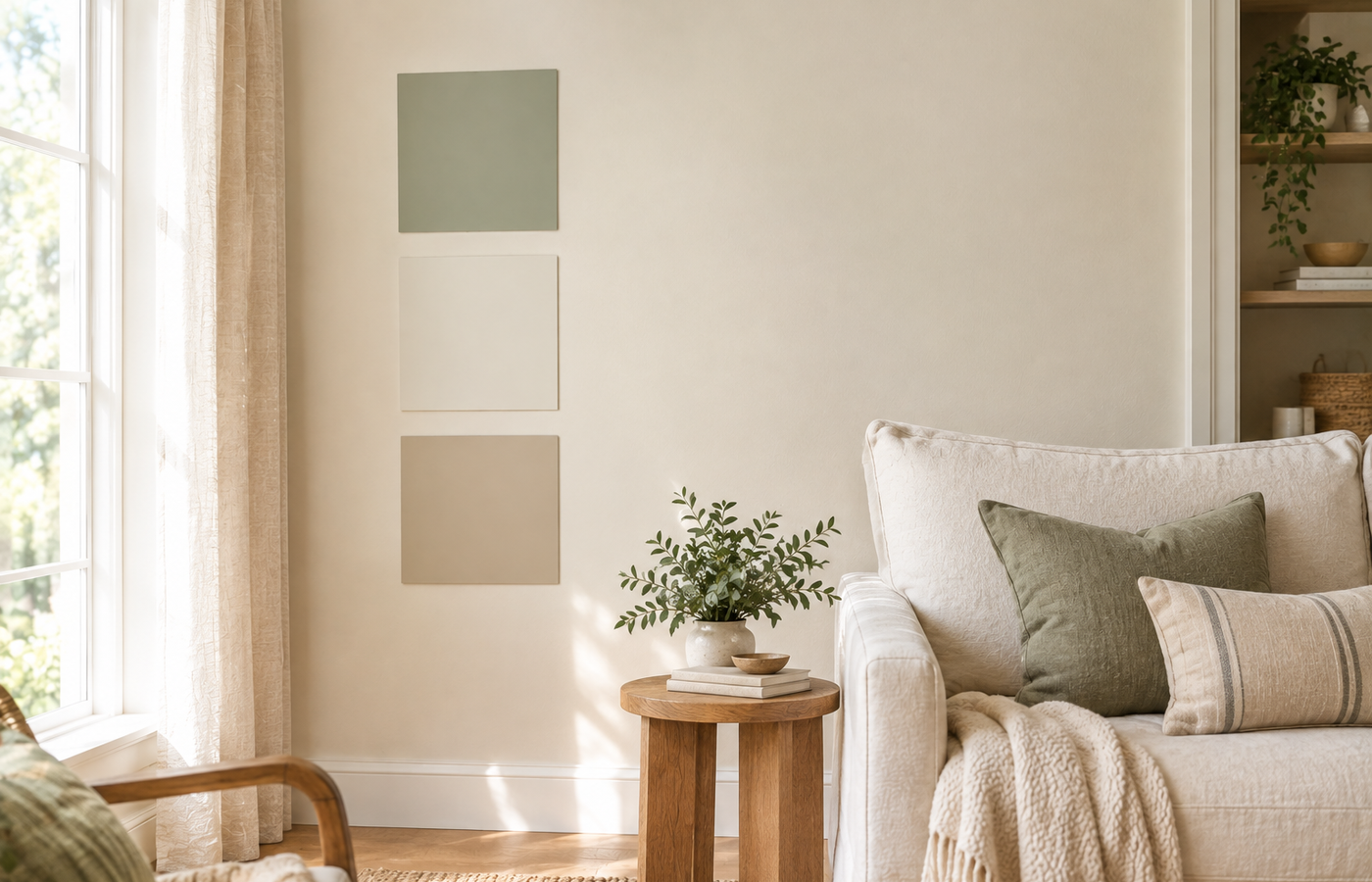
Choosing a paint color from a tiny chip is risky, and painting test patches is messy and slow. That is why peel and stick paint samples have become so popular: large squares of real paint that you stick on the wall, move around and peel off. But are peel and stick paint samples worth the money?
This guide explains what they are, what they cost, how they compare with sample pots and paint chips, when they fall short, and how to use them so you pick the right color the first time.
Quick Answer: Are Peel and Stick Paint Samples Worth It?
- Yes, usually: they are accurate, mess-free and easy to move from room to room.
- Cost: reviews report roughly $4 to $7 per sample.
- Best for: testing a few colors in different light without painting the wall.
- Not ideal for: unusual colors, specific finishes, or very large rooms where you want to test a big area.
- Check: color range, finish, size and return policy before ordering.
What They Are
Peel and stick paint samples are large squares, often around 12 by 12 inches, coated with real paint in the color you choose, with an adhesive back. Reviewers report that they use two coats of the actual paint, so the color is much closer to the final result than a printed chip. You peel the backing off, stick the sample to the wall and move it as often as you like.
What They Cost
Reviews put peel and stick paint samples at about $4 to $7 each, plus shipping or minimums that vary by seller. That is similar to or a bit higher than a small sample pot, but you do not need a brush, a roller tray or leftover paint to dispose of. Check current prices and delivery times, since they change.
Pros
- Accuracy: real paint, not ink, so color is closer to the final result.
- No mess: no brushes, drips or dry time.
- Moveable: you can compare walls, rooms and light.
- No marks: nothing to paint over on the wall.
- Easy for renters: nothing permanent.
Cons
- Limited choice: not every color or brand is available, especially new releases.
- Limited finishes: you may not be able to choose the exact sheen.
- Reuse limits: once peeled, putting a sample back on its backing can be hard.
- Small flaws: reviewers mention occasional white specks from handling.
- Cost adds up: many samples cost more than one pot.
Peel and Stick Samples vs Sample Pots
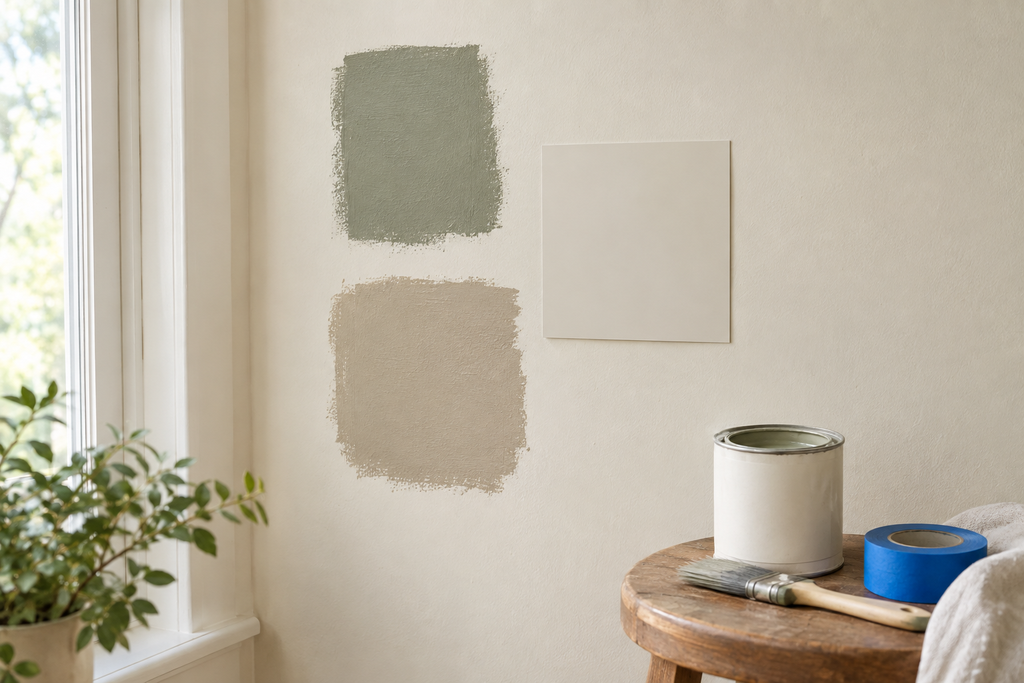
A sample pot lets you paint a big patch in the exact finish, and costs little for a lot of paint, but it takes time, brushes and cleanup, and leaves patches you may need to cover. Peel and stick paint samples win on speed and mess, while pots win on finish and size. If you plan to paint an accent wall, our accent wall painting tips cover when to use a pot for a larger test.
Peel and Stick Samples vs Paint Chips
Paint chips are free and fast, but they are printed, so they are only an approximation, and they are tiny. A chip is fine for narrowing options; use peel and stick paint samples to decide. Many people use chips to pick a shortlist, then order samples of the two or three finalists.
How to Use Them Well
Place a sample on at least two walls, one bright and one dark, and leave it for a few days. Look at it in the morning, at noon and with lamps on. Keep each sample away from the corner, and place it next to your trim, floor and furniture. For soft whites such as Pantone Cloud Dancer, compare samples side by side, since small differences matter. Good use of peel and stick paint samples saves a lot of repainting.
Tips for Better Results
Stick samples on a clean, dry wall and press the edges flat. Leave a gap between samples so colors do not influence each other, and cover the wall around them with a neutral sheet if you can. View them from across the room, not up close. If you live with strong colored furniture, hang a sample near it before ordering gallons.
When They Fall Short
Peel and stick paint samples are poor for testing a color you plan to use on a floor, ceiling or exterior, because the surface and sheen differ. They are also less useful for cabinets, where finish and sheen matter, so paint a real door or board there; see our kitchen cabinet colour ideas for more guidance. And if your color is not on the maker’s list, you will need a sample pot.
Doing This as a Renter
Renters get the most from peel and stick paint samples because nothing is permanent. They are also useful if you want to show a landlord the color you are asking to paint. Follow the instructions to avoid damaging the wall paint, and peel gently.
Budget and Timing
Order a few days ahead, since delivery takes time. Five samples can cost $20 to $35, so choose your shortlist first. Compared with repainting a room in the wrong color, that is a small cost.
Where to Start If This Is Your First Time
Narrow your choices to two or three using chips or online swatches, order those as peel and stick paint samples, and test them for a week. When you have chosen, follow our guide on how to paint a room.
Quick Recap
Peel and stick paint samples are accurate, clean and moveable, they cost roughly to each, and they are best for comparing a short list of colors. Use a sample pot when you need the exact finish.
Who Should Skip Them
If you already know the exact color, have a tight budget or are painting a ceiling, a free chip or a small sample pot may be enough. They make the most sense when you are torn between two or three colors, or when you want to compare light in different rooms without painting patches.
Common Mistakes to Avoid
- Judging a sample in one spot at one time of day.
- Ordering too many options. Three is plenty.
- Putting samples in the corner where light bounces.
- Assuming finish matches exactly. Confirm the sheen.
FAQs
Are peel and stick paint samples accurate? Reviews say they are close because they use real paint.
How much do they cost? About $4 to $7 each, reported.
Can I reuse them? You can move them, but putting them back on the backing is hard.
Do they damage walls? Reviewers say they peel off cleanly if the paint is well cured.
Are they better than sample pots? They are cleaner and faster; pots give you the exact finish.
Can I use them on cabinets? For a rough idea, but test the real finish on a door.
Tools and Basics to Gather
A few peel and stick samples, a notebook or phone to record notes, a neutral sheet or paper to frame the sample, and a way to check the color at night, such as a lamp with your normal bulb.
The Bottom Line
Peel and stick paint samples are worth it for most people choosing a wall color: they are accurate, clean and easy to move. Narrow your list first, test two or three in different light for a few days, and use a sample pot only when you need the exact finish. Used that way, they save time, paint and second thoughts.
Related:
How to Paint a Room · Accent Wall Painting Tips for a Clean Finish